

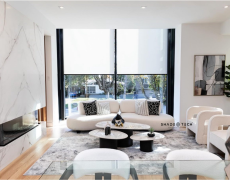
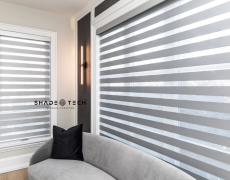
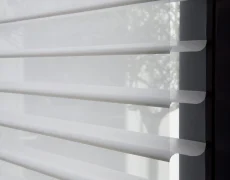
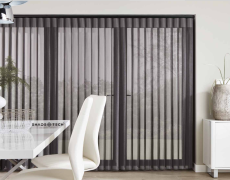

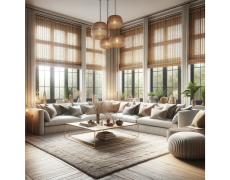






A wall of west-facing glass can be a selling feature in a Dallas home until the afternoon sun turns the room into a glare-filled heat zone. Builder shade motors address that problem before move-in, giving homeowners controlled daylight, privacy, and automation without adding visible cords or asking them to operate hard-to-reach shades by hand.
For builders, designers, and commercial project teams, motorized shades work best when they are treated as part of the building plan, not as a last-minute window-covering decision. The motor, power source, fabric, mounting details, controls, and smart-home platform all affect the finished result. Early coordination protects the clean architectural lines that make large contemporary windows so appealing in the first place.
Why Builder Shade Motors Belong in the Design Phase
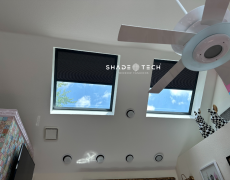
Motorized shades are often requested after construction, especially when homeowners realize how much heat and glare enters through expansive windows. Retrofitting is possible, but new construction and major renovation projects offer a better opportunity. Power can be planned behind fascia, inside recessed pockets, or near each shade location before drywall is complete. That reduces exposed wiring, avoids compromises in trim details, and creates a more intentional installation.
The practical value is especially clear in North Texas. Solar exposure changes dramatically throughout the day, and large rooms with tall windows can collect significant heat. A properly specified solar shade fabric can reduce glare and filter UV exposure while preserving an outward view. In bedrooms, media rooms, and spaces requiring stronger privacy, blackout or room-darkening materials may be the better choice. The right answer depends on the room’s orientation, function, glass type, and the homeowner’s expectations.
Builders also gain a cleaner handoff. Instead of leaving the owner to coordinate a shade retailer, electrician, installer, and automation programmer after closing, the project can deliver with the window treatment system measured, installed, and ready to use.
Choosing the Right Power Strategy
Not every motorized shade requires hardwired power, and not every project should rely on batteries. The appropriate choice depends on window count, access, design goals, and the level of automation planned.
Battery-powered motors are useful for retrofit work, secondary spaces, and locations where running wire would disrupt finished surfaces. Premium rechargeable systems are quiet and discreet, but they still need periodic charging or battery service. For a single difficult-to-reach window, that trade-off may be reasonable. Across an entire home or commercial space, maintenance becomes more of a consideration.
Hardwired motors are often the preferred option for new construction, extensive remodels, hospitality settings, and multi-shade rooms. They remove the routine of charging batteries and support a refined, permanent installation. They also require coordination between the shade specialist, electrician, and general contractor. Wire locations, low-voltage versus line-voltage requirements, access to transformers, and serviceability should be reviewed before walls are closed.
Solar-charged motor options can be valuable in bright windows where wiring is impractical and battery access is inconvenient. Their performance depends on available daylight and the window conditions, so they should be specified thoughtfully rather than assumed to be the universal answer.
The Details That Determine a Clean Installation
A motor is only one component of a finished shade system. The installation must account for the roller diameter, bracket depth, fabric roll direction, side gaps, trim dimensions, and clearance from handles or window hardware. These are small details on a plan and highly visible details in a finished room.
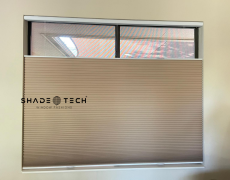
Recessed shade pockets are especially popular in modern homes because they conceal the hardware when shades are raised. But a pocket must be sized for the actual product, including the selected fabric and motor. A shallow pocket may work for a narrow light-filtering shade yet fail to conceal a larger blackout roller on a wide opening. Pocket drawings should be based on final shade specifications, not generic assumptions.
For exterior-facing glass, fabric selection has equal importance. Openness factor influences how much view and daylight remain after solar fabric is lowered. A more open weave generally preserves more visibility but allows more light through. A tighter weave provides stronger glare and heat control but can make the room feel more enclosed. Color matters, too. Darker fabrics often offer clearer daytime views outward, while lighter fabrics can better complement a bright interior palette. Sample review at the actual window is worth the time.
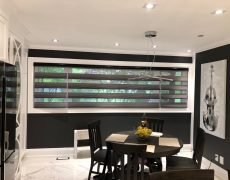
Commercial and medical settings add another layer of consideration. Clinics may need privacy and glare reduction in exam rooms while maintaining a calm, professional appearance. Restaurants need shade systems that manage harsh afternoon sun without making the dining room feel shut in. In both cases, durable fabrics, consistent alignment, simple staff controls, and reliable operation matter as much as appearance.
Smart Controls Should Fit the Way the Building Is Used
The most useful automation is rarely the most complicated. A homeowner may want shades to lower on sun-exposed elevations during the hottest part of the day, raise in the morning, and close for privacy after sunset. A restaurant manager may need one-button control for a dining area. A clinic may prefer scheduled operation that reduces glare before the first appointment.
Builder shade motors can be controlled by handheld remotes, wall keypads, mobile apps, voice assistants, and whole-home automation systems. Compatibility with Alexa, Google Home, Apple HomeKit, and Matter-enabled ecosystems can be a major advantage, but platform selection should be decided early. A system that works well as a stand-alone shade solution may not offer the same experience within a larger lighting, security, or AV setup.
There is also a difference between voice control and automation. Asking a voice assistant to close the shades is convenient. Programming shades to respond automatically to a schedule, scene, occupancy condition, or solar event delivers the hands-off benefit most owners expect from a premium smart home. Still, automation should include practical overrides. People want easy local control when hosting guests, watching a movie, or adjusting a room for a specific task.
Reliable wireless range deserves attention in large homes with steel framing, dense insulation, multiple levels, or detached outdoor living areas. A professional site review can identify when repeaters, hubs, or a different control approach may be needed. This is one reason shade automation should not be treated as a boxed product selected after every other system is complete.
A Better Coordination Process for Builders and Contractors
The strongest projects establish responsibilities before measurements begin. Window schedules and elevations help identify shade types, but on-site field verification remains essential. Finished opening sizes can change with drywall, tile, trim, and ceiling details. Precision measurement after those conditions are known prevents surprises at installation.
A coordinated process typically addresses four decisions: where each shade mounts, how it receives power, what fabric performance the room requires, and how the owner will control it. Those answers inform pocket dimensions, electrical rough-in, trim work, and programming. They also help set realistic expectations for lead times and installation sequencing.
ShadeoTech supports that process through local Texas manufacturing, field measurement, professional installation, and smart-home setup. For builders, that means fewer handoffs and a single technical partner accountable for the system from design review through final commissioning.
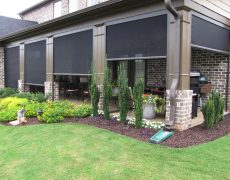
Factory-direct manufacturing also gives project teams more control over sizing and finish choices than a retail-first approach. Wide windows, angled conditions, paired shades, double-shade systems, and outdoor openings often need more than an off-the-shelf solution. Custom fabrication makes those applications more achievable, although very large spans may require divided shades or engineered support details. A good specification recognizes those limits early instead of forcing a design that cannot perform reliably.
What Homeowners Notice After Closing
Homeowners do not usually talk about motor torque, power supplies, or communication protocols after a project is complete. They notice that morning light enters gently rather than blasting into the kitchen. They notice that a two-story great room can be shaded without climbing a ladder. They notice less screen glare, more privacy at night, and furniture that is better protected from UV exposure.
They also notice whether the shades move quietly, align evenly, and respond when asked. That is why installation quality matters as much as the motor itself. A premium system should feel considered from the first press of a keypad to the final programmed scene.
The best time to make that happen is while the project still has open walls, accessible ceilings, and flexibility in the schedule. When builder shade motors are planned alongside lighting, electrical, and smart-home infrastructure, the finished space feels less like it received an upgrade and more like it was designed to work that way from the start.
