

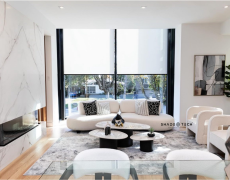
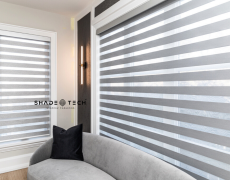
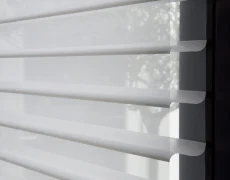
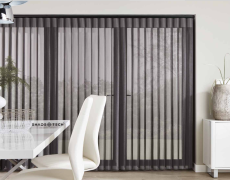







A media room can have a premium projector, a large-format television, and carefully selected speakers, then still feel compromised at 3 p.m. because sunlight washes across the screen. The best blinds for media rooms do more than darken the space. They control glare, protect finishes from UV exposure, reduce heat gain, and make it easy to set the room for movie night, gaming, or daytime viewing.
For Dallas-Fort Worth homes, the right choice is rarely a basic off-the-shelf blind. Large contemporary windows, intense afternoon sun, and smart-home expectations call for a custom system that closes precisely, blocks light where it matters, and fits the room’s design.
What a Media Room Window Treatment Must Do
The first goal is light control, but not all light problems are the same. A television room with direct sun needs glare reduction. A dedicated theater with a projector needs near-total darkness. A multipurpose game room may need both, plus privacy and insulation during the hottest part of the day.
This distinction affects the product selection. Dark fabric alone does not guarantee a dark room. Light can enter around the sides of a shade, through a mounting gap, or from the top of a window. For a projector room, those small leaks can noticeably lower contrast and make dark scenes look gray.
Heat is the second major consideration in North Texas. West-facing glass can turn a media room into a warm, bright space before the system is ever switched on. A well-specified shade helps manage solar gain at the window, reducing the burden on HVAC equipment while protecting upholstery, flooring, artwork, and electronics from harsh UV exposure.
Finally, operation matters. If closing every window covering requires walking around the room, the shades are less likely to be used consistently. Motorization turns light control into part of the room’s normal routine.
Best Blinds for Media Rooms: Start With Blackout Roller Shades
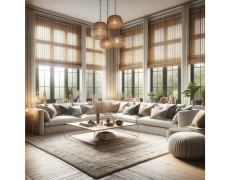
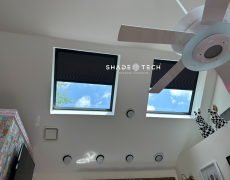
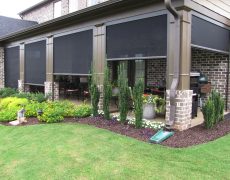
For most media rooms, custom blackout roller shades are the strongest all-around recommendation. Their clean profile works with modern interiors, and their continuous fabric panel provides more complete coverage than horizontal slats. When measured and installed correctly, they are especially effective on wide windows, tall glass, and banks of windows common in newer Dallas homes.
A true blackout fabric blocks light through the material itself. However, the mounting approach is what determines the final result. An outside-mounted roller shade that extends beyond the window opening will reduce edge gaps more effectively than a shade installed inside the opening. For rooms where projector performance is the priority, side channels and a cassette or fascia system can further limit light leakage.
Roller shades also offer design flexibility. The fabric can disappear into a discreet header, match surrounding wall tones, or become a deliberate visual element. Unlike bulky layered treatments, they preserve a clean architectural look when raised.
The trade-off is that a single blackout roller shade is built for darkness, not for a softly filtered daytime view. If the room serves multiple purposes, a dual-shade system may be the better investment.
Dual Shades for Daytime Viewing and Movie Mode
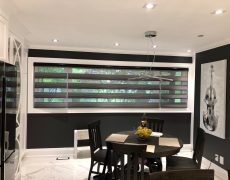
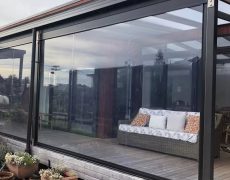
Dual shades pair two fabrics at one window: a solar screen shade for the day and a blackout shade for evening viewing. The solar layer cuts glare, softens harsh sunlight, and preserves some outward visibility. The blackout layer lowers when the room needs deeper darkness.
This is an excellent configuration for a family media room, living room theater, or flex space where the windows should not feel closed off all day. A 1% to 3% openness solar fabric is often a good starting range for glare-prone rooms. Lower openness means a tighter weave and stronger light control, though it also reduces the clarity of the view outward.
With motorization, the two layers can operate independently. During the day, the solar shade can lower automatically on the sunny side of the house. At night, one command can lower the blackout layer before the movie starts.
When Cellular Shades Are the Better Choice
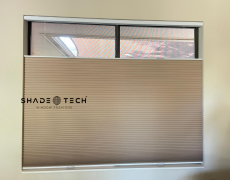
Cellular shades deserve consideration when heat control and sound softening are high priorities. Their honeycomb-shaped pockets trap air, adding insulation at the window. In a sun-exposed media room, that can improve comfort during long afternoons and help the space hold a more stable temperature.
Blackout cellular shades can provide strong room darkening, particularly when paired with an outside mount or light-blocking side features. Their softer, more residential appearance works well in traditional homes, bedrooms that double as media rooms, and spaces where the window treatment should contribute to a warmer interior feel.
They are not always the first choice for a dedicated contemporary theater. Large window spans can make cellular shades appear more segmented than roller shades, and the overall visual effect is less minimal. Still, for homeowners focused on insulation and practical darkness, they offer compelling performance.
Why Slatted Blinds Are Usually a Secondary Option
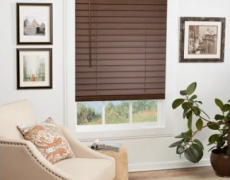
Wood blinds, faux wood blinds, and aluminum blinds can tilt to redirect daylight, but they are rarely the best standalone solution for serious screen viewing. Light leaks between slats, through cord routes, and around the edges. Even when closed, they typically cannot create the consistent darkness a projector needs.
That does not make them a poor product. In casual TV rooms, tilting slats upward can reduce direct glare while retaining airflow and a degree of daylight. Faux wood blinds can also stand up well to humidity and are familiar in traditional interiors. The limitation is precision: they manage light, but they do not fully contain it.
If the design calls for slatted blinds, consider pairing them with lined drapery or a separate blackout shade. The layered approach can improve darkness significantly, although it requires more visual space around the window and more components to operate.
Motorization Makes the System Worth Using
A media room is one of the clearest cases for motorized blinds or shades. Light conditions change quickly, especially in rooms with multiple exposures. Motorization lets the window treatments respond without interrupting a movie, pausing a game, or leaving a seat.
A well-planned system can be controlled by wall keypad, handheld remote, mobile app, voice assistant, or smart-home scene. A “Movie” scene might lower all blackout shades, dim the lights, and activate AV equipment. A daytime scene can lower solar shades only on sun-facing windows while keeping the rest of the room open.
Integration should be selected with the broader home system in mind. Compatibility with Alexa, Google Home, Apple HomeKit, and Matter-enabled platforms gives homeowners more flexibility, but reliable performance starts with correct product selection, power planning, and professional programming. Battery motors are useful where wiring is impractical. Hardwired motors are often the preferred long-term choice for new construction, major renovations, and large groups of shades.
Custom Fit Determines How Dark the Room Feels
Measurements matter more in a media room than in many other spaces. An uneven opening, deep window trim, recessed handles, or adjacent doors can create gaps that standard products do not address well. The shade must also clear speaker placement, projector screens, built-ins, and any architectural features that affect its path.
A professional consultation should assess where light enters at different times of day, not just measure the glass. West and south exposures may require a different fabric or mounting strategy than shaded north-facing windows. A room with a projector may justify blackout fabric and channels, while a bright TV room may perform beautifully with a solar shade and strategic automation.
Local manufacturing also creates practical advantages. ShadeoTech can build custom treatments to the actual dimensions and operating requirements of the room, then install and configure the system as one coordinated project. That avoids the common gap between buying a product, finding an installer, and trying to make the automation work afterward.
A Better Way to Specify Your Media Room Shades
Start by defining how you use the room after dark and during the brightest hours of the day. If a projector is central to the experience, prioritize blackout roller shades with outside mounting and light-blocking details. If the room is used for TV, entertaining, and everyday living, dual solar and blackout shades offer the most adaptable solution. If energy efficiency and a softer aesthetic lead the list, blackout cellular shades may be the right fit.
Then plan operation before installation begins. Decide whether the shades should run on schedules, react to sunlight, work with a voice assistant, or become part of a whole-home scene. The best system is not simply the one that looks right on the window. It is the one that makes the room comfortable, screen-ready, and easy to enjoy whenever the lights go down.
