

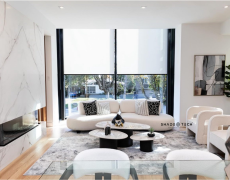
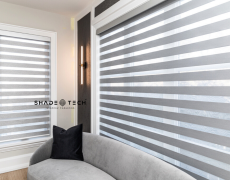
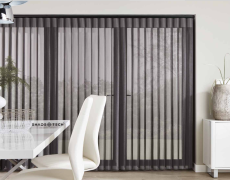







You notice it most around 3 p.m. The west-facing glass starts heating up the room, glare hits the TV, and the shades you meant to close are still open. That is exactly where apple homekit window shades stop feeling like a gadget and start feeling like a better way to run the house. With the right setup, your shades respond to time of day, sunlight, voice commands, and daily routines without adding friction to your schedule.
For homeowners in Dallas-Fort Worth, that convenience matters for more than comfort alone. Large windows, strong sun exposure, and long cooling seasons make shade automation a practical upgrade. When smart shades are custom-built, professionally installed, and integrated correctly with Apple Home, they can improve privacy, reduce heat gain, protect interiors from UV damage, and make the home feel more polished every day.
What apple homekit window shades actually do
At the simplest level, HomeKit-compatible shades let you control window coverings from the Apple Home app, Siri, and automations built around your routines. You can raise a bedroom shade with a voice command, close an entire wall of living room shades from your phone, or set scenes that adjust multiple shades at once.
The real value is not tapping a button on a screen. It is automation that works quietly in the background. A “Good Morning” scene can open bedroom shades and let in natural light. An “Away” scene can lower shades for privacy while helping reduce solar heat buildup. In media rooms or open-concept living spaces, shades can lower automatically at sunset when glare becomes a problem.
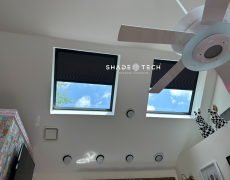
That level of control is especially useful in homes with tall windows, hard-to-reach openings, or wide expanses of glass. In those spaces, manual operation is inconvenient enough that shades often stay in the wrong position for hours. Motorization fixes that. HomeKit makes it easy to use.
Why HomeKit matters in a custom shade system
Not every smart shade experience is equal. Some products technically connect to an app but feel disconnected from the rest of the home. HomeKit matters because it gives Apple users a cleaner control experience across iPhone, iPad, Apple Watch, HomePod, and Apple TV.
For many households, that means less app switching and fewer workarounds. If your lights, locks, thermostat, and shades live inside one ecosystem, the automations become more practical. You are not just controlling a shade. You are setting a house-wide routine.
That said, compatibility should never be the only decision point. The motor, power method, fabric, alignment, and installation quality still determine whether the finished system feels premium. A shade that appears smart on paper can still underperform if it is noisy, poorly sized, or installed without precision. In custom window treatments, the hardware and craftsmanship matter just as much as the platform.
Where smart shades make the biggest difference
Homeowners often start with one problem room. It may be a primary bedroom that gets bright too early, a living area with afternoon glare, or a two-story window wall that is difficult to reach. Once those shades are automated, the rest of the house usually follows.
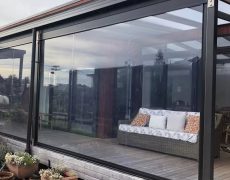
Bedrooms benefit from scheduled privacy and more natural wake-ups. Family rooms benefit from glare reduction at the exact time it becomes disruptive. Dining areas and offices benefit from better light control without interrupting the day. In homes with expansive contemporary glass, automation also helps maintain a cleaner visual line because the shades move together instead of ending up at uneven heights.
Commercial spaces can benefit too. Conference rooms, hospitality settings, and client-facing interiors often need a more polished appearance along with repeatable control. In those environments, automation supports both presentation and daily efficiency.
Choosing the right apple homekit window shades for your home
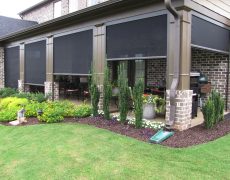
The right solution depends on the windows, the room, and how you want the system to behave. Roller shades are a common fit for modern interiors because they keep the look clean and integrate well with motorization. Solar shades can preserve views while reducing glare and UV exposure. Blackout materials work well in bedrooms and media spaces. Layered solutions can make sense when privacy, light filtering, and room-darkening all matter in the same area.
Power is another important factor. Some systems use rechargeable batteries, while others are hardwired. Battery-powered shades can be a strong fit in retrofit projects where opening walls is not ideal. Hardwired systems are often preferred in large custom homes, major remodels, or projects with many shades because they reduce long-term maintenance and support a more permanent infrastructure.
This is where custom planning becomes important. The best outcome comes from matching motor type, fabric weight, shade size, control method, and installation conditions. Oversized windows, high ceilings, and grouped shade layouts all need careful specification. A one-size-fits-all product rarely performs like a true custom system.
Installation is where performance is won or lost
Smart shades are precision products. If measurements are off, alignment is inconsistent, or programming is rushed, the result feels disappointing fast. That is why professional measurement and installation are not just add-ons. They are part of the product.
A properly installed system should move smoothly, stop at consistent positions, and fit the window with a clean finished look. Brackets should be secure, fabric lines should be straight, and grouped shades should operate in sync. Once the physical installation is complete, the smart-home setup should be equally deliberate. Rooms should be named clearly, scenes should reflect how the household actually lives, and controls should feel intuitive from day one.
For North Texas homes, installation planning also has to account for sun exposure and heat load. South- and west-facing windows can benefit from specific openness levels, fabric selections, and automation schedules. The goal is not just motorization. It is better comfort and control in the conditions the home actually faces.
The trade-offs homeowners should understand
Apple HomeKit window shades are a premium upgrade, and premium upgrades deserve a clear-eyed evaluation. Cost is higher than manual shades, particularly when you move into larger windows, premium fabrics, or whole-home automation. If budget is the main priority, it may make more sense to automate the rooms where the benefit is highest first.
There is also a difference between retail smart shades and a professionally integrated custom solution. Off-the-shelf products can be attractive for smaller spaces or simpler needs, but they may offer fewer fabric choices, narrower size ranges, less refined motors, and less support when something needs adjustment. Custom systems cost more because they solve more variables and deliver a better finish.
Connectivity is another consideration. HomeKit is reliable when the ecosystem is set up correctly, but smart-home performance still depends on good network conditions, proper device configuration, and compatible hardware. That is one more reason setup matters. A technically compatible product is not the same thing as a well-executed system.
Why local manufacturing and service matter
With smart shades, lead times, precision, and service after installation all matter. Working with a local manufacturer and installer creates advantages that national resellers and big-box channels often cannot match. Measurement errors can be caught earlier. Product choices can be tailored more precisely. Service is more direct if a shade needs adjustment or if you want to expand the system later.
That matters even more in a market like DFW, where homes often feature oversized openings, strong sunlight, and design expectations that leave little room for compromise. ShadeoTech builds around that reality by combining local manufacturing, custom sizing, professional installation, and smart-home setup into one process. The result is not a boxed product with a support number. It is a fitted system designed for the house, the climate, and the way you live.
How to decide if apple homekit window shades are worth it
If you already use Apple Home and want your shades to work like the rest of your home, the answer is often yes. The upgrade tends to pay off most in rooms where sunlight, privacy, or hard-to-reach windows create a daily annoyance. It also makes sense for homeowners who care about clean design and want technology that blends into the space rather than calling attention to itself.
The strongest case for smart shades is not novelty. It is consistency. Rooms stay more comfortable. Interiors are better protected. Privacy happens on schedule. The house responds with less effort from you.
If you are planning a renovation, building a new home, or replacing outdated window coverings, this is the right moment to think beyond manual operation. The best smart shade systems do not just move up and down on command. They make the home work better in ways you notice every single day.
A good smart-home upgrade should remove little frustrations you have gotten used to. When your shades rise and lower exactly when they should, comfort stops being another task on your list.
