

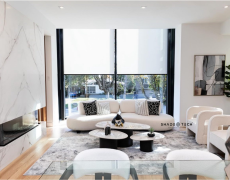
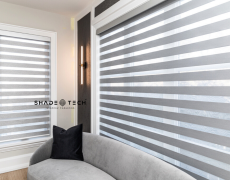
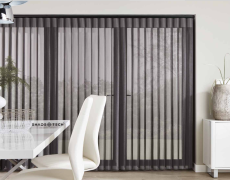
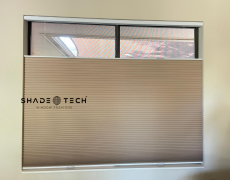

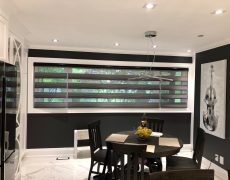
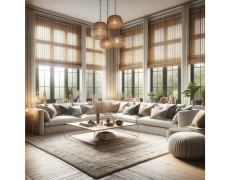
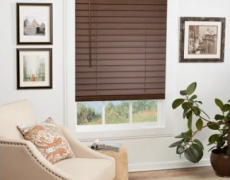
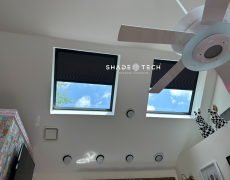


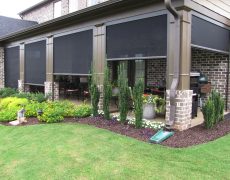

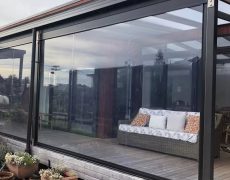



A west-facing room at 4:30 p.m. can turn a beautiful Dallas home into a glare-filled, overheated space in minutes. Voice controlled shades give homeowners a faster answer than getting up, finding a remote, or leaving the room uncomfortable until sunset. A simple command can lower shades for privacy, raise them for a view, or adjust a room before the afternoon sun reaches its peak.
That convenience is only part of the value. When the system is designed around the window, fabric, motor, and smart-home platform, motorized shades become a practical tool for managing heat gain, UV exposure, and daily routines. For North Texas homes with expansive glass, tall windows, and open-concept living areas, the details behind the command matter as much as the command itself.
What Voice Controlled Shades Actually Do
Voice control allows a compatible smart-home assistant to send commands to motorized window shades. Depending on the system and setup, a homeowner can say things like, “Lower the living room shades,” “Open the kitchen shades to 50 percent,” or “Close all downstairs shades.” The best systems also support room-based controls, grouped shades, and preset scenes.
The distinction is important: voice control is not simply a motor attached to a shade. A reliable installation combines correctly sized motors, appropriate power options, a stable communication method, and integration with the home’s preferred smart-home ecosystem. If any one of those elements is poorly planned, the experience can feel inconsistent.
For many homeowners, voice commands are most useful at high-friction moments. They make sense when hands are full in the kitchen, when a room has hard-to-reach windows, when glare hits a home office screen, or when guests are arriving and privacy needs to change quickly. They are also valuable for homeowners who want easier day-to-day control without handling cords or remotes.
The Right Smart-Home Platform Matters
A voice-controlled shade system should fit the technology already used in the home. Alexa, Google Home, Apple HomeKit, and Matter-compatible systems each offer different strengths, and compatibility should be confirmed before equipment is selected.
Alexa is often a natural fit for homes with Echo devices and broad smart-device adoption. Google Home can work well for households already using Google speakers, displays, and home controls. Apple HomeKit is a strong choice for homeowners who prefer control through iPhones, iPads, Siri, and Apple Home. Matter is increasingly relevant because it is designed to improve interoperability between supported devices and platforms.
There is no universal “best” platform. An Apple-focused household may prioritize HomeKit support and privacy preferences. A family with several existing Alexa routines may want shades that can join those routines immediately. In a new build, the best decision may be the platform the builder, integrator, and homeowner can support consistently over time.
Voice commands should also be paired with automation. Saying “close the shades” is convenient, but an automated schedule that lowers solar shades before a room overheats can be more useful. Scenes can coordinate shades with lighting, temperature settings, and entertainment systems. For example, a “movie time” scene might lower living room shades, dim lights, and reduce screen glare in one action.
Why Custom Shades Perform Better in Dallas-Fort Worth
Dallas-Fort Worth sunlight is not a minor design consideration. Large windows create dramatic views and natural light, but they can also bring substantial heat, fading, glare, and uneven comfort across a room. The right shade fabric and openness factor determine how much light enters, how much of the view remains, and how effectively the system helps manage solar exposure.
Solar screen fabrics are a common choice for view-facing rooms because they reduce glare and filter harsh sunlight while preserving an outward view during the day. Lower openness fabrics provide greater privacy and solar control, while higher openness fabrics maintain more visibility. Blackout shades are usually better suited to bedrooms, media rooms, nurseries, and spaces where near-total darkness is the goal.
Color matters as well. Darker solar fabrics can provide clearer outward visibility, while lighter fabrics may better complement the interior palette and reflect more light. The correct choice depends on window orientation, room use, desired privacy, and the home’s overall design. A fabric that performs well on a shaded north-facing window may not be the best choice for a wall of west-facing glass.
Custom manufacturing also addresses dimensions that off-the-shelf shades frequently cannot handle well. Large contemporary windows, corner windows, narrow sidelights, and high ceiling applications demand accurate measuring, proper bracket placement, and motors sized for the shade’s weight and width. A shade that looks refined in a showroom can underperform if it is not engineered for the actual opening.
Power Planning Is a Critical Early Decision
Motorized shades are typically powered by rechargeable battery, hardwired low-voltage power, or plug-in power. Each option has a place, but the right selection should be made before installation day whenever possible.
Battery-powered shades are often ideal for existing homes where opening walls is not desirable. They offer a clean appearance and can be installed without visible cords when planned correctly. Their trade-off is maintenance: batteries need recharging or replacement on a schedule that varies by shade size, usage, fabric weight, and exposure.
Hardwired shades are especially compelling for new construction, major renovations, commercial spaces, and rooms with many shades. They eliminate routine battery maintenance and are well suited to large installations. The trade-off is that electrical planning must happen early, often alongside the builder, electrician, or low-voltage contractor.
Plug-in power can be a practical middle ground when outlets are positioned near the windows and can be concealed appropriately. It is not always the cleanest choice for a highly finished room, but it can be effective in selected applications.
A professional consultation should identify the power path, control requirements, and access needs before finalizing the order. This prevents a common disappointment: selecting a beautiful motorized shade and later discovering that the preferred power method or smart-home connection was never accounted for.
Installation Determines How the System Feels Every Day
Motorized shades have less tolerance for guesswork than manual shades. Mounting height, bracket alignment, roller clearance, hem bar position, and side gaps all affect appearance and operation. On tall or wide openings, minor measuring errors become noticeable quickly.
Professional installation is also where voice-controlled functionality moves from a product feature to a working home system. Each shade needs to be paired, named logically, assigned to the right room, and tested through the selected app, remote, and voice assistant. Names should be simple enough to remember and distinct enough to avoid confusion. “Living room west shades” is more useful than a generic device name that no one in the household will recall.
For multi-room homes, grouping is equally important. Homeowners may want one command for all first-floor shades, another for the primary suite, and a separate command for patio-facing shades. A well-organized setup should feel intuitive for every member of the household, not just the person who configured it.
ShadeoTech approaches this as a complete local process: consultation, precision measurement, Texas manufacturing, professional installation, and smart-home setup. That integrated approach helps avoid the handoffs that can occur when shades, installation, and automation are purchased from separate providers.
Where Voice Control Makes the Biggest Difference
In living rooms and great rooms, voice control helps manage glare without interrupting conversation or entertainment. In kitchens, it is useful when cooking or cleaning. In bedrooms, scheduled opening and closing can support a more consistent morning and evening routine, while a voice command offers quick privacy when needed.
Home offices benefit from precise adjustments. Instead of closing a shade completely, a homeowner can lower it to a position that blocks monitor glare while retaining daylight. For tall foyer windows and other difficult-to-reach areas, motorization is often less of a luxury and more of a practical necessity.
Commercial spaces also benefit when shades are specified for daily use rather than treated as decorative accessories. Medical clinics can improve patient privacy and control sun exposure in waiting areas. Restaurants can reduce afternoon glare at tables without sending staff around the dining room to adjust every window. Builders and contractors can add a highly visible smart-home feature that supports both design and comfort.
Questions to Ask Before Choosing a System
Before selecting voice controlled shades, consider how the room is used, what time of day sunlight creates problems, and which smart-home platform the household actually relies on. Also ask whether the goal is glare reduction, privacy, blackout performance, UV protection, or all of the above. Those answers guide fabric selection more effectively than color alone.
It is also wise to ask how shades will be powered, what happens if Wi-Fi is temporarily unavailable, whether a physical remote is included, and how future additions will be handled. Voice control is convenient, but reliable systems should still offer simple manual app or remote control options.
The best shade system does not call attention to its technology every day. It simply responds when sunlight shifts, privacy is needed, or the room needs to feel more comfortable. Start with the windows that create the greatest daily frustration, then build a solution that is tailored to the way the space is actually lived in.
