

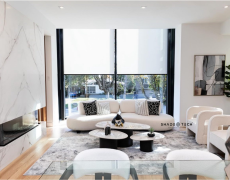
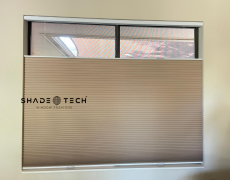

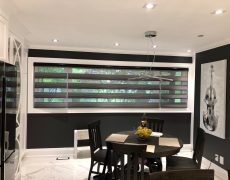
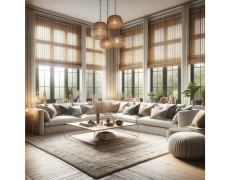
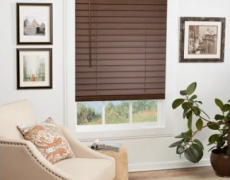
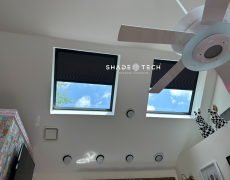






A west-facing living room in Dallas can go from bright and inviting to uncomfortably hot in a matter of minutes. Smart shading technology gives homeowners a more precise answer than closing every blind by hand: window coverings that respond to a schedule, a voice command, a wall control, or the changing conditions outside.
For homes with expansive glass, tall ceilings, and rooms that receive intense afternoon sun, automation is not just a convenience feature. It is a practical way to manage heat gain, glare, privacy, and UV exposure without interrupting how the space is used. The right system also preserves the clean, tailored appearance expected from a custom window treatment.
What Smart Shading Technology Actually Does
Smart shades and motorized blinds use a concealed motor to raise, lower, tilt, or adjust a window covering. That motor can be controlled with a handheld remote, a wall-mounted keypad, a mobile app, or a connected smart-home platform. Depending on the system, homeowners can also use Alexa, Google Home, Apple HomeKit, or Matter-compatible controls.
The technology becomes more valuable when it is programmed around real routines. Shades can lower in a media room before a movie starts, open gradually in the morning, or close automatically on sun-exposed windows before afternoon heat builds. A single command can manage several shades at once, which matters in open-concept homes and spaces with hard-to-reach windows.
Automation is not limited to residential interiors. Restaurants can reduce harsh glare during peak dining hours. Medical clinics can improve patient privacy and daylight control. Offices and hospitality spaces can create consistent conditions across multiple rooms without asking staff to adjust every window covering throughout the day.
Why It Matters in North Texas
North Texas sunlight is a design consideration, not an afterthought. Large windows bring in views and natural light, but they can also increase solar heat, fade flooring and furnishings, and make televisions or computer screens difficult to see. Smart shading technology helps address those issues at the window, before direct sun dominates the room.
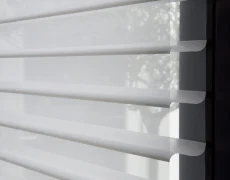
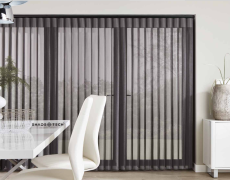
Solar screen fabrics are especially useful where preserving the view is part of the goal. They filter glare and UV exposure while maintaining a degree of outward visibility during the day. In bedrooms, nurseries, and media rooms, room-darkening or blackout materials offer stronger light control. Many homes benefit from combining different fabrics and opacity levels based on each room’s orientation and purpose.
The energy benefit depends on the glass, insulation, HVAC system, fabric selection, and how shades are programmed. Automated window coverings are not a replacement for efficient windows or proper insulation. They can, however, reduce the solar load entering a room during the hottest parts of the day, helping interiors feel more stable and reducing unnecessary strain on cooling systems.
The Best Automation Starts With the Window
A polished installation begins with measurement, not an app. Motorized shades need accurate dimensions, the correct mounting approach, and enough clearance for brackets, fascia, and fabric movement. Oversized windows, corner windows, curved walls, and high transoms require particular attention because small errors become more visible at scale.
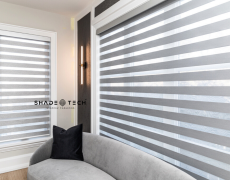
Fabric choice should come before selecting automation features. A light-filtering roller shade may be ideal for a bright kitchen where daylight is welcome, while a dual-shade configuration may be better for a primary bedroom that needs both daytime filtering and nighttime privacy. Wood or composite shutters can suit homeowners who prefer architectural structure and adjustable louvers over a fabric treatment.
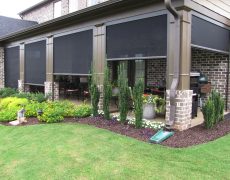
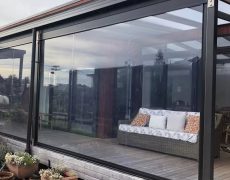
For patios, outdoor motorized screens add another layer of control. They can reduce glare, insects, and windblown debris while making an outdoor kitchen or covered living area more usable. The right material must be selected for the exposure level, opening size, and desired balance of airflow, visibility, and solar protection.
Power Options Affect the Long-Term Experience
Motorized shades are commonly powered by rechargeable batteries, plug-in power, or low-voltage hardwired systems. Each option has a place, and the best choice depends on the project.
Rechargeable battery motors work well for existing homes where opening walls is not desirable. They keep the installation visually clean and are practical for standard-size shades, although batteries will need periodic charging or replacement. The timing varies with shade size, use frequency, fabric weight, and motor type.
Plug-in motors avoid battery maintenance but require a nearby outlet and thoughtful cable routing. They can be a sensible fit in certain retrofit projects, especially where outlets are already positioned near windows.
Hardwired low-voltage motors are often the preferred solution for new construction, major remodels, and large groups of shades. They provide dependable power without routine charging and support a highly refined finish. The trade-off is planning: wiring should be coordinated early with the builder, electrician, and smart-home integrator.
Smart-Home Compatibility Is More Than Voice Control
Voice control is useful when hands are full or a window is across the room, but it should not be the only way a shade system works. A well-designed installation offers intuitive local controls, dependable remotes, scheduled automation, and app access alongside voice assistant integration.
Platform compatibility also deserves a closer look. A household built around Apple HomeKit may have different priorities than one using Alexa or Google Home. Matter is increasingly relevant because it supports broader interoperability across smart-home ecosystems, but compatibility should still be verified at the product and controller level. Not every motor, bridge, feature, or automation behaves identically across platforms.
The most useful scenes tend to be simple. A “Good Morning” scene can raise bedroom shades and bring natural light into common spaces. An “Away” scene can lower selected shades for privacy and sun protection. A “Movie Time” scene can dim the room by lowering screens or blackout shades. These settings should serve daily life, not add another layer of technology to manage.
Design Details That Separate Custom From Off-the-Shelf
Motorization should not dictate the design. Custom fabrication allows the treatment to match the window, architecture, and interior palette rather than forcing a room to fit stock sizes and limited colors. Details such as fabric texture, openness factor, hardware finish, fascia style, and mounting position all influence the final result.
For modern Dallas-Fort Worth homes, concealed pockets and recessed mounting can create a minimal appearance, especially with floor-to-ceiling glass. In other spaces, decorative valances, fabric-wrapped fascias, or shutters may better complement the architecture. The goal is to conceal the mechanical components where appropriate while making the shading solution feel intentional.
Professional installation matters as much as the product itself. Level alignment, secure mounting, tension adjustment, programming, and final testing determine whether shades operate quietly and consistently. For integrated projects, setup should include room names, control grouping, smart-home connection, and a clear handoff so the owner knows how to use the system from day one.
A Better Way to Plan a Shading Project
Start by identifying the rooms that create the most friction. It may be a glass-walled family room that overheats after 3 p.m., a bedroom that receives early sunrise, or a patio that is beautiful but underused in the summer. Then consider the desired light level, privacy needs, power access, and preferred control method for each opening.
It also helps to think beyond individual shades. A coordinated plan can group windows by elevation, room function, or schedule, creating a more consistent result throughout the house. For builders and designers, early coordination prevents last-minute compromises around power, trim, recessed pockets, and control locations.
ShadeoTech approaches this process with local manufacturing, precision measurement, professional installation, and smart-home setup under one roof. That integrated approach is particularly valuable when a project includes large windows, multiple fabric types, exterior screens, or complex automation requirements.
The most satisfying smart shade system is the one homeowners stop thinking about because it works at the right moment. When sunlight is controlled before it becomes glare, privacy arrives on schedule, and a room stays comfortable without constant adjustment, the technology has done exactly what it should.
