

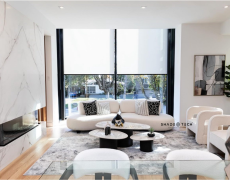
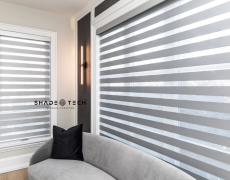
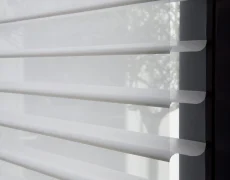
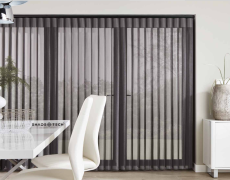







A west-facing living room in Dallas can go from bright and inviting to difficult to use in a matter of minutes. The most meaningful shading technology trends are responding to that reality with better automation, more refined materials, and controls designed around how people actually use a home or workplace. For North Texas properties with broad glass walls, tall ceilings, and strong afternoon exposure, window treatments are becoming part of the building’s comfort system rather than a finishing detail added at the end.
The shift is not about adding technology for its own sake. It is about making shades, blinds, shutters, and outdoor screens more precise: opening when daylight is useful, lowering when glare builds, protecting interiors from UV exposure, and fitting cleanly into a connected home.
Smart shade control is moving beyond the app
Motorization is no longer the novelty. The more significant change is how reliably a shade system can work with the rest of the home. Homeowners increasingly expect a custom shade to respond to a wall keypad, a handheld remote, a phone, a voice command, or a scheduled routine without needing a different system for each room.
Compatibility with Alexa, Google Home, Apple HomeKit, and Matter-enabled platforms is shaping purchase decisions. A morning routine can raise bedroom shades gradually, while an evening routine can lower privacy shades and reduce glare in a media room. In a commercial setting, a restaurant can manage sun-facing windows before a busy service period, and a medical clinic can maintain comfortable, private treatment rooms throughout the day.
Compatibility still deserves careful planning. Not every motor, hub, and smart-home platform offers the same features, and a system that works through a bridge may behave differently from one with native integration. The right approach starts with the client’s existing ecosystem, Wi-Fi conditions, control preferences, and the number of openings involved. A professional setup helps prevent the common frustration of having premium motorized shades that technically connect but are awkward to operate.
Shading technology trends favor automation that reacts to conditions
Scheduled scenes remain useful, but fixed schedules do not account for a cloudy afternoon, a changing season, or a room that receives direct sun only at certain times of year. That is why solar-aware automation is gaining traction. Sun sensors, temperature triggers, and smart-home scenes can make window coverings more responsive to actual conditions.
For a south- or west-facing room, shades can lower when sunlight reaches a defined threshold and rise later to preserve views. The benefit is practical: less glare on televisions and work screens, lower heat gain near the glass, and better protection for flooring, artwork, upholstery, and wood finishes. In homes with large contemporary windows, this targeted control can make a room more usable without keeping it dark all day.
The trade-off is calibration. Aggressive automation can become annoying if shades lower while someone wants an open view, which is why manual overrides and thoughtfully selected scene settings matter. The best systems give owners control over the rules rather than treating every sunny day the same.
Daylight management is replacing all-or-nothing coverage
Many homeowners do not want blackout conditions in every room. They want filtered daylight without harsh glare, along with privacy when it is needed. Dual-shade systems address this with two layers, typically a solar screen for daytime light control and a room-darkening fabric for evenings or sleep.
This is especially useful in open-plan homes, offices, conference rooms, and hospitality spaces. A solar fabric can preserve outward visibility during the day while reducing glare and UV exposure. A blackout or privacy layer can take over when the room’s use changes. The result is a more flexible window treatment than a single fabric trying to solve every condition.
Fabric openness should be selected carefully. A more open weave generally preserves a clearer view but allows more light through. A tighter weave improves glare and heat control but can reduce outward visibility and make the room feel more enclosed. Orientation, glass size, nearby landscaping, and the client’s privacy expectations should guide that choice.
Cleaner design is driving concealed and custom-built systems
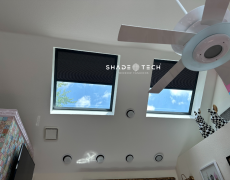
Technology is also changing how shades look when they are not in use. Recessed pockets, fascia systems, coordinated hardware, and carefully sized shade bands help motorized treatments disappear into the architecture. This matters in Dallas-Fort Worth homes where tall expanses of glass, multi-panel doors, and minimal interiors leave little room for visual clutter.
A clean installation depends on details that cannot be solved with an off-the-shelf measurement. The mounting surface, window depth, trim profile, electrical access, roll direction, fabric weight, and clearance around doors all affect the final appearance and performance. Custom manufacturing and precision measurement are what turn a motorized shade from a gadget into a finished architectural element.
For remodels, battery-powered motors can offer a strong solution when running new power is impractical. They avoid opening walls and can provide a clean installation in many applications. For new construction, major renovations, and large banks of shades, hardwired power is often the better long-term choice. It reduces maintenance and is particularly well suited to high or hard-to-reach windows.
Exterior screens are becoming a core comfort upgrade
Indoor shades manage light after it passes through the glass. Exterior solar screens stop a meaningful portion of solar load before it reaches the window or patio area, which makes them increasingly valuable in North Texas.
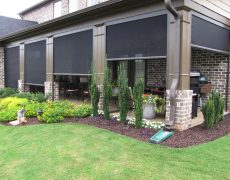
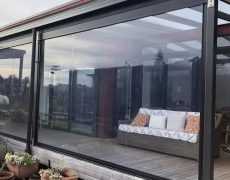
Motorized exterior screens can help turn a covered patio into a more comfortable living area by reducing low-angle sun, insects, wind-blown debris, and visual exposure. On large openings, they can also create a sense of enclosure without the permanence of a solid wall. For restaurants and hospitality venues, this flexibility can extend the useful hours of outdoor seating while keeping the space polished.
Exterior products need to be specified for the application, not simply chosen by color. Wind exposure, opening width, track design, mounting material, drainage, and the desired level of insect or solar control all matter. A screen that looks good but is undersized or poorly anchored for the site will not deliver the durability a premium installation should provide.
Energy performance is becoming easier to measure and feel
Energy efficiency remains one of the strongest reasons to invest in advanced shading, but the benefit is often felt before it appears on a utility bill. Rooms near large windows become more comfortable. HVAC systems do not have to fight as much direct solar heat. Furniture and finishes receive less UV exposure. These gains are particularly relevant in homes with extensive glass and in commercial spaces where occupants sit near perimeter windows.
No window treatment can replace high-performance glass, proper insulation, or a well-designed HVAC system. Still, properly selected shades can be a valuable layer in an overall comfort strategy. Reflective backing, solar fabrics, cellular constructions, shutter panels, and exterior screens each address heat and light differently. The right product depends on whether the priority is insulation, glare reduction, view preservation, privacy, or architectural style.
Professional integration is becoming the real luxury
The strongest trend is not a specific motor or fabric. It is the expectation that the entire project will be handled as one coordinated system. Clients want a consultant who understands daylight, a measurement process that accounts for construction realities, locally built products, professional installation, and smart-home programming that works on move-in day.
That standard is especially valuable for builders, designers, clinics, and restaurant owners managing multiple windows and a defined project schedule. A fragmented purchase can leave responsibility scattered between the shade retailer, electrician, installer, and automation provider. A full-service specialist can coordinate those decisions earlier, when power locations, pockets, controls, and finish details are still easy to address.
At ShadeoTech, local Texas manufacturing supports that level of control, from custom dimensions and premium materials to installation and connected-home setup. The goal is not to fill a room with more devices. It is to make comfort, privacy, and daylight control feel intentional every day.
For any upcoming window treatment project, start by identifying the rooms where heat, glare, privacy, or difficult-to-reach windows create the most friction. Those spaces usually reveal the smartest place to invest first.
