








A patio can be one of a restaurant’s highest-value seating areas – until a 100-degree Dallas afternoon, a sudden gust of wind, or a wave of insects sends guests inside. Custom restaurant patio screens give operators a practical way to protect that revenue-producing space without closing it off or compromising the atmosphere that made the patio appealing in the first place.
For restaurants, bars, medical campus cafes, and hospitality venues, the right exterior screen system is not simply an amenity. It is a controllable layer between guests and North Texas weather. It can reduce harsh glare, soften heat, limit wind-driven debris, and create a more comfortable perimeter for longer stays, stronger reviews, and better table turns.
Why patio comfort affects restaurant revenue
Outdoor seating is often designed around visual appeal: open views, natural light, landscaping, and connection to the surrounding neighborhood. Those qualities matter, but they do not guarantee that a patio will be usable at noon in August or during a blustery spring evening.
Heat and direct sun can make certain tables effectively unmarketable for hours. Low-angle glare creates problems for guests reading menus and staff operating handheld payment devices. Wind can scatter napkins, move lightweight furniture, and make food service more difficult. Mosquitoes and flies can turn a promising patio experience into a short visit.
Restaurant patio screens address these operational issues while preserving flexibility. When conditions are pleasant, the screens can retract and leave the patio open. When the sun shifts, wind picks up, or pests become disruptive, the system can lower quickly to create a more protected dining zone.
That flexibility is especially valuable in Dallas-Fort Worth, where a patio may see intense sun, high heat, sudden storms, and large temperature changes in the same week.
What restaurant patio screens actually do
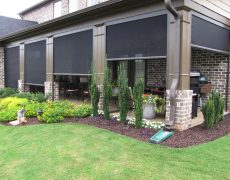
Exterior screens are engineered to perform differently from interior shades or decorative drapery. They are mounted around an outdoor opening, pergola, covered patio, or open-air dining structure and lower vertically to provide solar, privacy, wind, and insect management.
The exact result depends on the screen fabric, opening dimensions, side retention system, and installation details. A well-designed system should be specified around how the patio operates, not selected as a generic outdoor product.
Solar screen fabrics reduce glare and heat
Solar fabrics filter a portion of direct sunlight before it reaches guests, tables, flooring, and adjacent glazing. They can reduce glare without making the patio feel dark or enclosed. Openness level matters: a more open weave preserves clearer outward views, while a tighter weave provides greater shade and privacy.
For west-facing patios, where late-afternoon sun can be especially punishing, this can extend usable seating well into the evening. It also helps protect upholstery, wood finishes, signage, and other exterior furnishings from UV exposure.
No screen will replace a complete cooling strategy in extreme heat. Fans, shade structures, airflow, and appropriate seating layout still matter. But blocking solar load at the edge of the patio is far more effective than asking guests to tolerate direct sun at the table.
Insect screens help protect the dining experience
Insect mesh can be an excellent choice for patios near landscaping, water features, or evening activity zones. It creates a physical barrier that can reduce the intrusion of flying insects while allowing air movement and visibility.
A screen system does not eliminate the need for proper sanitation, waste handling, or pest management. It does, however, give restaurant operators another reliable layer of control at the patio perimeter. For venues that serve dinner, cocktails, or desserts outdoors, that added comfort can be meaningful.
Guided systems provide a cleaner, more durable closure
For commercial applications, a guided track system is often preferable to a loose-hanging screen. The screen fabric travels within side channels, which keeps the panel aligned and helps resist movement in light-to-moderate wind conditions.
This produces a more finished appearance and a better seal along the sides than a basic manually operated shade. It is also better suited to large openings, frequent daily use, and patios where visual presentation is part of the brand experience.
Wind ratings and performance limits should always be evaluated for the specific building, screen size, and exposure. Exterior screens are not storm shutters, and they should not be treated as protection during severe weather unless the system has been specifically engineered and approved for that purpose.
Motorization makes the system operationally useful
A manually operated screen may work for a small, low-traffic patio. In a restaurant environment, it can quickly become one more task competing for staff attention during service.
Motorized restaurant patio screens make adjustment fast and repeatable. A manager can lower a bank of screens before the lunch rush, raise them for a breezy evening service, or adjust one exposed side of the patio as the sun moves. The result is a more consistent guest experience without requiring staff to handle multiple cranks, cords, or panels.
For larger patios, screens can be grouped into zones. The host stand, bar terrace, private event area, and main dining section can each operate independently. This matters when one portion of the patio needs shade while another benefits from an open view.
Automation can also be configured around schedules or smart controls. A west-facing screen may lower automatically before the strongest afternoon glare arrives, then rise after sunset. Weather sensors can be considered where appropriate, although every system should include clear operating procedures for staff when weather conditions change quickly.
ShadeoTech can integrate motorized exterior screen solutions into a broader smart-control strategy, giving commercial operators a polished, professionally installed system rather than a collection of disconnected components.
Selecting the right screen for the space
The best screen choice begins with a site evaluation. A patio that faces a busy street has different needs from a rooftop lounge, a medical clinic waiting patio, or a covered restaurant courtyard. Visibility, sun orientation, local wind exposure, ceiling structure, drainage, access points, and daily service flow should all inform the design.
Start with the operating problem
If late-day heat is the primary complaint, solar fabric and thoughtful zoning should lead the conversation. If insects are the main issue, insect mesh and perimeter coverage become more important. If wind and blowing debris are affecting the dining area, a guided system with carefully assessed opening sizes may be the better fit.
Many commercial patios need a combination of benefits. A solar screen can improve comfort dramatically, but it may not provide the insect control of a dedicated mesh. The right specification is often a trade-off between view-through, shade level, privacy, airflow, and protection.
Match the fabric to the brand and setting
Exterior screens should support the restaurant’s design rather than look like an afterthought. Neutral colors often complement contemporary facades and keep the view visually calm. Darker fabrics can offer stronger outward visibility during daylight, while lighter colors may better suit certain architectural palettes and heat-reflective goals.
Fabric selection also affects how enclosed the patio feels. A premium dining patio may prioritize views and subtle sun filtering. A fast-casual restaurant with broad west exposure may prioritize stronger solar control and easy daily operation. Neither approach is universally better. It depends on the business model, architecture, and guest expectations.
Plan for professional measurement and installation
Commercial exterior openings are rarely perfectly square, especially on older buildings or custom patio structures. Precision measurement is essential for clean alignment, dependable travel, and long-term performance.
Professional installation also addresses the details that determine whether an exterior screen looks intentional: mounting surfaces, electrical access, track alignment, bottom-bar clearance, drainage, and coordination with doors, heaters, fans, signage, and furniture. A factory-built system can only perform as well as the way it is fitted to the structure.
Operational details that are easy to overlook
Patio screens should be part of the restaurant’s service plan, not installed and forgotten. Staff should know when to deploy them, who is responsible for controls, and when screens must be raised due to changing weather or closing procedures.
Cleaning requirements are generally manageable but should be considered. Outdoor fabrics collect dust, pollen, and occasional food-service residue. Periodic gentle cleaning and inspection of tracks, housings, and control components helps maintain a polished appearance.
It is also wise to think through emergency egress and guest circulation before installation. Screens should not interfere with required exits, accessible routes, or the safe movement of staff carrying trays. A custom consultation can identify these constraints early, before they become costly revisions.
A patio should adapt to the day, not surrender to it
A well-designed outdoor dining area should not become unusable because the sun moved, the wind shifted, or insects arrived after dusk. Custom restaurant patio screens give operators a refined, controllable way to protect comfort while maintaining the open-air experience guests came for.
The strongest result comes from treating the screen system as part of the patio’s architecture and operations: measured precisely, built for the exposure, installed professionally, and automated around the rhythm of service. That approach keeps more tables comfortable when conditions are least forgiving – and makes the patio feel like a dependable part of the business rather than a seasonal gamble.
