








A Dallas patio can be the best room in the house until mosquitoes, flies, wasps, and no-see-ums decide to join dinner. The best patio screens for bugs do more than put a barrier between your family and insects. They preserve airflow, hold up to North Texas sun and wind, complement the architecture of the home, and make it practical to use an outdoor living space more often.
For a premium patio, a temporary magnetic mesh panel or basic roll-down screen rarely delivers the result homeowners expect. The right choice depends on your patio opening, the insects you are dealing with, your need for sun control, and whether you want the screens to disappear when the weather is pleasant. In many Dallas-Fort Worth homes, a professionally fitted motorized screen system provides the strongest combination of insect protection, shade, and convenience.
What Makes a Patio Screen Effective Against Bugs?
Insect protection starts with the mesh, but the frame and installation matter just as much. A screen can use an excellent fabric and still let insects in if there are gaps along the sides, bottom, or corners. This is especially common with off-the-shelf products installed on uneven patio openings or beneath beams that are not perfectly square.
A custom patio screen is measured to the finished opening and guided within side tracks or a dedicated framing system. That controlled fit helps prevent mosquitoes and small flying insects from slipping around the edges. It also keeps the screen aligned during daily operation and gives the finished patio a cleaner, more intentional appearance.
Mesh openness is the other major consideration. A tighter weave blocks smaller insects more effectively, but it can slightly reduce visibility and airflow. A more open mesh improves outward views and ventilation but may not be the right answer near standing water, heavily landscaped yards, or areas where tiny biting insects are a recurring problem. The best selection is usually a balance, not simply the finest mesh available.
The Best Patio Screens for Bugs: Your Main Options
Standard insect mesh for open-air comfort
Standard insect mesh is a practical choice for covered patios that already receive manageable levels of sunlight. It blocks common mosquitoes, houseflies, gnats, and larger pests while maintaining a bright, open feel. For homeowners who mainly want to enjoy evening meals or morning coffee without swatting bugs, this is often the most visually subtle option.
The trade-off is that standard insect mesh does not provide the same heat and glare control as a solar screen fabric. On west-facing patios in Dallas-Fort Worth, afternoon sun can still make the space uncomfortable even when insects are kept out.
Fine insect mesh for no-see-ums and small pests
Fine insect mesh is designed for smaller insects that can pass through conventional screen openings. It is especially useful near lakes, greenbelts, creeks, dense plantings, or yards with frequent gnat and midge activity. If tiny insects are the reason your family avoids the patio after sunset, a tighter mesh deserves serious consideration.
The cost of that extra protection is modestly reduced airflow and a slightly softer view through the screen. On a large patio with multiple openings, professional guidance is useful here. Some homeowners use finer mesh only on the sides facing vegetation or water while choosing a more open fabric elsewhere.
Solar screen fabrics that also block insects
Solar screen fabrics are often the most versatile option for North Texas patios. They serve as an insect barrier while reducing glare, filtering UV exposure, and cutting a meaningful portion of solar heat gain. That makes them a strong fit for patios that face south or west, outdoor kitchens with stainless appliances, and seating areas where low sun makes the space hard to use.
Solar fabrics come in different openness levels, colors, and performance ranges. Darker fabrics often provide clearer outward views, while lighter colors can better coordinate with exterior finishes and reflect more light. The right fabric should be chosen around the patio’s orientation, the desired level of privacy, and the home’s exterior palette, not from a small online swatch alone.
Motorized retractable patio screens
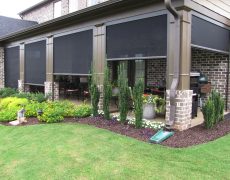
For large contemporary openings, motorized retractable screens are typically the premium answer. The screen lowers at the press of a remote, through a wall control, or from a smart-home routine. When the patio is not in use or conditions are bug-free, the fabric retracts into a discreet housing rather than remaining permanently visible.
This flexibility is valuable in Dallas because patio conditions change quickly. You may want open air on a mild spring afternoon, sun filtering during a hot July lunch, and full insect control at dusk. A motorized system adapts without asking you to install, remove, store, or wrestle with separate panels.
For the most dependable result, look for a system with side guides, a reinforced bottom bar, and components matched to the opening size. Large screens can catch wind, so proper engineering and installation are essential. Motorization should add convenience, not become a weak point in the system.
Why Custom Fit Matters More Than a Cheap Screen
A patio screen has to work with the structure it is attached to. Brick columns, stone veneer, sloped patio floors, ceiling fans, outdoor fireplaces, and oversized openings all affect the design. A generic screen kit may look acceptable on day one, then sag, bind, or leave gaps once it is exposed to heat, wind, and frequent use.
Custom manufacturing allows the housing, guides, fabric, and mounting approach to be selected for the patio rather than forced into a standard size. Precise measurements are particularly important on homes with wide sliding-door openings and outdoor living areas that flow directly from the kitchen or great room. The screen should protect the space without making it feel boxed in.
Local installation also matters in the Texas climate. High UV exposure can fade inferior fabrics and make low-grade plastic components brittle. Wind can stress loosely mounted tracks. A professionally installed system uses materials and fastening methods appropriate to the opening, helping the screens operate reliably through changing seasons.
Smart Control Makes Patio Protection Easier to Use
The best bug screen only helps when it is down. That sounds obvious, but convenience often determines whether a household actually uses a screen every evening. Motorized patio screens remove the friction of manual operation, especially when a patio has several large openings.
Smart controls can be particularly useful for homeowners who already use Alexa, Google Home, Apple HomeKit, or Matter-compatible devices. A patio routine might lower screens before dinner, raise them in the morning, or close the sun-facing side during the hottest part of the afternoon. Restaurants, clinics, and hospitality spaces can also benefit from scheduled operation that keeps customer areas comfortable without requiring constant staff attention.
Automation should be planned around real routines rather than technology for its own sake. If the patio is used mostly on weekends, simple remote control may be enough. If it is an extension of the home’s main entertaining space, integrated scheduling and voice control can make the investment feel much more natural.
Choosing the Right Screen for Your Patio
Start by identifying the actual problem. If mosquitoes are the only concern and the patio is shaded, standard insect mesh may be ideal. If no-see-ums are persistent, choose a finer weave. If bugs arrive alongside punishing afternoon sun, a solar screen fabric provides broader value. And if you want a polished appearance with on-demand protection for large openings, a motorized retractable system is usually worth the investment.
Also consider how the screen will look from inside the house. On many North Texas homes, the patio sits directly beyond expansive glass doors. A well-selected fabric can preserve views and daylight while adding privacy and glare control. A poorly selected fabric can make a beautiful outdoor room feel dark or visually closed off.
ShadeoTech designs and installs custom outdoor screen systems with the same attention to precision, materials, and smart-home performance applied to interior shading. Factory-direct local manufacturing helps ensure that each system is built around the opening and the way the space will be used.
A patio should not become off-limits when the sun gets low and the insects come out. Choose a screen system that fits the structure precisely, matches the climate, and is easy enough to use that your family will enjoy the space on an ordinary Tuesday night, not just when the weather is perfect.
