








A Dallas patio can be beautifully furnished and still sit empty by midafternoon. Direct sun heats pavers, glare cuts across outdoor TVs, and mosquitoes arrive just as dinner is served. A custom patio screen changes how that space performs, adding controlled shade, insect protection, privacy, and the option to adjust the enclosure at the touch of a button.
For North Texas homes, the right screen is not a decorative afterthought. It is a climate-control system designed around the patio’s orientation, the size of its openings, prevailing wind, and how the space is actually used. A screen that works well for a covered poolside lounge may not be the right fit for a west-facing outdoor kitchen or a restaurant patio with daily traffic.
What a Patio Screen Can Solve
The most immediate benefit is solar control. Exterior screens stop a meaningful portion of solar energy before it reaches the patio and adjacent glass doors. That helps make a covered outdoor area more comfortable while reducing heat and glare in the room just inside. For homes with expansive sliding doors or folding glass walls, this can improve the entire indoor-outdoor living zone.
Insect control is equally practical. Fine mesh fabrics create a barrier against mosquitoes, flies, and wasps without closing off the view or the breeze. This matters during Dallas-Fort Worth evenings, when a patio may be comfortable enough to enjoy but insects make it less inviting.
Privacy is another reason homeowners choose screens. A properly selected fabric softens views from neighboring lots and nearby streets during the day, particularly on patios with close property lines. Privacy screening is not always total privacy, though. The darker or more open the fabric, the more it preserves the outward view but the less it conceals activity after lights come on inside or on the patio.
A patio screen can also protect furniture, rugs, cabinetry, and outdoor finishes from UV exposure. Even covered patios receive reflected sunlight and angled sun at certain times of day. Over time, that exposure can fade fabrics and put extra wear on finishes.
Choose the Screen System Before Choosing the Fabric
Screen fabric matters, but the operating system determines whether the installation will feel refined and reliable over years of use. The best choice depends on opening size, wind exposure, frequency of operation, and the level of control you want.
Motorized retractable screens
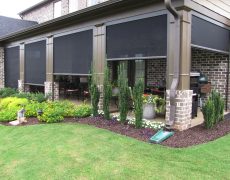
Motorized patio screens are often the preferred solution for large openings in high-end residential spaces. When raised, the screen disappears into a discreet housing and keeps sightlines open. When lowered, it provides immediate shade and insect control without the effort of manually handling a large panel.
This format is especially useful for outdoor kitchens, covered patios, pool houses, and contemporary homes with wide clear openings. It also allows one patio to serve multiple purposes: open for a morning view, shaded for the afternoon, and screened for dinner.
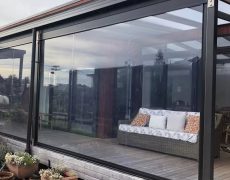
For stronger wind performance, look for a guided system that secures the screen’s edges within side tracks. A free-hanging screen may be appropriate in a protected location, but it can move in the breeze and leave gaps along the sides. Side-guided or zip-style retention systems create a cleaner enclosure and are generally the better choice for exposed patios.
Fixed panels and framed screens
Fixed patio screens are a sensible option when an opening does not need to be opened and closed regularly. They can be effective for permanently screened porches, smaller side openings, or areas where a motorized system is unnecessary.
The trade-off is flexibility. A fixed screen will always affect the view and access, while a retractable system gives the homeowner control. For a patio used as a true outdoor room, that difference is often worth considering early in the design process.
Manual retractable systems
Manual operation can work well on smaller or lightly used openings. It reduces upfront equipment costs and avoids the need for electrical planning. Still, a large screen used daily is more likely to be left in one position if it requires manual effort.
For homeowners already using motorized shades, lighting scenes, or voice assistants, motorization creates a more consistent experience. The screen becomes part of the home rather than a feature that needs separate attention.
Fabric Openness Changes the View, Shade, and Privacy
Screen fabric is typically described by openness factor, which refers to how much open space exists within the weave. A more open fabric preserves more visibility and airflow. A tighter fabric offers greater shade and daytime privacy but can make the patio feel more enclosed.
For many Dallas patios, a mid-range openness provides a practical balance. It reduces glare and heat while keeping the landscape visible. A tighter solar fabric may suit a west-facing opening where late-day sun is intense, while insect mesh may be the priority for a screened dining area that already has a deep roof overhang.
Color matters as well. Darker fabrics generally provide better outward visibility because they reduce reflected light on the screen surface. Lighter fabrics can create a brighter appearance from outside and may blend more easily with pale trim, but they may not deliver the same visual clarity when looking out.
The frame, housing, and side tracks should be coordinated with the home’s exterior. Black, bronze, white, and custom-matched finishes can make a system either recede into the architecture or complement modern metal details. Precision measurement is essential here. A screen that is technically functional but poorly proportioned can distract from an otherwise polished patio.
Smart Controls Make the Patio Easier to Use
Automation is where a patio screen becomes more than a passive barrier. Motorized systems can be operated by wall control, handheld remote, smartphone, or smart-home platform. Depending on the selected equipment, they can integrate with Alexa, Google Home, Apple HomeKit, and Matter-compatible ecosystems.
A useful setup is simple: lower the screens when the afternoon sun reaches the patio, raise them when the weather cools, or group them with exterior lighting for an evening entertaining scene. Homeowners with multiple openings can control each screen individually or run the entire patio from one command.
Sensors and schedules can add another layer of convenience, but they should be planned with care. Wind sensors can protect the system by retracting it when conditions exceed the screen’s operating limits. Sun-based schedules are helpful, though seasonal sun angles and manual overrides should remain part of the plan. Automation should support how people use the patio, not create surprises during a gathering.
Installation Details That Affect Long-Term Performance
A patio screen system must be attached to a structure that can support it. Installers evaluate mounting surfaces, header depth, clearances, electrical access, drainage paths, and the way doors, fans, grills, and furniture interact with the screen’s travel path. This is why a site visit and precise field measurements are more valuable than selecting a system from a standard-size catalog.
Large openings require particular attention. The screen’s width and drop affect tube size, fabric tension, guide selection, and motor capacity. Trying to stretch a small-system specification across an oversized opening can lead to uneven operation, visible deflection, and premature wear.
North Texas weather also calls for realistic expectations. Retractable screens are designed for shade, insects, and everyday comfort. They are not storm shutters, nor should they remain deployed in severe wind events unless the system is specifically rated and conditions stay within its stated limits. A professional installer will explain those limits rather than promising all-weather performance.
For restaurants, clinics, and commercial patios, durability and operation planning become even more important. High-traffic spaces may need controls placed away from public access, fabrics selected for frequent cleaning, and coordinated screen zones that allow staff to adjust comfort quickly without blocking service paths.
When Custom Manufacturing Is Worth It
Off-the-shelf patio screens can be tempting for simple, protected openings. But they rarely account for the irregular dimensions, structural details, and finish expectations common in custom homes. The difference shows up in side gaps, uneven alignment, exposed wiring, and hardware that does not match the architecture.
Locally manufactured screens allow the frame, fabric, control system, and installation approach to be tailored to the opening instead of forcing the opening to accept a generic product. ShadeoTech combines local Texas manufacturing with professional measurement, installation, and smart-home setup, which keeps responsibility in one place from the first consultation through final programming.
Before choosing a patio screen, spend time in the space at the hour it is hardest to use. Notice where the sun enters, which view you want to preserve, where insects gather, and how often the opening needs to stay accessible. Those details turn a screen from a nice addition into an outdoor comfort system built for the way you live.
