


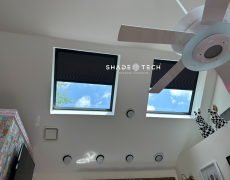


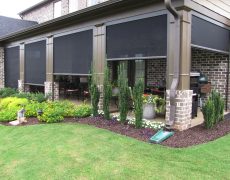

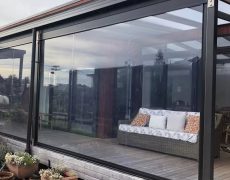



A patio can have beautiful stonework, a well-designed pool, and a fully equipped outdoor kitchen, yet still go unused when the late-afternoon sun hits or neighboring sightlines feel too close. Outdoor privacy screens address both problems at once. They create a more protected outdoor room while filtering glare, heat, and UV exposure without closing off the view or making the space feel boxed in.
For Dallas-Fort Worth homes, restaurants, clinics, and commercial patios, the difference comes down to choosing a system designed for North Texas conditions. A custom exterior screen must handle intense sun, sudden wind, broad openings, and frequent use while looking appropriate for the architecture. That requires more than hanging a piece of fabric from a pergola.
What Outdoor Privacy Screens Actually Do
A professionally designed outdoor screen is a vertical shading system that lowers from a housing above an opening and guides along the sides of the patio, porch, balcony, cabana, or covered outdoor area. Depending on the fabric and guide system, it can reduce visibility from adjacent homes, soften direct sunlight, limit windblown debris, and help make an outdoor living area more comfortable through more of the day.
Privacy is only one benefit. On a west-facing patio, a screen can block the harshest low-angle sun that makes dinner outdoors unpleasant. Around a pool or spa, it can create a more secluded setting without the permanence of a solid wall. For a restaurant, it can improve guest comfort and extend usable seating during bright or breezy hours.
The right fabric preserves an outward view during daylight while reducing the ability to see inward from outside. That distinction matters. A screen is not automatically a blackout barrier, particularly at night when interior or patio lighting is brighter than the exterior. If complete nighttime privacy is the goal, fabric selection, lighting design, and the location of the screen all need to be considered together.
Choose the Screen Type Around the Opening
The best exterior screen system starts with how the opening is built and how exposed it is. A covered patio with finished beams has different installation requirements than a freestanding pergola, a second-story balcony, or a wide restaurant storefront. Precision measurement is essential because even a high-quality screen will not perform well if the housing, side channels, and bottom bar are not properly aligned.
Cable-Guided Screens for Lighter Exposure
Cable-guided systems use slim tensioned cables to help the screen travel straight down. They can be a clean solution for some covered patios and openings where visual lightness is a priority. However, they are generally less suited to highly exposed locations or projects requiring a tightly sealed perimeter.
They work best when expectations are clear: cable-guided screens offer useful shade and visual separation, but wind can move the fabric more than it would in a fully guided track system.
Track-Guided Screens for Better Control
Side-track systems secure the screen edges in channels mounted along the opening. This creates a cleaner, more stable installation and provides stronger resistance to wind and edge gaps. For many Dallas-area patios, especially larger openings or locations exposed to weather, guided exterior screens are the more durable choice.
A track-guided screen also gives the finished space a tailored appearance. The screen looks integrated with the structure rather than added as an afterthought, which is particularly valuable on contemporary homes with large-format doors, masonry openings, and outdoor entertaining areas.
Motorized Screens for Everyday Use
Manual screens can make sense for small, sheltered openings that are adjusted only occasionally. For broad patios, multiple bays, or daily use, motorization is usually the practical upgrade. With a motorized system, the screen lowers at the touch of a remote, wall control, or app instead of requiring someone to walk to each opening and operate it by hand.
Automation matters because a screen only helps when people actually use it. A scheduled command can lower west-facing screens before the patio heats up, then raise them after sunset. Smart-home integration can also coordinate exterior screens with lighting, interior shades, or scenes such as Entertain, Pool Time, and Evening Privacy.
Fabric Openness Changes Privacy, Light, and View
Screen fabric is not a cosmetic afterthought. Its weave, color, and openness factor determine how much light enters, how much glare is reduced, and how private the space feels. Openness refers to the percentage of open area in the fabric weave. A lower openness factor generally provides more solar control and daytime privacy, while a higher openness factor preserves a clearer view outward.
For patios facing strong afternoon sun, a tighter weave often makes sense. It can significantly reduce glare and help protect outdoor furnishings from UV exposure. For a covered porch that needs only modest visual screening, a more open fabric may maintain a lighter, more connected feeling.
Color also affects performance and appearance. Darker fabrics often provide better outward visibility because they reduce reflected light on the screen surface. Lighter colors can complement pale exterior finishes and may create a brighter feel, but the view through them can be less crisp. The right choice depends on solar exposure, surrounding landscaping, the home’s exterior palette, and how the patio is used.
Design for North Texas Heat and Weather
Outdoor privacy screens should be planned as part of the building envelope around an exterior living space. On an unshaded patio, they can reduce the direct solar load reaching people, furniture, doors, and adjacent glass. That does not turn an open patio into an air-conditioned room, but it can make the space meaningfully more usable during hot months.
Wind is the other major consideration. North Texas storms can arrive quickly, and outdoor screens are not intended to remain deployed in severe weather unless the specific system and installation conditions support it. Motorized controls make it easier to raise screens quickly, while properly engineered guides and mounting surfaces help the system perform reliably during normal use.
A qualified installer will assess the substrate before specifying the screen. Brick veneer, stucco, steel, wood framing, and aluminum patio structures each require the right mounting strategy. This is one reason factory-built, professionally installed systems outperform off-the-shelf solutions on large or highly visible openings.
Where Exterior Screens Deliver the Most Value
The strongest projects begin with a specific comfort or privacy problem. A home overlooking another backyard may need screens along one side of a covered patio, not every opening. A pool pavilion may need a broad screen facing the street but an open view toward the yard. A restaurant may need flexible screens that create a comfortable dining environment without changing the building facade permanently.
For medical clinics and professional offices, exterior screens can improve privacy and reduce glare in waiting-area patios, staff break spaces, or street-facing outdoor zones. Builders and contractors can use them as a premium finishing element on new construction, especially for homes designed around sliding glass walls and expansive outdoor kitchens.
The goal is not to cover every view. It is to control the views, sun angles, and weather exposure that keep a space from functioning the way it should.
Why Custom Measurement and Installation Matter
Exterior screens have to operate smoothly across the full width and height of the opening. A few inches of error can affect fabric tension, guide alignment, bottom-bar clearance, and the overall appearance. Custom manufacturing allows the system to fit the real conditions of the home instead of asking the structure to fit a standard-size product.
Local manufacturing also helps maintain quality control from measurement through installation. ShadeoTech builds custom solutions in the Dallas area and pairs them with professional installation and smart-home setup, so homeowners are not left coordinating fabric selection, electrical work, programming, and service among separate vendors.
Before moving forward, consider how often the screens will be used, which direction the patio faces, whether the space is exposed to wind, and what level of nighttime privacy is required. Those answers determine the appropriate guide system, fabric, controls, and placement.
A well-specified outdoor screen does more than hide a neighboring view. It gives a patio the control and comfort of a finished living space, ready when the sun shifts, guests arrive, or a quiet evening outside is exactly what the home needs.
