

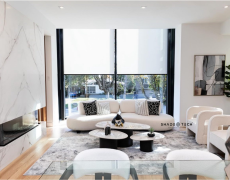







A west-facing Dallas living room can become uncomfortable long before the afternoon is over. The right window treatment does more than finish the room – it manages glare on large glass, protects furnishings from UV exposure, and reduces the demand on your HVAC system. In the choice of motorized blinds vs curtains, the better option depends on how you use the room, how much direct sun it receives, and whether you want your window coverings to work as part of your smart home.
Curtains bring softness, color, and a familiar decorative presence. Motorized blinds bring precision, repeatable performance, and hands-free control. For many North Texas homes, especially those with tall windows, open floor plans, and sun-facing elevations, that difference becomes apparent every day.
Motorized Blinds vs Curtains: The Core Difference
Curtains are fabric panels that open and close from the sides of a window. They can be purely decorative, lined for better privacy and insulation, or made with blackout material for bedrooms and media rooms. Their strength is visual warmth. They frame a window, absorb sound, and can introduce texture that a more minimal interior may need.
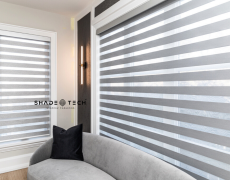
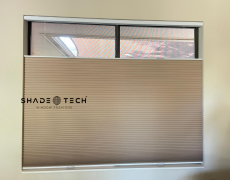
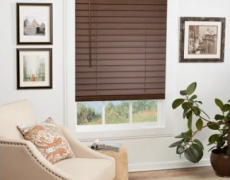
Motorized blinds are structured window coverings operated by a quiet motor rather than a cord, wand, or manual lift. Depending on the product, they may raise, lower, tilt, or roll into position through a wall control, handheld remote, app, voice assistant, or scheduled automation. They are available in materials and constructions suited to specific needs, including light-filtering shades, blackout shades, solar screens, zebra shades, and more architectural blind styles.
The practical distinction is control. Curtains generally move between open and closed. Motorized blinds can be positioned with far more accuracy, allowing you to block a harsh band of sun while preserving daylight and an outside view.
Light Control Matters More in North Texas
For Dallas-Fort Worth homeowners, solar management is often the deciding factor. Intense sun can create glare on televisions and computer screens, fade wood floors and upholstery, and heat rooms with expansive windows. Curtains can help, especially when lined or blackout panels are fully closed, but they are less adaptable during the day.
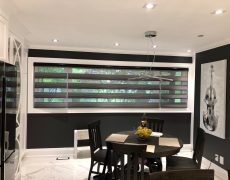
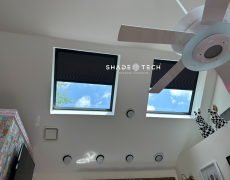
Motorized blinds allow a room to respond to changing light. A solar shade can lower automatically during the hottest afternoon hours, then raise in the evening to restore the view. In a home office, the shade can stop at a preset height that prevents screen glare without turning the workspace dark. In a dining room with tall glass, several shades can move together so the entire elevation looks intentional rather than uneven.
This is particularly valuable for contemporary homes with oversized windows. Reaching a high manual blind every day is inconvenient. Leaving it closed all week because it is inconvenient defeats the purpose of having natural light. Automation makes regular use realistic.
Privacy Without Closing Off the Room
Privacy is another area where product selection matters. Curtains provide strong privacy when closed, but sheer panels may offer little nighttime protection, while heavy drapery can make a room feel enclosed. Layered drapery can solve that issue, though it adds bulk and requires more fabric, hardware, and maintenance.
Motorized shades can be specified for daytime privacy, nighttime privacy, or complete blackout. A solar fabric may reduce visibility into a room during daylight while retaining a connection to the outdoors. A blackout roller shade provides the stronger coverage needed for bedrooms, nurseries, media rooms, and certain clinic or hospitality settings.
The best answer is not always one product throughout the home. A primary bedroom may call for blackout motorized shades, while a formal dining room may benefit from tailored curtains or decorative drapery layered over discreet shades.
Design: Softness vs Clean Architectural Lines
Curtains are often the right choice when the room needs dimension and softness. They work especially well in traditional homes, transitional interiors, bedrooms, and spaces with hard surfaces such as stone, glass, and polished tile. A well-made panel can make a standard window look larger and more finished.
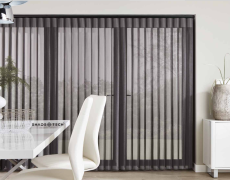
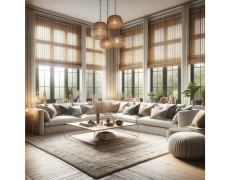
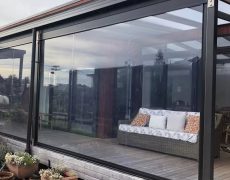
Motorized blinds and shades tend to suit a cleaner, more tailored visual direction. Their compact profile is useful around sliding doors, narrow window openings, and large banks of glass where heavy fabric would compete with the architecture. When raised, many shade systems disappear into a small stack or cassette, keeping the window line clean.
There is also a strong middle ground. Motorized shades can manage light and privacy, while stationary decorative drapery panels add warmth at the sides. This layered approach is common in premium custom interiors because it separates performance from decoration. The shade does the daily work; the drapery completes the room.
Convenience and Smart-Home Integration
Manual curtains are simple. Pull them closed, pull them open, and there are no electronics to configure. That simplicity has value in low-use rooms or when a homeowner prefers a fully traditional solution.
But convenience changes the equation in rooms used every day. Motorized blinds can be grouped by room, scheduled around sunrise and sunset, and adjusted without crossing the room or moving furniture. They can also integrate with Alexa, Google Home, Apple HomeKit, and Matter-enabled systems when properly specified and installed.
A useful automation is not technology for its own sake. It is a reliable daily setting: shades lowering before late-afternoon heat hits the family room, bedroom blackout shades opening on a weekday schedule, or all window coverings closing with a single goodnight command. For homeowners who travel, scheduled movement can also make a home appear occupied while protecting interiors from continuous sun exposure.
Professional setup is especially valuable here. Smart shades need more than a motor. They need correct measurements, suitable power planning, dependable network or hub configuration, and controls that match how the household actually lives. A custom system should feel straightforward after installation, not like another device that needs attention.
Energy Performance and UV Protection
Neither curtains nor blinds replace proper insulation or high-performance glass, but both can reduce solar heat gain when selected and used correctly. The biggest benefit comes from stopping sunlight before it has heated the room’s surfaces.
Curtains can add insulation at night, particularly with thermal lining and a close fit to the wall. Their heat-control performance varies widely by fabric weight, lining, coverage, and how often they remain closed. A beautiful unlined panel may provide modest shade but limited thermal benefit.
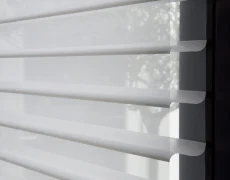
Solar shades and cellular-style systems can be selected for stronger daytime heat and glare management. The fabric openness, color, mounting style, and placement all affect results. A lower openness factor generally provides more glare reduction and privacy, though it may reduce the clarity of the view. This is where a consultation matters: the right fabric for a shaded north-facing bedroom may be wrong for a west-facing great room.
For Dallas homes, automated scheduling adds a practical advantage. Even a high-performing window covering cannot help much if it stays open during the hottest hours because no one is home to adjust it.
Cost and Long-Term Value
Curtains can appear less expensive at first, especially off-the-shelf options. Yet custom curtains often involve fabric selection, lining, fullness calculations, drapery hardware, fabrication, and installation. For large or unusually shaped windows, premium drapery can become a substantial investment.
Motorized blinds typically carry a higher upfront cost because of the motor, controls, power solution, and smart-home configuration. However, they may provide stronger everyday value in rooms where light control, privacy, and heat management are ongoing concerns. They also avoid dangling cords, a safety and visual advantage for homes with children and pets.
The comparison should account for the full project, not just the price of a single covering. Poor measurements, undersized hardware, awkward cord placement, or incompatible automation can make a lower-priced purchase feel costly later. Custom manufacturing and professional installation are designed to prevent those compromises.
When Curtains Are the Better Choice
Choose curtains when the main goal is decorative impact, acoustic softness, or a traditional layered look. They are a compelling option for formal spaces, bedrooms where fabric warmth matters, and rooms with little direct solar exposure. They also work well when you are comfortable adjusting coverings manually and do not need granular light control.
Curtains may be the better fit when a room already has another effective shade or shutter system and simply needs visual framing. In that case, asking drapery to solve every performance issue is unnecessary.
When Motorized Blinds Are Worth It
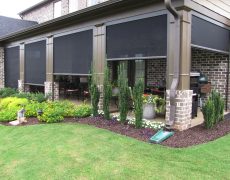
Motorized blinds are usually the stronger choice for large windows, high ceilings, west- and south-facing rooms, media spaces, bedrooms, and smart-home households. They are also highly practical for restaurants, clinics, offices, and hospitality environments where staff need consistent appearance and light control without manually adjusting multiple windows throughout the day.
For a Dallas-area home with significant glass, the best system often combines precision-made motorized shades with a design plan tailored to each room. ShadeoTech manufactures and installs custom solutions locally, allowing the fabric, fit, controls, and automation details to be considered as one coordinated project rather than separate purchases.
The right window treatment should make a room easier to live in at 3 p.m., not merely look good at a showroom sample table. Start with the sun exposure, the view, and the way the room is used, then choose the level of control that will still serve you years from now.
