

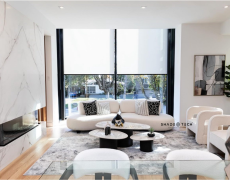
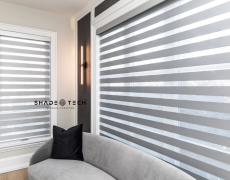
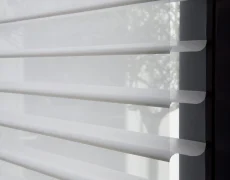
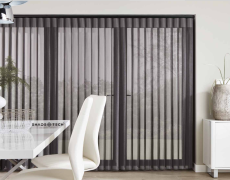
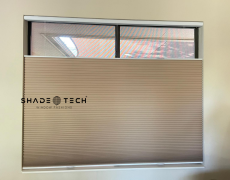

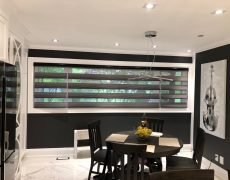
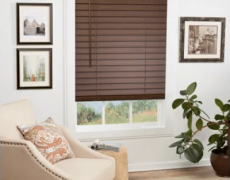






A beautiful wall of windows should not require a step stool, strained shoulder, or another person’s help to manage. For homeowners and commercial property owners, how motorized blinds improve accessibility comes down to one practical change: light, privacy, and comfort become available at the touch of a button, through a voice command, or on a schedule that runs automatically.
That convenience matters in Dallas-Fort Worth homes with high ceilings, wide contemporary windows, and sun-exposed rooms. It also matters for anyone living with limited mobility, arthritis, vision loss, an injury, or the changing physical demands that come with age. A properly designed motorized shade system removes a daily obstacle without making the room look clinical or overengineered.
Accessibility Starts With Everyday Independence
Traditional blinds and shades ask the user to reach, pull, twist, lift, and align. On a standard window, those motions may seem minor. Multiply them across a home, add windows behind furniture or above a staircase, and the task quickly becomes difficult. Manual cords can be hard to grip, chains can require repeated pulling, and elevated windows may be impossible to operate safely without a ladder.
Motorized blinds replace that physical process with controlled movement. The shade can raise, lower, or stop at a preferred position using a wall-mounted control, handheld remote, smartphone app, or connected smart-home system. Instead of adapting the person to the window covering, the system adapts to the person and the room.
For many households, this is not simply a convenience upgrade. It supports the ability to control one’s own environment independently. That can mean closing a bedroom shade from bed, reducing afternoon glare without crossing a room, or opening the living room for daylight without asking a family member for assistance.
How Motorized Blinds Improve Accessibility at Home
They eliminate difficult reaching and repetitive effort
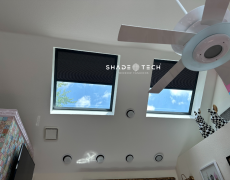
The clearest accessibility benefit is the removal of manual operation. Motorized blinds are especially effective on tall windows, skylights, windows behind tubs, and large groups of shades that would otherwise need individual adjustment. The user does not need the hand strength to pull a chain, the balance to stand on furniture, or the shoulder range of motion to reach a high rail.
This is valuable for wheelchair users, people recovering from surgery, and homeowners managing arthritis or chronic pain. It also reduces the risk of a fall caused by reaching for a hard-to-access window treatment. For multistory homes, that added safety can influence whether certain rooms remain comfortable and usable over time.
They make voice control genuinely useful
Voice assistants are often presented as a novelty, but they have a direct accessibility purpose when hands-free control is needed. With compatible Alexa, Google Home, Apple HomeKit, or Matter-enabled systems, a homeowner can ask a selected shade or room group to open, close, or move to a preset level.
A simple command such as close the west-facing shades can reduce glare during the late afternoon without interrupting a meal, work call, or mobility routine. For users with limited dexterity, low vision, or temporary restrictions after an injury, voice control can be the most practical way to operate window coverings.
The best setup keeps commands intuitive. Naming shades by room and direction, such as kitchen east or primary bedroom, is more useful than relying on generic device names. Professional configuration helps ensure the controls fit the way the household actually speaks and moves through the home.
They automate comfort before it becomes a problem
Scheduling gives motorized blinds another level of accessibility. Rather than waiting until heat, glare, or privacy becomes uncomfortable, shades can move at set times or in response to scenes created in the smart-home system. Morning shades can rise gradually, while west-facing shades can lower before intense Texas afternoon sun reaches the room.
Automation is particularly helpful for people who may forget a routine, have limited energy at certain times of day, or cannot quickly move from room to room. It also helps caregivers and family members support a more comfortable home without having to manage every window manually.
Schedules should serve the homeowner, not create unnecessary complexity. Some households want a consistent daily routine. Others prefer simple one-touch scenes such as daytime, movie time, or bedtime. Both approaches can work well when they are planned around the home’s sun exposure and the owner’s habits.
Custom Window Treatments Make Accessibility More Effective
Motorization is only as good as the shade system behind it. A ready-made blind may offer basic automation, but it may not fit oversized windows, account for uneven openings, or provide the level of light control required in a high-exposure room. Accessibility improves when the product, controls, and installation are treated as one coordinated project.
Custom manufacturing allows the fabric, opacity, lift system, and mounting approach to be selected for each opening. Solar shades can preserve outward views while cutting glare and UV exposure. Room-darkening materials may better suit bedrooms, media rooms, clinics, or spaces where light sensitivity is a concern. For large windows, a professional can determine whether one wide shade or multiple synchronized shades will operate more reliably and look more refined.
Placement matters, too. A wall control needs to be installed where it is easy to reach from a typical path of travel, not where it happens to be most convenient for wiring. Remotes should be simple to identify and use. In a home with multiple residents, layering physical controls, app access, and voice control provides practical backup options.
Power Choices and Other Planning Considerations
Motorized blinds are not one-size-fits-all. The right power source depends on the window layout, the number of shades, access to electrical power, and how often the shades will operate. Battery-powered systems can be an excellent fit where running wire would disrupt finished walls. They do require periodic charging or battery replacement, which may be less convenient for windows located high above the floor.
Hardwired systems are often the stronger long-term choice for new construction, major renovations, and larger shade installations. They avoid routine battery maintenance and are well suited to frequently used shades. The trade-off is that electrical planning must happen early, before walls are closed or finishes are complete.
Solar charging options can reduce battery maintenance in bright locations, but they depend on suitable light exposure and should be evaluated by window orientation. A north-facing room or a shade positioned under a deep overhang may not receive enough consistent sunlight to make solar charging the best answer.
Connectivity deserves the same level of attention. Smart-home integration can be highly dependable when the selected motor and control platform match the property’s network and automation ecosystem. Still, a well-designed system should retain easy local operation through a remote or wall control if Wi-Fi is interrupted. Accessibility should never rely on a single point of control.
Accessible Motorized Shades for Commercial Spaces
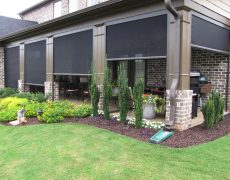
Accessibility is equally relevant in medical clinics, restaurants, offices, hospitality settings, and multifamily common areas. Staff should not need ladders or repeated manual effort to control large shade banks. In a clinic, adjustable light can improve patient comfort and reduce glare in reception or treatment spaces. In a restaurant, scheduled shades can maintain a polished appearance while reducing harsh afternoon sun for guests.
For commercial properties, centralized control can simplify daily operations. A manager can operate multiple window coverings by zone rather than walking the property and adjusting each one. Durable materials, carefully selected motors, and professional installation are especially important in high-use environments where reliability affects the guest experience and staff workload.
Why Professional Design and Installation Matter
The difference between a motorized blind that feels effortless and one that becomes frustrating often comes down to measurement, programming, and installation detail. Large or unusually shaped openings require precise sizing. Shades need proper alignment to travel cleanly. Motors must be selected for the weight and width of the chosen material, while control locations and smart-home settings need to be configured for real-world use.
For Dallas-Fort Worth properties, local expertise also matters because the climate is part of the performance equation. Intense sun and heat gain can make the wrong fabric or openness factor feel like a missed opportunity. ShadeoTech combines local Texas manufacturing, precise measurement, professional installation, and smart-home setup so the finished system supports both accessibility and everyday comfort.
The most useful accessible home upgrades are the ones that disappear into the routine. When shades respond reliably to a button, a voice command, or the time of day, residents can focus less on managing the room and more on enjoying it.
