

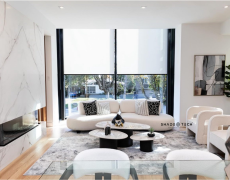
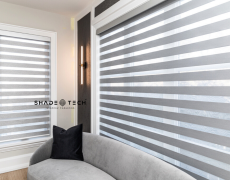
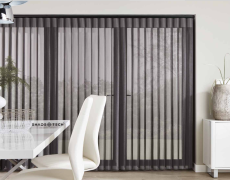

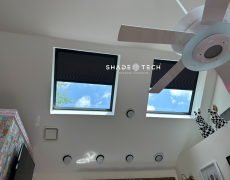


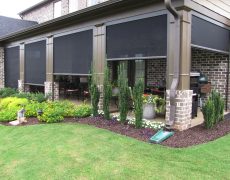

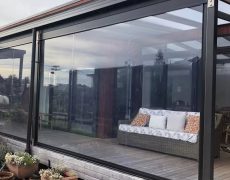



A west-facing living room in Dallas can look spectacular at 5 p.m. and feel nearly unusable at 5:15. Sun pours through the glass, screens become hard to see, furnishings fade, and the air conditioner works harder than it should. What are solar shades? They are precision-made window treatments designed to soften intense sunlight, reduce glare and UV exposure, and preserve an outward view during the day.
For homes with expansive glass, open floor plans, and a strong connection to the outdoors, solar shades offer a cleaner alternative to closing off a room with heavy drapery or opaque blinds. They deliver practical solar control without losing the modern look that makes large windows appealing in the first place.
What Are Solar Shades Made to Do?
Solar shades are roller shades made with woven performance fabric. The fabric filters sunlight rather than blocking it completely, which is the key difference between a solar shade and a blackout shade. Fine openings in the weave allow some natural light and a view through the material while intercepting a meaningful amount of solar energy.
That balance is especially valuable in North Texas. The objective is rarely to make every room dark. More often, homeowners want to read, work, watch television, or entertain without direct glare and harsh heat overtaking the space. A properly specified solar shade makes daylight more comfortable and manageable.
The fabric also helps protect interior finishes. UV exposure can fade hardwood floors, rugs, artwork, upholstery, and cabinetry over time. Solar shades reduce that exposure while retaining a bright, composed feel. Exact performance depends on the fabric, color, openness factor, window orientation, and whether the glass itself has a low-E coating or tint.
Openness Factor Determines the View and Privacy
The most important solar-shade specification is usually the openness factor. This percentage refers to how much open space exists in the fabric weave. A lower openness factor, such as 1% or 3%, has a tighter weave. It provides stronger glare control and greater daytime privacy, but the view is less crisp and the room is a bit darker.
A higher openness factor, such as 5% or 10%, allows more daylight and delivers a clearer view outside. It can be an excellent choice when preserving a skyline, pool view, or backyard sightline is the priority. The trade-off is that more light and solar energy enter the room.
There is no single best percentage for every window. A 1% fabric may make sense for a media room with direct afternoon sun, while a 5% fabric can be ideal in a breakfast area that needs light but suffers from morning glare. A custom consultation should consider the direction of each window, glass size, room function, and the view worth preserving.
Color Changes Performance Too
Fabric color affects both appearance and view-through. Darker solar fabrics often provide a sharper outward view because they reduce reflected light on the interior side of the shade. They can be a strong fit for contemporary homes with dark window frames, especially where the goal is to maintain visual connection to the outdoors.
Lighter fabrics can create a softer, brighter interior aesthetic and pair well with pale walls and warm neutral finishes. They may diffuse light beautifully, although the view can appear less defined. Color also influences how the fabric looks from the exterior, which matters when a home has prominent street-facing windows or a commercial property requires a consistent façade.
Solar Shades vs. Other Window Treatments
Solar shades are not the answer to every window challenge. They are excellent at controlling daytime glare, UV exposure, and solar heat while maintaining a view. They do not provide the total darkness or nighttime privacy of a blackout product.
At night, a lighted interior can be visible from outside through most solar fabrics. Bedrooms, bathrooms, and street-facing rooms may need a secondary treatment, such as a blackout roller shade, drapery, or a dual-shade system. Dual shades place a solar fabric and a blackout fabric in one coordinated setup, giving homeowners filtered daylight during the day and full privacy when needed.
Compared with traditional blinds, solar shades have fewer visible slats and create a more architectural appearance across large windows. They are also easier to use on tall or wide openings, particularly when motorized. Plantation shutters offer strong visual presence and adjustable light control, but they do not disappear as cleanly when an unobstructed view is the goal. Drapery adds softness and acoustic value, yet it usually cannot match a solar fabric’s precise view-through and low-profile operation.
Why Solar Shades Work Well in Dallas-Fort Worth
North Texas homes face a particular mix of design and climate demands: intense summer sun, large contemporary windows, high ceilings, and rooms that often transition directly to patios or pools. Glass brings in light, but it can also create hot spots and glare that change how a room functions throughout the day.
Solar shades help moderate those conditions at the window, before the sun reaches flooring, furniture, and occupants. They are particularly effective in west-facing family rooms, home offices, kitchens, sunrooms, and commercial spaces with broad storefront glass. Restaurants and medical clinics can use them to make seating areas and waiting rooms more comfortable without making the space feel closed in.
They can support energy efficiency, but expectations should remain realistic. Shades reduce solar gain and can ease the strain on cooling systems, especially on sun-exposed glass. They are not a replacement for efficient windows, proper insulation, or a well-designed HVAC system. Their value comes from improving comfort where occupants actually experience the heat and glare.
Motorized Solar Shades Make Daily Control Practical
A shade only performs when it is used. That is where motorization changes the experience. Rather than manually lowering shades across a wall of tall windows, homeowners can control them with a wall keypad, remote, smartphone, voice assistant, or scheduled automation.
For example, solar shades can lower automatically on west-facing windows before late-afternoon heat builds up, then raise in the evening to reopen the view. In a home office, a scene can lower one bank of shades to reduce monitor glare without darkening the entire room. In commercial settings, scheduled control provides a more consistent guest or employee experience while reducing the need for staff adjustments.
The strongest systems are planned around the home rather than added as an afterthought. Motor type, power access, shade size, fabric weight, control locations, and smart-home compatibility should all be considered before installation. Battery-powered shades can be an elegant option in many retrofit applications, while hardwired systems may be preferable for new construction, large shade groups, or frequent daily use.
ShadeoTech designs and manufactures custom solar shade systems locally in Texas, with professional measurement, installation, and smart-home setup tailored to the property. That level of coordination matters on large windows, recessed pockets, angled architectural details, and multi-room automation projects where small measurement errors can become very visible.
Details That Separate a Custom Solar Shade From a Basic Roller Shade
The fabric gets most of the attention, but the finished system matters just as much. A precisely measured shade should sit square, roll evenly, and align consistently with adjacent windows. Mounting style affects both appearance and light control. An inside mount can create a clean, integrated look, while an outside mount may cover more of the window opening and reduce side light gaps.
Hardware should complement the room rather than compete with it. Fascias, cassettes, and recessed pockets can conceal the roller for a refined finish. In high-ceiling spaces, the location and installation accuracy of every bracket become especially important. For broad openings, a professional will also determine whether one large shade is appropriate or whether multiple shades will operate more reliably and look more balanced.
Fabric selection deserves a hands-on review as well. Samples should be viewed against the actual window in daylight, not only under showroom lighting. What looks like a warm gray in a sample book can read differently when sunlight, wall paint, and outdoor landscaping are part of the composition.
Choosing the Right Solar Shade for Your Space
Start with the problem the shade needs to solve. If glare on a television is the issue, prioritize a lower openness factor on that exposure. If the room’s main value is a panoramic backyard view, choose a fabric that maintains clearer sightlines. If privacy is essential after dark, plan for a layered or dual-shade solution instead of expecting a solar fabric to do work it was not designed to do.
Then consider how the shades will be used. Manual operation may suit a small guest room window. Motorization is often the better long-term choice for hard-to-reach windows, whole-home projects, and rooms where sun conditions change predictably every day. The best solar shade is not simply the one with the highest performance rating. It is the one that fits the architecture, the exposure, and the way the space is lived in.
When Texas sunlight is part of the architecture, it should be controlled with the same intention as lighting, flooring, and furniture. A well-designed solar shade lets the room keep its view while making it far more comfortable to enjoy.
