

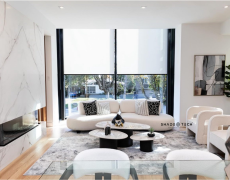
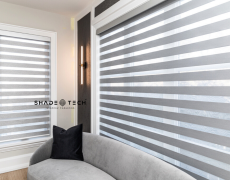
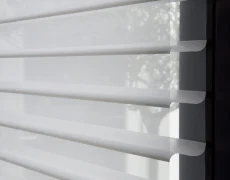
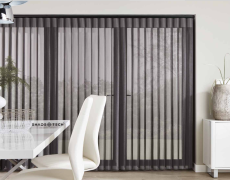

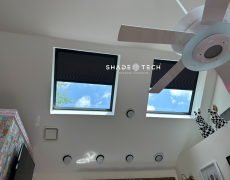


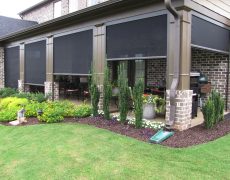

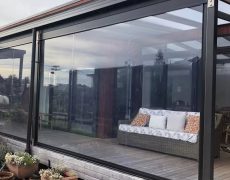



A west-facing living room in Dallas can look spectacular at 4 p.m. and feel unlivable by 5. Large glass openings bring architectural drama, but they also invite glare, UV exposure, and serious heat gain. Sheer vertical drapery shades are designed for exactly this kind of space: they soften daylight across wide windows and sliding doors while preserving the open, polished look modern homes demand.
Unlike a basic vertical blind, this style combines broad fabric vanes with a sheer backing or integrated sheer fabric. The result is a treatment that can filter light gently when open and provide privacy and sun control when the vanes rotate closed. For homeowners who want a tailored alternative to heavy drapery or hard-edged blinds, it offers a practical middle ground.
What Are Sheer Vertical Drapery Shades?
Sheer vertical drapery shades are vertically oriented fabric window coverings that operate on a track. Their individual fabric vanes rotate to control the direction and intensity of incoming light, then draw to one side or split from the center when a clear view is preferred.
The sheer fabric diffuses direct sun rather than simply blocking it. During the day, that means a brighter room without the sharp glare that makes screens difficult to see or washes out finishes and artwork. When the vanes are tilted for privacy, the treatment retains a softer appearance than traditional vinyl vertical blinds.
This construction is particularly effective on large windows, patio doors, corner glass, and high-ceiling spaces. It creates a consistent vertical line that complements contemporary Dallas-area homes, while providing more flexible light control than fixed drapery panels.
Why This Style Works in North Texas
North Texas sunlight is not a minor design consideration. It affects room temperature, flooring, upholstery, wood finishes, and how comfortably a space functions throughout the afternoon. The right window treatment needs to manage that exposure without turning a bright room into a dark one.
Filtered light without losing the room
A sheer vertical system lets homeowners adjust light in small increments. Rotate the vanes to redirect sunlight toward the ceiling, reduce glare on a television, or create a more comfortable workspace near a window. Open the treatment fully when the weather and view are worth enjoying.
That flexibility matters in rooms that serve several purposes. A family room may need daylight for most of the day, glare control for an afternoon movie, and privacy after sunset. One custom treatment can accommodate each use without requiring separate curtains, blinds, and shades.
Better coverage for wide openings
Many window treatments are visually strongest on standard windows but become awkward across a 12-foot sliding door or a wall of glass. Sheer vertical drapery shades are built around wide spans. Their vertical orientation follows the natural movement of a patio or sliding glass door, making access easier than lifting a horizontal shade repeatedly.
They can also be configured to stack on the left, right, or at both sides, depending on furniture placement and door traffic. That detail should be decided during measurement, not guessed after the track is installed.
A softer alternative to conventional vertical blinds
Traditional vertical blinds can be functional, but they often read as commercial or dated in a high-end residential setting. Fabric vanes introduce texture, depth, and a more refined visual finish. They also reduce the sharp contrast between a covered window and surrounding drapery, millwork, or upholstered furnishings.
The trade-off is that fabric requires thoughtful material selection and professional installation. Lower-quality fabrics may show discoloration, struggle with heat exposure, or fail to hang cleanly over time. Custom fabrication gives the installer control over vane spacing, track alignment, fabric selection, and stack position.
Where Sheer Vertical Drapery Shades Perform Best
These shades are not the best answer for every opening. They are most compelling where broad glass, strong sun, and frequent movement make other products less convenient.
In living rooms and great rooms, they preserve a light, open feeling while improving comfort near exposed glass. In primary bedrooms, room-darkening fabric options or a layered solution may be better if complete sleep privacy is the priority. In dining rooms, the soft fabric appearance works especially well when the treatment needs to feel like part of the interior design rather than a purely functional covering.
For sliding glass doors, vertical operation is a natural fit. The panels move in the same direction as the door, allowing everyday access without raising or lowering a shade. This is useful for patios, pool areas, and homes where children or pets regularly move through the opening.
Commercial settings can benefit as well. Medical clinics, restaurants, hospitality spaces, and offices often need controlled daylight without a closed-off atmosphere. A professionally specified vertical fabric system can reduce glare and maintain a polished customer-facing appearance across large storefront or waiting-area windows.
Motorization Makes Large Shades Easier to Use
The wider the treatment, the more valuable motorization becomes. A manually operated shade may work well on a smaller door, but a tall or wide span can be inconvenient to adjust several times a day. Motorized sheer vertical drapery shades make that adjustment immediate, repeatable, and more likely to happen.
A programmed schedule can close the vanes during the hottest afternoon exposure, open them in the morning, or provide privacy at sunset. In a media room, one command can reduce glare before a movie begins. In a commercial space, automation can standardize the appearance of window treatments across operating hours.
For smart-home owners, the system should be selected for reliable compatibility, not just a phone app. ShadeoTech can integrate custom motorized solutions with Alexa, Google Home, Apple HomeKit, and Matter-enabled smart-home systems where appropriate. The useful goal is simple: shades should respond consistently to the home systems people already use.
Motorization also reduces wear from frequent manual handling. That can be a meaningful advantage for high-traffic patio doors, tall windows, and installations that are difficult to reach safely.
The Details That Determine the Final Result
A beautiful fabric sample is only one part of a successful installation. The track must be level, the stack must clear the usable door area, and the vane rotation must provide the intended privacy at the right angles. These details are especially important in homes with expansive glass, vaulted ceilings, or nonstandard trim.
Measure for function, not just width
Custom measurement should account for where the door opens, where furniture sits, and how people move through the room. A treatment that stacks on the wrong side can interfere with a handle, block a preferred view, or create a bulky visual interruption near a focal wall.
Ceiling-mounted tracks can create a taller, more architectural presentation, particularly in rooms with high ceilings. Inside-mount applications can look clean and integrated when the opening is square and deep enough. Neither is automatically better. The right choice depends on the window construction and the design intent.
Choose fabric based on exposure and privacy needs
A light, sheer fabric delivers maximum softness and daylight but will not provide the same nighttime privacy as an opaque option. For bedrooms and street-facing rooms, a denser fabric or an additional blackout layer may be the better specification.
Color also changes performance. Pale fabrics tend to keep a room visually bright, while deeper tones can improve glare control and create stronger contrast. In high-sun locations, material quality matters more than a color swatch alone. The fabric should be selected for UV stability, dimensional consistency, and the way it performs under daily Texas heat.
Plan for clean operation
Fabric vanes should hang evenly, rotate smoothly, and stack neatly. A track that is undersized, misaligned, or poorly installed can compromise the entire experience. This is one reason factory-direct custom manufacturing and professional installation matter. The product is only as refined as its final fit.
For homes with children or pets, cordless motorized operation can also simplify the space and remove the visual clutter of control chains. For commercial projects, durable hardware and consistent operation are equally important because the system may be used by multiple people throughout the day.
A Custom Treatment Should Solve More Than One Problem
The strongest window treatments do not force homeowners to choose between style, privacy, daylight, and convenience. They bring those needs together in a system that fits the glass, the room, and the way the space is actually used.
Sheer vertical drapery shades are a particularly smart choice when a large opening needs to stay bright but become more comfortable. With precise local measurement, quality fabric, professional installation, and automation where it adds value, they can make sun-exposed rooms feel intentional again rather than something to work around.
