
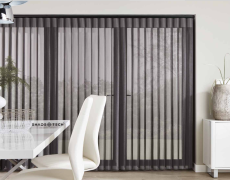
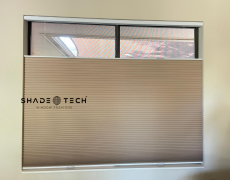

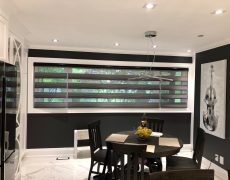
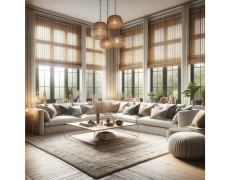





A good motorized shade systems review should start where Dallas-Fort Worth homeowners feel the difference most: the room that becomes too bright to use by midafternoon, the wall of glass that heats up a living space, or the tall windows that are impossible to reach without a ladder. Motorization is not simply a convenience feature. When the system is specified correctly, it becomes a practical way to manage heat, glare, privacy, UV exposure, and daily routines.
For a custom home, clinic, restaurant, or commercial project, the best system is rarely the one with the longest feature list. It is the one that fits the window precisely, uses the right fabric and motor for the application, and operates reliably as part of the space.
What a Motorized Shade System Should Deliver
Motorized shades should make a room more comfortable without making the window treatment the center of attention. The strongest installations combine quiet operation, consistent alignment, clean fabric panels, dependable controls, and automation that works when it is supposed to.
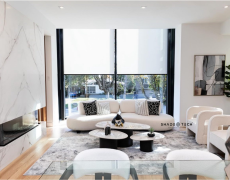
In North Texas, performance begins with solar management. A west-facing family room may need a solar screen shade that preserves the view while reducing glare and heat gain. A bedroom may call for a dual-shade setup, pairing a light-filtering roller shade for daytime privacy with a blackout shade for sleep. A media room may benefit from room-darkening fabric and programmed scenes that lower shades before a movie starts.
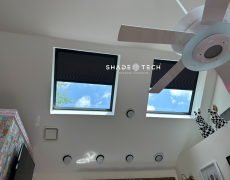
The value of motorization becomes more apparent as window size and access become more challenging. Large contemporary windows, clerestory windows, stairwells, and multi-panel sliding doors are difficult to cover manually and even harder to adjust throughout the day. A motorized system lets the shading respond to how the room is actually used rather than leaving it in one position for weeks.
Motorized Shade Systems Review: What Separates Quality
A fair motorized shade systems review has to look beyond whether a shade moves up and down. Nearly every motorized product can do that. The difference is found in the details that affect durability, appearance, and ownership over years of daily use.
Motor and control reliability
A premium motor should operate quietly, stop at programmed positions accurately, and retain those limits over time. Noise matters more than many buyers expect. In an open-concept living area, a loud or abrupt motor can make a system feel inexpensive even when the fabric looks refined.
Control options also deserve careful review. A handheld remote is useful, but it should not be the only way to operate a shade. Wall controls provide a familiar, immediate option for guests and family members. App control adds flexibility. Voice control through Alexa, Google Home, or Apple HomeKit can be valuable when it supports real habits, such as closing the patio shades while carrying groceries or opening bedroom shades on a weekday schedule.
Matter compatibility is increasingly worth considering for homeowners building a long-term smart-home system. It can reduce dependence on a single ecosystem and make future device changes less disruptive. Still, compatibility claims should be verified at the system level. A motor may support a platform while a bridge, hub, or specific control method is required for the desired experience.
Fabric is a performance decision
Fabric selection changes how a room feels at noon, not just how it looks in a sample book. Openness factor, color, weave, and backing all influence glare reduction, privacy, visibility, and heat control.
A more open solar fabric keeps an exterior view clearer, making it a strong choice for living rooms and offices with attractive sightlines. The trade-off is reduced privacy at night when interior lights are on. A tighter weave increases privacy and glare control but can make the window feel more closed off. Blackout fabrics provide the highest light control, although small light gaps at the edges are normal unless the system uses side channels or a carefully designed recess.
Color deserves technical consideration as well. Darker solar fabrics often preserve views better during the day, while lighter fabrics can reflect more light and contribute to a brighter interior feel. The right answer depends on window orientation, furnishings, the desired view, and how the room is occupied.
Custom sizing and installation quality
This is where many retail motorized shades fall short. A shade can have an excellent motor and still look poor or perform inconsistently if it is measured, mounted, or programmed without precision. Uneven reveals, oversized headers, out-of-square windows, deep trim, and large spans all affect the final result.
Professional measurement accounts for mounting surface, window geometry, fabric deductions, hem-bar clearance, bracket access, and the route for charging or power. It also identifies where a larger roller tube or a different shade configuration is needed to keep fabric tracking straight. Those details are especially relevant on wide windows, corner glass, and door openings.
For hardwired systems, planning early is the cleanest approach. During construction or renovation, power can be located at the headrail so the finished installation has no exposed cords and minimal maintenance. Battery-powered shades are often an excellent fit for completed homes because they avoid wall work, but they require a realistic charging plan. Rechargeable motors can run for months between charges depending on shade size, fabric weight, use frequency, and automation schedules.
Smart automation that solves an actual problem
The most useful automations are usually simple. Raise the kitchen shades with the morning routine. Lower west-facing shades before afternoon sun hits the room. Close bedroom shades at bedtime. Open shades while away to create a lived-in appearance, then close them before sunset for privacy.
Sensors can add another layer of control, particularly in rooms with intense solar exposure. But automation should be designed with the household, not added as a novelty. A sun sensor may be helpful on a glass-heavy elevation, while a family that values an open view may prefer time-based schedules with easy manual overrides.
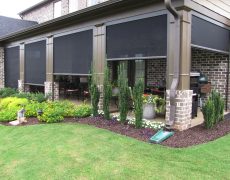
The same principle applies to commercial spaces. A restaurant may need patio screens or front-window shades programmed around operating hours and sun direction. A medical clinic may prioritize glare control in treatment areas and privacy in consultation rooms. A builder may need standardized controls that are intuitive for the eventual homeowner. The system should make operations easier, not create another technology task for staff or residents.
Where Motorized Shades Have Real Trade-Offs
Motorization adds cost, and it is worth being direct about that. The price reflects the motor, power solution, controls, smart-home integration, custom fabrication, and professional installation. For one small, easily reached window, manual operation may be perfectly sensible. The return grows with window quantity, height, sun exposure, and the need for repeatable daily control.
Battery systems offer flexibility, but charging is still a maintenance item. Hardwired systems provide the cleanest long-term power solution, but they require coordination before drywall or during electrical work. Smart-home integration provides convenience, but a basic remote and wall control should remain available when a phone is not nearby or the network needs attention.
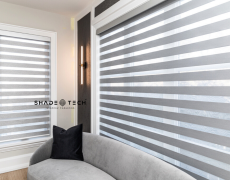
There is also a design trade-off. Motorized roller shades have a clean, architectural appearance that suits many modern homes, but they do not provide the adjustable slat control of motorized blinds or shutters. For homeowners who want a more traditional profile, shutters or layered drapery may better match the interior. The right product category should follow the room’s priorities, not the trend of the moment.
A Better Way to Evaluate Quotes
When comparing proposals, make sure they describe more than shade dimensions and a total price. Ask what motor platform is included, whether controls and smart-home setup are part of the scope, how power will be handled, and what fabric performance characteristics have been selected. Confirm who measures, manufactures, installs, programs, and services the system after installation.
This matters because a fragmented purchase can create avoidable gaps. One company may sell the shades, another may install them, and a third may be asked to connect the app. A full-service provider takes responsibility for the finished operation of the system, including final programming and adjustment.
For Dallas-Fort Worth projects, local manufacturing also has a practical advantage. It supports precise fabrication, direct quality oversight, and a clearer path for service or future additions. ShadeoTech approaches motorized shading as a custom architectural system, with local measurement, Texas manufacturing, professional installation, and smart-home setup coordinated as one process.
Before selecting a system, stand in the room at the time of day when it performs worst. Notice where glare lands, how hot the glass feels, what view you want to keep, and how often someone would realistically adjust the treatment by hand. Those answers will lead to a motorized shade solution that earns its place every day, long after the first time it responds to a voice command.
