

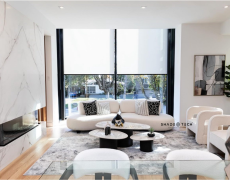







A west-facing living room in Dallas can go from bright and comfortable to punishingly hot before lunch. For homeowners with expansive glass, the answer is not simply adding a motor to a shade. It is choosing a control system that responds reliably to the rest of the home. Matter shades bring custom light control, heat management, and smart-home compatibility into the same conversation.
For a new build, a major renovation, or a carefully upgraded existing home, Matter support can reduce the friction between window treatments and the technology already in place. The result is a shading system that feels intentional: shades rise with a morning routine, lower before afternoon sun reaches the floor, and respond to a wall control or voice command without requiring everyone in the home to learn another app.
What Matter Means for Motorized Shades
Matter is a smart-home interoperability standard. Its purpose is straightforward: help compatible devices communicate across leading platforms, including Apple Home, Google Home, Amazon Alexa, and Samsung SmartThings. For motorized shades, that can mean more flexibility in how the system is controlled and how it participates in automations.
A Matter-compatible shade is not defined by a single brand of motor or fabric. It is defined by its ability to work through the Matter standard, either directly or through a compatible bridge or hub, depending on the system. That distinction matters during product selection. Some shade systems connect through Wi-Fi, while others use Thread, a low-power mesh network designed for smart-home devices. A professional specification should account for the home’s network, controller, and desired ecosystem before the shades are made.
The practical advantage is fewer isolated devices. Instead of opening a separate window-covering app every time sunlight shifts, owners can place shades inside the routines they already use. A command such as “good night” can lower bedroom shades, adjust lighting, and arm compatible security features. In a commercial setting, scheduled shade positions can support opening, closing, and energy-management routines without relying on daily manual adjustments.
Why Matter Shades Fit North Texas Homes
North Texas sunlight is not a minor design consideration. It drives glare across television screens, raises heat gain near large windows, fades furnishings, and makes rooms with cathedral ceilings harder to cool. A custom shade needs to look appropriate for the room, but it also needs to perform under real local conditions.
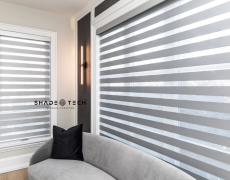
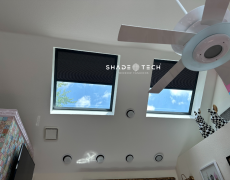
Matter shades add a control layer to that performance. Solar shades can lower during the most intense afternoon exposure while maintaining an outward view. Room-darkening roller shades can close for movie time or nursery naps. Dual-shade systems can shift from light-filtering privacy to blackout coverage on demand. The automation does not replace good fabric selection, openness factor, or precise coverage. It makes those decisions easier to use consistently.
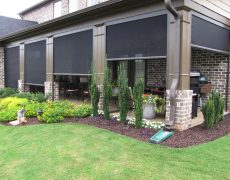
For many Dallas-Fort Worth properties, the highest-value automation is schedule-based rather than voice-based. West-facing shades can lower before late-day heat builds. East-facing bedroom shades can rise gradually in the morning. Exterior screens can deploy before a patio becomes uncomfortable. These settings can be adjusted seasonally, because the sun angle and daily routine change.
That said, automation should not make a room feel controlled by a clock. A well-designed system preserves simple manual control at the wall, on a handheld remote, and in the homeowner’s preferred smart-home platform. Technology works best when it is available without becoming a chore.
The Details That Determine Whether a System Feels Premium
Matter compatibility is valuable, but it is only one part of a custom motorized shade project. The shade itself must fit the opening precisely, operate quietly, and complement the architecture. On large contemporary windows, small measurement errors, light gaps, or poorly placed brackets are immediately noticeable.
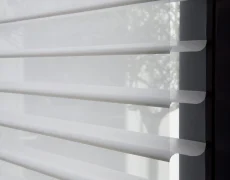
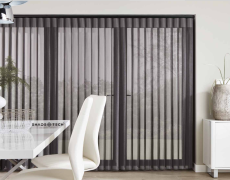
Fabric selection also deserves more attention than a color sample alone can provide. Openness affects glare control and privacy. Darker solar fabrics often preserve a sharper daytime view, while lighter fabrics can brighten the room and soften the appearance of the window. Room-darkening fabrics improve sleep and media-room performance, but side light gaps may still require side channels, drapery, or a properly designed cassette when near-blackout conditions are the goal.
Motor capacity is another technical detail with visible consequences. Oversized rollers, wide fabrics, and heavier blackout materials need motors specified for the actual shade weight and tube diameter. Choosing the wrong motor can result in slower operation, excess noise, shortened component life, or inconsistent shade alignment.
Professional installation is equally central. Power planning, outlet placement, charging access for battery-powered options, recessed pockets, fascia choices, and control locations should be addressed before trim and paint whenever possible. Retrofitting remains possible in many homes, but early coordination creates a cleaner finished result.
Choosing the Right Control Path
Not every homeowner needs the same smart-home architecture. The right approach depends on the size of the project, the home’s existing devices, and the level of automation expected.
Direct Matter control and bridged systems
A direct Matter device connects to a Matter ecosystem without relying on a proprietary shade bridge for everyday platform control. This can simplify the device path, particularly in homes built around Thread. A bridged system uses a manufacturer’s gateway to bring its shades into Matter. That can still be an excellent choice, especially when the shade manufacturer offers specialized controls, advanced limits, or features that extend beyond the standard Matter command set.
The key question is not whether a bridge exists. It is whether the entire system is stable, professionally configured, and appropriate for the property. A bridge may be the best way to support a larger shade installation with dependable coverage and dedicated product controls.
Battery, hardwired, and solar power
Battery-powered shades are practical for finished homes where running low-voltage wiring would disrupt walls or ceilings. They offer a clean look and can be an efficient retrofit solution, though batteries require a maintenance plan and convenient access for charging or replacement.
Hardwired motorized shades are often the preferred choice for new construction, major remodels, clinics, restaurants, and large installations. They remove routine battery service and support a more permanent infrastructure. Solar charging can extend battery life in suitable windows, but it depends on adequate daylight and should be evaluated against the window’s orientation and shading conditions.
Voice control is useful, but not the whole experience
Alexa, Google Assistant, and Siri can make everyday adjustments convenient, especially when hands are full or a room has many windows. Still, voice is not always the best interface. Families often prefer a wall keypad for common scenes, while a scheduled automation handles repetitive solar control without anyone asking.
For a restaurant or medical clinic, staff-friendly controls are usually more valuable than elaborate voice routines. A clearly labeled scene control and a reliable schedule keep the environment consistent without placing shade management on the team’s daily checklist.
Questions to Settle Before Ordering Matter Shades
A successful project begins with the room, not the app. Determine what each window needs to accomplish: reduce glare, protect finishes, improve privacy, darken a bedroom, manage heat, or preserve a view. Then consider the home’s smart platform, network layout, and power options.
It is also worth defining the automation behavior in plain language. Should shades lower at a set time, based on sunlight, when the home enters away mode, or only when a user activates a scene? Should bedroom shades open on weekdays but remain closed later on weekends? Those choices shape the controls, sensors, and installation details needed for the finished system.
For builders and designers, early coordination avoids costly compromises. Shade pockets, low-voltage wiring, recessed tracks, and window depth all influence the final appearance. For existing homes, a site visit identifies what can be accomplished cleanly with battery power, surface-mounted hardware, or carefully routed wiring.
ShadeoTech approaches this work as a complete custom system, from precision measurement and Texas manufacturing to installation and smart-home setup. That matters because the fabric, hardware, motor, controls, and programming must operate as one finished installation, not as a collection of separately purchased parts.
Matter gives homeowners a more flexible way to bring shading into their smart-home routines. The lasting value, however, comes from selecting shades that solve the actual problem at the glass: heat, glare, privacy, UV exposure, or comfort. When those fundamentals are specified well, the automation becomes something better than a novelty – it becomes a dependable part of how the room works every day.
