








A patio can look perfect at 9 a.m. and become unusable by midafternoon. In North Texas, direct sun, reflected heat from hardscape, wind-driven insects, and sudden weather shifts all affect how to shade patio openings effectively. The right solution does more than make an outdoor room look finished. It creates a more comfortable extension of the home, protects furnishings from UV exposure, and gives you practical control over heat and glare.
The best approach depends on the size and orientation of the opening, whether the patio is fully covered, how often the space is used, and how much weather protection you expect. A standard off-the-shelf shade may help for a season. A custom-fitted exterior shading system is built to perform for the long term.
Start With What the Patio Is Fighting
Before selecting a screen or shade, identify the primary problem. A west-facing patio usually needs serious late-day solar control. A south-facing opening receives more consistent sun and may benefit from shades that can remain lowered for longer periods without making the area feel closed in. East-facing patios often need morning glare management, while north-facing spaces may prioritize insect control and privacy over heat reduction.
The opening itself matters just as much. Wide contemporary patio spans, multi-panel sliding doors, and tall ceilings need systems designed to stay aligned and stable. A shade that works on a small porch can look undersized or perform poorly across a 16-foot opening.
Consider what is immediately outside and around the patio, too. A light-colored pool deck or stone terrace reflects heat upward. An uncovered side wall may allow low-angle sun to enter from the side. Nearby trees can reduce direct solar exposure but add leaves, pollen, and maintenance considerations. Precision measurement should account for all of these conditions, not simply the width of the opening.
Choose the Right Way to Shade Patio Openings
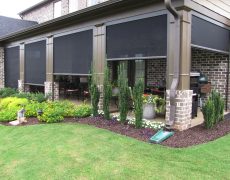
For most covered patios, exterior motorized screens offer the most complete combination of sun control, insect protection, and clean design. They lower vertically from a discreet housing and create a defined boundary without permanently closing off the outdoor space. When raised, the patio retains open views and airflow. When lowered, the screen filters intense sunlight, reduces glare, and helps make the space more comfortable during the hottest parts of the day.
Motorized exterior screens for flexible coverage
Motorized screens are a strong choice for patios that need on-demand shade. They are especially effective on large openings beneath a roofline, pergola, or outdoor living structure. High-quality systems use side tracks or guided channels to keep the fabric taut and controlled, even when North Texas wind picks up.
Fabric selection determines how the screen performs. More open weave fabrics preserve outward views and airflow while reducing glare and solar intensity. Tighter solar fabrics provide greater privacy and stronger heat reduction, although they can slightly reduce visibility and daylight. If insects are the main concern, a dedicated insect screen may be the better fit. In many projects, the best answer is a solar screen fabric that balances shade, view-through, and bug control.
Motorization matters because exterior shade only works when people use it. With a wall control, handheld remote, app, or voice command, lowering a screen becomes effortless. Automated schedules can lower screens before late-afternoon sun reaches the patio, then raise them after the peak heat has passed.
Retractable shades for open-sided structures
If the patio has a pergola or exposed overhead structure, retractable canopy shades can control top-down solar exposure. These systems are useful where the primary issue is sun entering from above rather than through a vertical opening. They bring valuable shade to seating areas, outdoor kitchens, and dining spaces without requiring a permanent solid roof.
Their trade-off is that overhead shades do not solve low-angle sun coming through the sides. On a west-facing patio, a retractable canopy may be most effective when paired with vertical exterior screens. Together, the two systems manage sun from above and the side while preserving the flexibility to open the space completely when conditions are pleasant.
Fixed architectural shade when constant coverage is needed
Fixed louvers, awnings, and architectural panels can work well for commercial patios, restaurant seating, and certain residential applications. They offer dependable coverage with little day-to-day adjustment, and they can become an intentional part of the building design.
The limitation is flexibility. Fixed shade is always present, which may reduce winter sunlight, block desired views, or make a patio feel darker than intended. It also cannot respond to changing weather in the way a motorized screen can. This route is best when the exposure is consistently harsh and a permanent design feature suits the property.
Measure for Performance, Not Just Fit
An outdoor shade system must fit precisely to operate reliably. A small measurement error can leave light gaps, cause interference with columns or trim, or make a guided screen track difficult to align. For wide openings, structural mounting surfaces and clearances become even more important.
A professional site evaluation should document the opening width and height, mounting depth, soffit or beam conditions, nearby doors and hardware, and the direction of sun exposure. It should also confirm where power will come from for motorized operation. Battery-powered options can be appropriate in select situations, but hardwired power is often the preferred choice for larger, frequently used exterior screens because it supports dependable daily operation.
Custom manufacturing is valuable here. Rather than forcing a standard-size product into a complicated opening, the shade housing, fabric, side tracks, and controls are specified for the patio as built. That is particularly important for Dallas-area homes with oversized openings and contemporary outdoor living designs.
Select Materials Built for Texas Conditions
Exterior shading is exposed to more than sunlight. It must contend with heat, UV radiation, wind, humidity, dust, pollen, and occasional storms. The screen fabric should be engineered for outdoor use, with color stability and resistance to fading. Hardware should be durable, corrosion-resistant, and properly finished for exposure.
Dark screen fabrics often provide better outward visibility during daylight because they reduce glare and create less visual reflection. Lighter fabrics can complement a brighter exterior palette and may make the enclosed patio feel more open, but they can show dust and weathering more readily. Color should support the architecture, but performance and maintenance expectations should lead the decision.
Do not assume that a screen alone will turn a patio into an air-conditioned room. It can significantly reduce direct solar load and make fans more effective, yet outdoor comfort still depends on temperature, humidity, wind, and the openness of the structure. The goal is meaningful improvement: less harsh sun, less glare, fewer insects, and more hours when the patio feels inviting.
Add Smart Controls That Match How You Live
Smart shading is most useful when it anticipates a recurring problem. For example, screens can lower automatically at a set afternoon time, close when an outdoor entertainment area is in use, or respond to a sun sensor. A wind sensor can raise shades when conditions exceed the system’s recommended operating range, helping protect the fabric and hardware.
For homeowners with established smart-home systems, professional setup can integrate patio screens with Alexa, Google Home, Apple HomeKit, or compatible Matter-enabled platforms where supported by the selected controls. A simple command such as “shade the patio” is convenient, but automation provides the larger benefit. It keeps the outdoor space protected even when no one remembers to reach for a remote.
Restaurants, clinics with outdoor waiting areas, and hospitality properties can benefit from centralized control as well. Staff can adjust several openings quickly, maintain a polished guest environment, and reduce the need for manual cords or frequent hands-on adjustments.
Plan Installation Around the Entire Outdoor Room
A patio shade should work with lighting, ceiling fans, heaters, speakers, railings, and outdoor kitchen features. Screen housings need a clean mounting location that does not conflict with fixtures or obstruct doors. If the patio has multiple openings, control placement and fabric color should be coordinated so the completed space feels intentional rather than pieced together.
Professional installation also protects the investment. Properly aligned tracks, secure fasteners, clean electrical connections, and calibrated motor limits are what allow a motorized shade to operate quietly and consistently. ShadeoTech manufactures and installs custom systems locally in Texas, allowing the consultation, measurement, fabrication, installation, and smart-home setup to be managed as one coordinated process.
The most effective patio shade is not necessarily the darkest or most expensive option. It is the one designed around the sun, structure, and way you use the space. When those details are handled correctly, the patio stops being an area you avoid during the hottest hours and becomes a room you can enjoy far more often.
