

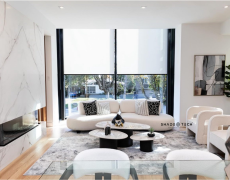
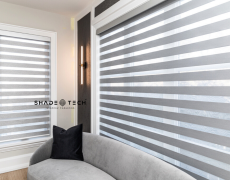
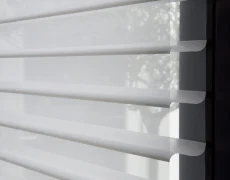
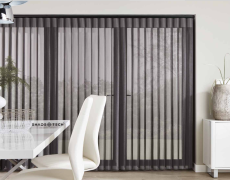







A west-facing conference room can look exceptional at 9:00 a.m. and become nearly unusable by 3:00 p.m. Screens wash out, employees shift seats to escape the sun, and video calls turn into a battle with bright windows. The best glare solutions for offices solve that problem without turning a polished workspace into a dark box.
For Dallas-Fort Worth offices, glare control also has a heat and energy component. Strong North Texas sun can pour through large glass elevations for hours, raising cooling demand while exposing furniture, flooring, merchandise, and artwork to UV light. The right system should preserve useful daylight, protect the space, and give staff simple control over changing conditions.
Why office glare is more than a window-covering issue
Glare is not simply brightness. It is the uncomfortable contrast between a bright window or reflected surface and a task area, particularly a computer monitor. Employees may close makeshift blinds, reposition monitors, or avoid desirable perimeter workstations when the light is unmanaged. In clinics, it can make patient rooms feel exposed and uncomfortable. In restaurants, low afternoon sun can disrupt the guest experience and make tables difficult to use.
A good glare-control plan balances four needs: visibility, solar heat reduction, privacy, and architectural appearance. Those priorities vary by room. A reception area may need an open, welcoming view. An accounting department may prioritize clear monitors all day. A conference room needs reliable scene control for presentations, while a restaurant may need a consistent façade that looks intentional from the street.
That is why an off-the-shelf blind rarely provides the best result. Window orientation, glass size, ceiling height, screen locations, and operating hours all affect the ideal fabric, opacity, and control method.
The best glare solutions for offices
Solar roller shades for daylight without screen washout
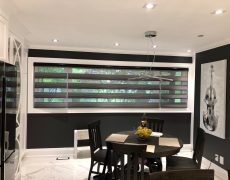
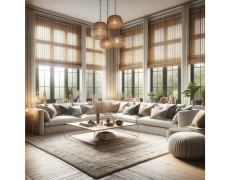
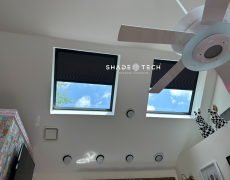
Solar roller shades are often the strongest all-around choice for contemporary offices with large windows. Their technical woven fabrics filter direct sunlight and soften contrast while maintaining an outward view. They also create a clean, uniform appearance across wide glass walls, which matters in client-facing commercial spaces.
The key specification is openness factor. A lower openness factor, such as 1% to 3%, provides stronger glare control and more privacy but limits the view. A 5% fabric is a common middle ground for offices that want daylight and exterior visibility. More open fabrics can work on shaded elevations but may not provide enough protection on intense south- or west-facing glass.
Color matters as well. Darker fabrics generally preserve a clearer view outward during daylight, while lighter fabrics can better reflect solar energy and may suit spaces where heat control is the priority. There is no universal winner. A professional assessment should account for orientation, interior finishes, and whether users work directly facing the windows.
Dual shades for rooms that need both daylight and privacy
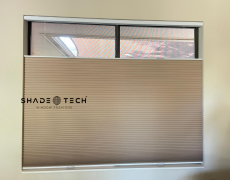
Dual-shade systems combine a solar shade with a separate blackout or room-darkening shade in one coordinated installation. During normal work hours, the solar fabric reduces glare while keeping the space connected to the outdoors. For presentations, private meetings, training sessions, or after-hours visibility control, the blackout shade lowers behind it.
This is particularly effective in boardrooms, executive offices, multipurpose rooms, medical exam spaces, and training centers. It costs more than a single treatment and requires careful pocket or fascia planning, but it avoids a common compromise: choosing a dense shade for occasional projection use and losing daylight every other day.
Motorized shades for consistent control across the building
Manual shades can perform well, but they depend on someone adjusting them at the right moment. In a busy office, that often means shades remain open until glare becomes disruptive, or stay closed long after conditions have changed. Motorization turns a window treatment into an operational system rather than a decorative afterthought.
Smart shades can raise and lower on schedules based on the sun’s path, opening in the morning for daylight and lowering automatically before direct afternoon sun reaches desks. They can also be grouped by façade, floor, department, or room. A west elevation can respond differently from an east elevation, and a conference room can have its own presentation setting.
For offices using Alexa, Google Home, Apple HomeKit, or Matter-compatible systems, automation can fit into broader building routines. A single command can lower shades, adjust lighting, and prepare a room for a client presentation. For commercial settings, wall controls and simple preset scenes are often more practical than relying on individual staff members to use an app.
Blackout roller shades for presentation and privacy zones
Blackout roller shades are purpose-built for spaces that require near-total light control, such as audiovisual rooms, training areas, conference rooms with projection, and certain healthcare applications. They block light through the fabric itself, but true room darkening also depends on side gaps, top gaps, and the treatment’s mounting method.
For a projection room, specify the installation around the whole opening, not just the fabric. Side channels, properly sized shades, and a light-blocking fascia can make a substantial difference. Blackout treatments are less suited to open-plan workstations, where employees generally benefit from filtered daylight rather than complete darkness.
Adjustable blinds for targeted directional control
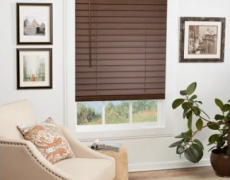
Venetian blinds, including aluminum and wood alternatives, allow users to tilt slats and redirect sunlight. This can be useful in private offices, smaller clinics, and spaces where occupants want frequent, hands-on adjustment. Slats can reduce direct sun while allowing some light to reflect toward the ceiling.
Their trade-off is visual complexity and maintenance. Wide banks of horizontal blinds can look busy on contemporary commercial glass, collect dust, and create inconsistent sightlines when each user sets them differently. They are best used where their adjustability is genuinely valuable, not as a default solution for an entire office floor.
Exterior screens where heat is the primary problem
When sunlight is heating the glass before it reaches the interior, exterior solar screens can be highly effective. They stop a significant portion of solar energy outside the building envelope, which can improve comfort near expansive windows and outdoor-adjacent work areas.
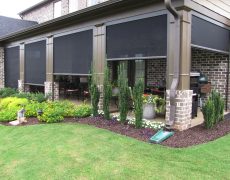
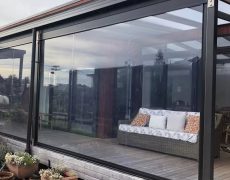
Exterior systems require durable materials, secure installation, and careful consideration of wind exposure. They are especially useful for patios, restaurant terraces, glass-heavy lobbies, and offices with intense sun exposure. Indoors, they are typically paired with interior shades when privacy or nighttime control is also needed.
Why window film is not always the complete answer
Window film can reduce heat and UV exposure, and it can be appropriate for select glazing conditions. But film is permanent and does not give occupants the ability to respond to changing weather, presentation needs, or privacy requirements. It also does not provide the visual softness or room-darkening capability of a custom shade system.
For some offices, film and solar shades work well together. The film handles baseline solar performance while shades manage glare and occupant comfort. Before applying film, confirm compatibility with the existing glass and manufacturer warranty requirements.
Design the system around the work happening near the glass
A glare-control decision should begin with a walkthrough, not a fabric swatch. Note where monitors face windows, where people sit during video calls, and which elevations receive the strongest direct sun. Look at reflective surfaces, too: glossy conference tables, white countertops, polished floors, and nearby buildings can amplify glare even when the sun is not directly visible.
Then decide what each zone needs. Open work areas may use 3% or 5% solar shades with automated schedules. Conference rooms may need dual shades. Reception areas may prioritize a more open weave and a coordinated fascia. Clinics may need greater privacy, wipeable materials, and quiet motors that do not disrupt appointments.
Architectural details deserve equal attention. Large windows often require multiple shade panels, and the alignment between them affects the finished look. Recessed pockets, surface-mounted fascia, cable routing, electrical access, and control locations should be planned before installation whenever possible. Precision measurement is what keeps a premium shade system operating smoothly and looking intentional.
Choose operation that employees will actually use
The most effective office shade is one people can operate without friction. For a single private office, manual control may be entirely practical. For a reception area, conference room, or broad glass façade, motorized control provides a cleaner and more consistent result.
Battery-powered motors can simplify retrofits where wiring is difficult. Hardwired systems are often preferable for large commercial projects or frequently operated shades because they remove battery-maintenance planning. The right approach depends on the building, access to power, number of shades, and desired level of automation.
ShadeoTech approaches office glare control as a custom performance system, combining local Texas manufacturing, precision installation, and smart-control setup for the specific demands of each space. The goal is not to cover windows indiscriminately. It is to make every seat, screen, and client-facing area more comfortable when the sun is at its strongest.
A well-planned shade system lets an office keep the daylight and views that make the space valuable, while removing the distractions that make people avoid the windows in the first place.
