

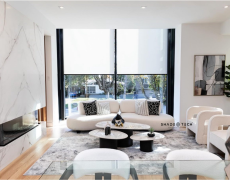
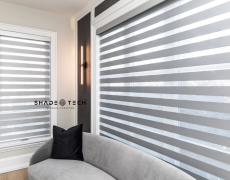
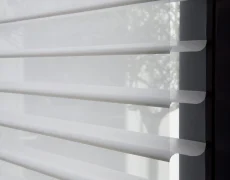
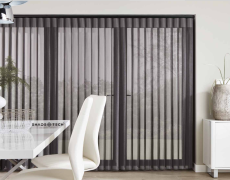
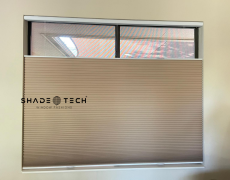

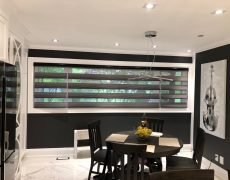
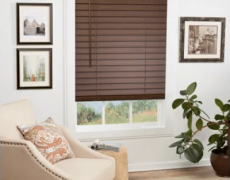






A guest may never ask what brand of shade is in the room, but they will remember the 6 a.m. glare, the streetlight leaking around the edges, or the inability to make the room feel private. Hotel window treatments are a direct part of the guest experience, affecting sleep quality, comfort, perceived cleanliness, and even online reviews.
For owners, developers, and hospitality designers, the right system must do more than look polished on opening day. It needs to perform through daily use, changing staff, repeated cleaning, strong sun exposure, and the expectations of guests who want simple controls that work the first time.
What Hotel Window Treatments Need to Solve
A hotel room has competing requirements. Guests want daylight when they are getting ready, a view when they are relaxing, privacy at night, and darkness when they are sleeping. The treatment also needs to complement the room design without creating another maintenance issue for the operations team.
That is why a single decorative curtain often falls short. Curtains can add warmth and softness, but they are not always enough for light control, glare reduction, or thermal performance. Commercial-grade roller shades, paired systems, drapery tracks, and motorized controls give hospitality properties more reliable ways to manage the room.
The right specification depends on the property. A limited-service hotel near a highway may prioritize room-darkening and acoustic support. A boutique property with expansive views may place more value on solar shading that preserves the view during the day. Medical-adjacent lodging, extended-stay properties, and upscale suites may require stronger privacy and easy-to-use automation.
Start With the Guest Room, Not the Product
The most effective design process begins with how the room is used. Consider the window orientation, nearby buildings, exterior lighting, ceiling height, and furniture layout before selecting fabrics or hardware.
Daylight and glare control
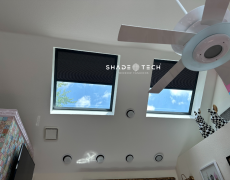
South- and west-facing windows can create intense heat and glare, especially in North Texas. A solar shade can soften direct sun, reduce screen glare, and maintain an outward view during the day. Openness factor matters here. A lower openness fabric provides more privacy and light filtering, while a higher openness fabric preserves more visibility but allows more light through.
For guest rooms, solar shades are frequently paired with a blackout shade or blackout drapery. This gives guests a practical choice: filtered daylight during the day and room-darkening coverage at night. It also allows the property to maintain a clean, modern window line without asking one fabric to do every job.
Privacy that holds up after dark
A common design mistake is assuming a light-filtering shade provides nighttime privacy. When interior lights are on and the exterior is dark, silhouettes may still be visible through many translucent materials. Rooms facing neighboring buildings, parking areas, pools, or public walkways need a second layer that provides dependable nighttime privacy.
Side gaps matter as much as the fabric itself. Precision measurement, correct bracket placement, and coordinated drapery returns help reduce light leakage. For rooms where sleep quality is a key selling point, details at the edges should be treated as a performance requirement, not an afterthought.
True room darkening
No window covering is completely blacked out unless the total system addresses the perimeter of the opening. Even a blackout roller shade can allow light around the sides, top, or bottom. That may be acceptable in some applications, but it can be disappointing in a premium guest room.
A dual treatment approach usually creates the strongest result: a solar or light-filtering shade for daytime operation, plus blackout drapery or a blackout shade for nighttime. For higher-performance rooms, side channels and carefully designed valances can further reduce light intrusion. The right solution depends on the guest expectation, the surrounding environment, and the room rate the property supports.
Durability Is a Design Decision
Hotel window treatments get used differently than residential shades. Guests pull, raise, lower, and sometimes misuse them. Housekeeping teams clean around them every day. Maintenance departments need parts and controls that can be serviced without replacing an entire system.
Commercial applications benefit from fabrics selected for dimensional stability, colorfastness, cleanability, and resistance to repeated handling. Hardware should be appropriately sized for the window width and fabric weight. A treatment that looks elegant but binds, frays, or sags after a year is not a cost-effective specification.
Motorized shades can reduce some of the wear associated with manual operation, particularly on large windows or in rooms with hard-to-reach openings. They also eliminate hanging chains, which can create a cluttered appearance and add another component for staff to maintain. Still, motorization should be specified with a realistic service plan. Properties need accessible power, dependable controls, and a clear path for programming or replacing components when needed.
Why Motorization Makes Sense in Hospitality
Motorized hotel window treatments are not only a luxury feature. In the right setting, they improve consistency and operations. A guest can lower blackout shades from bedside controls instead of crossing the room. Housekeeping can open shades during turnover to brighten the space. Managers can establish schedules for common areas that reduce afternoon heat gain without relying on staff to adjust every window.
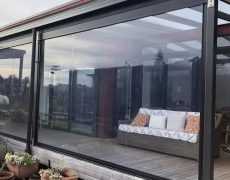
In suites, meeting rooms, lounges, and restaurant spaces, automation is especially valuable. Shades can respond to a wall keypad, a schedule, or a building control system. For venues with large glass walls, this improves comfort during presentations and helps protect furnishings from ongoing UV exposure.
There are trade-offs. Battery-powered shades can simplify installation where wiring is difficult, but batteries require periodic replacement. Hardwired systems are often better suited for new construction, major renovations, and high-use common spaces because they avoid battery maintenance. A professional planning phase should identify power locations, control zones, and access needs before drywall, millwork, or ceiling details are finalized.
Common Areas Need a Different Strategy
A lobby, breakfast area, restaurant, clinic waiting room, or hotel conference space has different needs than a guest room. In these spaces, the window treatment often supports the business itself.
Restaurants need glare control that lets diners enjoy the view. Meeting rooms need reliable projection conditions. Medical clinics need privacy and calm without making the space feel closed off. Lobby areas need shades that handle broad exposures while maintaining an inviting appearance throughout the day.
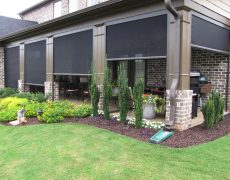
For these environments, solar shades are often the foundation because they manage heat and glare while retaining daylight. Depending on the design, they can be installed as exposed rollers for a clean architectural look or concealed in pockets and fascia systems for a more finished appearance. The fabric color should be selected with performance in mind, not just aesthetics. Darker fabrics often preserve views more effectively, while lighter fabrics may better reflect heat and brighten the interior.
Installation Quality Protects the Investment
A well-specified product can still disappoint if the installation is rushed. Uneven roller alignment, incorrect mounting heights, inconsistent gaps, and poorly placed controls are visible in a hospitality setting. They also create avoidable service calls.
Custom measurement is particularly valuable for older properties, irregular openings, and contemporary buildings with large expanses of glass. Window dimensions can vary more than plans suggest, and trim, sprinkler heads, soffits, curtain tracks, and HVAC grilles all affect the final installation.
For Dallas-Fort Worth properties, local manufacturing and installation can make coordination more practical during renovation schedules or phased openings. ShadeoTech designs, manufactures, and installs custom systems with the precision needed for hospitality spaces where visual consistency and long-term performance matter.
Specify for the Life of the Property
The lowest initial price is rarely the lowest long-term cost. Replacing faded fabric, damaged manual hardware, or poorly fitted shades across dozens of rooms is disruptive and expensive. A more thoughtful system can help control energy use, protect interior finishes, reduce maintenance issues, and support a better guest stay from day one.
The best hotel window treatment is the one guests barely have to think about: it opens when they want daylight, closes when they want privacy, blocks light when they need rest, and continues working through thousands of stays. That kind of quiet performance is worth designing for.
