

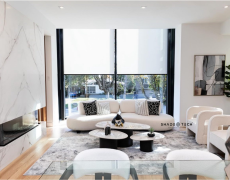

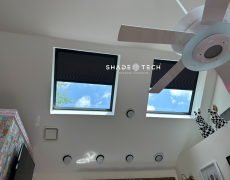


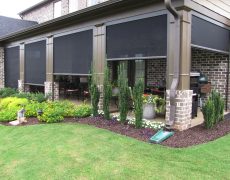

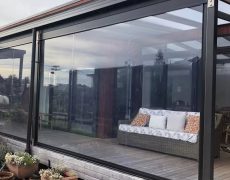



A wall of glass can make a Dallas home feel exceptional – until late-afternoon sun turns the living room into the brightest, hottest room in the house. Closing a single shade solves part of the problem, but it can also remove the soft daylight and exterior view that made the room appealing in the first place. Dual shade light filtering provides a more precise answer: one fabric for comfortable daytime light and a second for privacy, room darkening, or blackout when conditions change.
For North Texas homes with expansive windows, west-facing rooms, high ceilings, and open floor plans, that extra level of control is not a minor upgrade. It is what allows window coverings to support the architecture rather than work against it.
What Is Dual Shade Light Filtering?
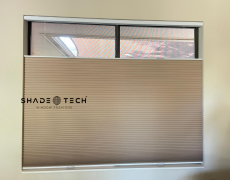
A dual shade system uses two independently operated shade fabrics at the same window. Most often, the front shade is a light-filtering or solar fabric and the second shade is a room-darkening or blackout fabric. Each layer serves a different purpose, so homeowners can select the amount of daylight, glare control, privacy, and darkness the room needs at a particular moment.
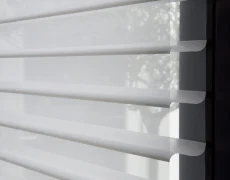
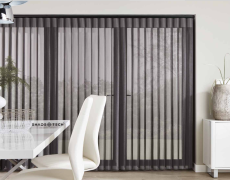
With the light-filtering layer down, harsh direct sun is softened into an even, usable glow. The fabric diffuses daylight, reduces glare on televisions and screens, and helps protect flooring, artwork, and furnishings from UV exposure. Depending on the material and openness factor selected, it may preserve a softened view outdoors while creating daytime privacy.
The secondary shade takes over after dark or whenever greater privacy is needed. A room-darkening fabric substantially reduces incoming light, while a true blackout fabric is designed for the strongest possible darkness. The distinction matters: blackout fabric minimizes light through the material, but small light gaps can remain at the sides or top unless the system is designed with the appropriate cassette, channels, and installation details.
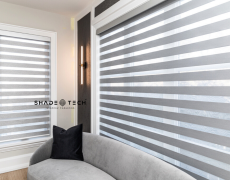
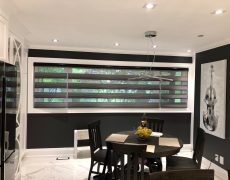
Dual shades are sometimes confused with zebra shades, which alternate sheer and opaque bands in one fabric. Zebra shades offer variable light control in a compact format, but they do not deliver the same separate daytime filtering and blackout capability as a true dual roller shade system. For bedrooms, media rooms, nurseries, and highly exposed living spaces, two dedicated fabrics are often the more capable solution.
Why Dallas-Fort Worth Homes Benefit From Two Layers
North Texas sunlight is intense for much of the year. A room with unprotected glass can experience uncomfortable glare and heat gain long before the thermostat recognizes the full effect. Light-filtering shades do not replace insulation or air conditioning, but they can reduce direct solar load at the glass and make occupied areas feel more comfortable.
The first layer is especially useful when a homeowner wants to preserve daytime openness. Instead of shutting the room off from natural light, a carefully selected filtering fabric moderates it. In a kitchen, home office, or great room, that often means fewer reflections on screens, less squinting, and a more consistent visual environment throughout the day.
At night, the priorities change. Interior lighting can turn uncovered windows into a privacy concern, particularly in closely spaced neighborhoods or homes with street-facing glass. The second layer gives the room a finished, private appearance without requiring a heavy drapery treatment. It also gives bedrooms and media rooms the darkness they need without sacrificing daylight control during the rest of the day.
The payoff is flexibility. A single blackout shade is excellent for sleep but can make a main living area feel closed in at noon. A single light-filtering shade is ideal for softened daylight but may not provide enough nighttime privacy. Dual systems address both conditions without asking one fabric to make every compromise.
Choosing the Right Fabrics for Each Room
The best combination depends on how the space is used, how the windows face, and what sits outside them. Fabric choice should be made with samples at the actual window whenever possible. Color, weave, and openness look different against bright Texas daylight than they do under showroom lighting.
Living Rooms and Open-Plan Spaces
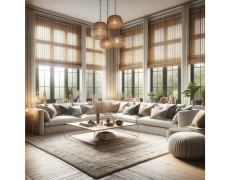
A solar or light-filtering fabric paired with a room-darkening rear shade is often a strong choice. The front layer can keep the room bright while limiting glare and filtering UV. The rear layer provides privacy for evening entertaining, family movie nights, or windows that face neighboring homes.
For view-focused rooms, the fabric openness factor deserves close attention. A more open solar weave generally preserves more of the exterior view and admits more light, but it offers less privacy and less glare reduction. A tighter weave creates stronger filtering and privacy, though the view becomes more subdued. There is no universal best option – the right balance comes down to the room’s exposure and the homeowner’s priorities.
Bedrooms, Nurseries, and Media Rooms
Pairing a light-filtering shade with a blackout layer gives these spaces day-to-night versatility. The filtering fabric keeps daytime glare under control without making the room feel like a cave. The blackout layer supports better sleep, nap schedules, and screen viewing when deployed.
For a bedroom with early sun exposure, consider side channels or a more enclosed cassette system if darkness is the primary goal. Precision measurement and professional installation matter here. A shade can use blackout fabric and still allow noticeable light around the perimeter if tolerances are not planned correctly.
Kitchens, Offices, and Street-Facing Rooms
These spaces usually benefit most from practical glare control and privacy. A light-filtering layer prevents the sharp contrast that makes computer work and food preparation uncomfortable, while the second shade gives occupants privacy after sunset. In an office, motorization can be particularly valuable because the shades can respond to changing sun angles without interrupting a meeting or work session.
Motorization Makes the System More Useful
Two fabrics offer more options, but manual operation can discourage people from using them consistently, especially on tall or hard-to-reach windows. Motorized dual shades remove that friction. Each layer can be adjusted by remote, wall control, app, voice command, or automated schedule, depending on the selected system.
A practical schedule might lower the light-filtering shade on west-facing windows before afternoon glare builds, then lower the privacy layer at sunset. In a bedroom, the blackout shade can close at bedtime and rise gradually in the morning while the filtered layer remains available for softer daytime light. These routines are not just about convenience. They help protect finishes from prolonged direct sun and keep the home more comfortable during predictable exposure periods.
For smart-home households, compatibility should be confirmed before fabrication. A professionally specified system can be integrated with platforms such as Alexa, Google Home, Apple HomeKit, or Matter-enabled controls when the motor and hub configuration support them. The key is to plan the controls around how the household already uses its home, rather than adding a shade app no one opens.
Commercial settings have similar needs. Medical clinics can use filtering shades to reduce patient-area glare while maintaining a calm, daylight-filled environment. Restaurants can manage strong afternoon exposure without closing off their dining room. Builders and designers can create a polished finish on large glazing packages while giving occupants intuitive control over privacy and light.
Details That Determine Performance
A dual shade system is only as effective as its specification and installation. Because two rollers, fabrics, and control paths are involved, the dimensions of the window recess, mounting surface, trim, and headroom need to be evaluated before production. Large contemporary windows may call for multiple aligned shades rather than one oversized unit, both for fabric performance and visual consistency.
Fabric selection also affects heat, color, and visibility. Darker solar fabrics can provide clearer outward views during the day, while lighter fabrics may better reflect heat and blend into pale interiors. Neither is automatically superior. The direction of the window, the desired look from inside and outside, and the room’s cooling demands all belong in the decision.
For an exterior-mounted shade, the edge coverage can improve light control and privacy. For a recessed installation, the clean architectural appearance may be the priority. Motor location, power access, battery service requirements, and smart-home hardware should be resolved before walls are finished or furniture is placed beneath the windows.
This is where local manufacturing and installation add real value. ShadeoTech measures, fabricates, and installs custom systems in Texas, allowing the shade design to account for actual window conditions instead of relying on standard retail dimensions. The result is a better fit, cleaner alignment, and a control plan that suits the room from the first day.
A Better Way to Use Daylight
Dual shade light filtering is not about making every room darker. It is about making daylight usable on your terms. The right system can preserve the airy quality of large windows at midday, protect the room from harsh sun, and provide privacy or blackout performance when the moment calls for it.
Before choosing fabrics, spend a few days noticing when glare appears, which windows heat up first, and when privacy becomes a concern. Those patterns will point to a dual shade configuration that feels tailored to the way the room is actually lived in.
