

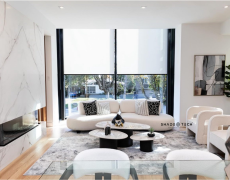
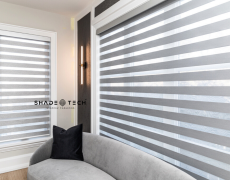
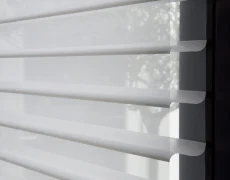
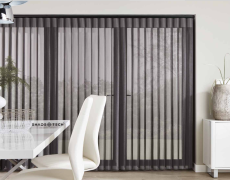







A west-facing patio door can turn a beautiful Dallas living room into the warmest room in the house by midafternoon. Vertical blinds for sliding doors address that problem at its source, covering wide glass expanses with panels that move in the same direction as the door. When specified and installed correctly, they bring privacy, glare control, UV protection, and a clean architectural finish to one of the hardest windows to cover.
For North Texas homes, this is not simply a decorative choice. Sliding doors often face patios, pools, outdoor kitchens, and entertaining areas, which means the treatment has to look refined while standing up to frequent use, direct sun, and changing light throughout the day. The right system makes the door easier to live with rather than becoming another obstacle at the threshold.
Why Sheer Vertical Blinds Work for Sliding Doors
A sliding glass door operates horizontally, so a vertical treatment is naturally compatible with it. The vanes travel to one side when the door needs to be opened, then rotate in place to control light without blocking access. That straightforward movement is a major advantage over many standard horizontal blinds, which can feel awkward or vulnerable on broad, frequently used doors.
Vertical blinds also give homeowners more control than a simple open-or-closed patio door covering. Tilt the vanes slightly to soften afternoon glare while maintaining a view of the yard. Close them more fully for privacy after dark. Open the full span when hosting guests or moving between the kitchen, living area, and patio.
The result depends on the system. Basic retail vertical blinds can rattle, hang unevenly, and show gaps at the edges. A custom track, precisely sized vanes, and professional mounting create a much more polished experience. For large contemporary door openings, those details are visible every day.
Choose Materials for Light, Heat, and Daily Use
The most appropriate material depends on the room, exposure, and design goals. In Dallas-Fort Worth, sun performance should be part of the selection process, especially on south- and west-facing glass.
Sheer Vertical vanes are practical in high-traffic settings. They resist moisture, wipe clean easily, and are well suited to luxury houses, large sliding and folding doors. Quality matters here: better materials maintain their shape and color more reliably than thin, lightweight vinyl.
Fabric vertical vanes create a softer, more residential look. They can diffuse harsh daylight without making a room feel closed off, making them a strong option for formal living rooms, primary suites, and open-plan spaces. The fabric should be selected with UV resistance and cleanability in mind, particularly near active outdoor areas.
For homes with expansive views, panel-track-style vertical systems are often worth considering. They use broad fabric panels rather than narrow vanes, producing a quieter, more tailored appearance. They are technically a different category from traditional vertical blinds, but they solve the same sliding-door challenge and can better suit minimalist interiors.
Color selection affects performance as well as appearance. Light-colored materials can help a room feel brighter, while darker solar-screen fabrics may provide stronger glare reduction and better outward visibility during daylight hours. There is no universal best choice. A media room with direct western sun needs a different solution than a shaded breakfast area that needs privacy at night.
Pay Attention to the Direction of the Stack
Before selecting a treatment, determine which side of the door is used most often and where the movable door panel operates. Vertical blinds can stack left, right, or split from the center. The stack should clear the active passage rather than bunching where people enter and exit.
This is one reason field measurement matters. The finished treatment has to account for handles, trim, adjacent windows, furniture placement, and the space needed for the vanes to stack neatly. A system that looks correct on a showroom display can be inconvenient if it is configured without considering the actual room.
Custom Sizing Changes the Finish
Sliding doors are rarely as simple as their nominal dimensions suggest. Frame depth, molding, ceiling height, track obstructions, and out-of-square openings all affect how a vertical blind system should be built. On large openings, even a small measurement error can lead to light gaps, poor alignment, or a track that does not operate smoothly.
A properly designed installation begins with the mounting location. Outside mounting above the opening is common because it allows the vanes to cover the full glass area and can reduce side gaps. In some homes, a ceiling-mounted track provides the most contemporary appearance, especially when doors reach close to the ceiling or are part of a wall of glass.
The track itself deserves attention. A premium headrail should support smooth operation without excessive noise or visible sagging. For wider doors, the system must be engineered for the overall span and vane weight. This is particularly relevant in commercial spaces, where staff and guests may operate the door treatment many times a day.
At ShadeoTech, local measurement, manufacturing, and installation help keep those decisions connected. Rather than adapting a standard retail product after the fact, the treatment can be built around the opening, the room’s sun exposure, and the way the space is actually used.
Motorized Vertical Blinds for Busy Homes and Businesses
Motorization makes the strongest case on large or hard-to-reach sliding doors. Instead of pulling a wand or cord across a wide opening, users can open, close, or tilt the blinds with a remote, wall control, app, or voice command. It is a practical upgrade when doors are behind furniture, near high ceilings, or part of a smart-home routine.
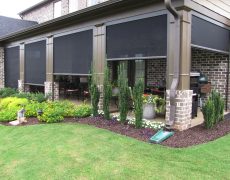
Automation is especially useful for heat management. A scheduled system can close during the hottest part of a west-facing afternoon, reducing direct solar exposure before the room becomes uncomfortable. It can then open later in the day to restore natural light and the view. This approach supports comfort and can reduce the strain placed on the home’s cooling system, though actual energy savings depend on glass type, insulation, HVAC performance, and how the shades are programmed.
For smart-home households, compatibility should be confirmed before purchase. A professionally configured treatment can work within ecosystems such as Alexa, Google Home, Apple HomeKit, and Matter-enabled systems, but the right motor, bridge, controls, and network setup all matter. The goal is dependable daily operation, not a feature that only works when someone opens an app and troubleshoots it.
In restaurants, medical clinics, and offices, motorized vertical treatments can also support a more consistent guest experience. Staff can adjust daylight across a lobby, dining room, or conference area without manually handling several large coverings. That consistency improves comfort and helps maintain a polished appearance throughout the day.
Design Details That Prevent Regret
The biggest mistake with vertical blinds is treating them as an afterthought. Because they cover a wide opening, the fabric, vane width, track color, and stack location have a meaningful visual impact. A well-selected system should relate to the room’s wall color, flooring, window frames, and other window treatments rather than looking like an isolated utility product.
Consider how the blinds will look when open as well as closed. Narrow vanes create a traditional vertical-blind profile, while wider vanes or panel systems have a more contemporary presence. If the sliding door sits beside fixed windows, matching the opacity and color of nearby shades can make the entire wall feel intentional.
Child and pet safety should also shape the hardware choice. Cordless and motorized options remove common cord-related concerns and often provide a cleaner appearance. For homes with pets that move in and out frequently, durable materials and a stack direction that keeps the opening clear can make a noticeable difference in day-to-day use.
A Better Fit for the Glass You Use Most
Vertical blinds for sliding doors are at their best when they are planned as part of the room, not purchased as a last-minute cover for glare. The right material manages Texas sun without sacrificing the view, the right track moves reliably, and the right configuration respects how people cross the threshold every day.
For a patio door that anchors the room, precision is not an extra. It is what turns a wide expanse of glass into a source of controlled light, comfortable temperatures, and effortless access to the outdoors.
