

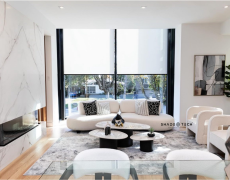
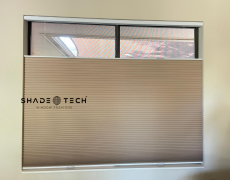

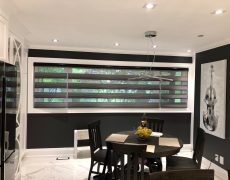
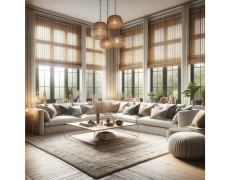
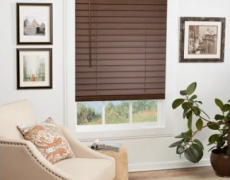
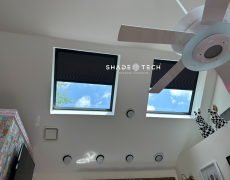






A west-facing Dallas living room can be bright enough to feel like an extension of the patio by 4 p.m. That is where tri shades earn their place. Their layered fabric construction gives homeowners a more precise way to manage glare, privacy, UV exposure, and daylight without covering a beautiful window with a heavy treatment.
For homes with large contemporary glass walls, tall entry windows, and open-concept rooms, the goal is rarely to make a room completely dark all day. It is to keep the view, soften the sun, and make the space comfortable when Texas heat is at its most aggressive. A custom tri shade system is designed for that middle ground.
What Are Tri Shades?
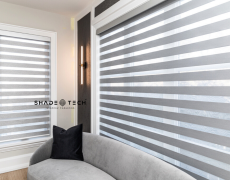
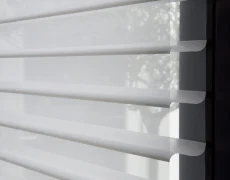
Tri shades are a layered window-shade style that uses alternating sheer and opaque fabric sections to create adjustable light control. Depending on the specific fabric and construction, the term may refer to a triple-layer shade system or a variation of a dual-layer banded shade. The key benefit is the same: the fabric layers can align to admit filtered daylight, overlap to create more privacy, or close more fully for room-darkening coverage.
They are often compared with zebra shades because both use horizontal fabric bands. The difference comes down to the fabric construction and the level of control offered by the product selected. A professionally specified tri shade can create a refined, architectural look while providing more flexibility than a standard roller shade.
The effect is clean and modern. When raised, the shade rolls into a compact headrail. When lowered, its horizontal bands add structure without making the window feel busy. That makes this style especially well suited to modern Dallas-Fort Worth homes, offices, medical clinics, and hospitality spaces where polished appearance and practical performance need to work together.
Why Tri Shades Work Well in North Texas
North Texas sunlight is not a minor design consideration. It affects room temperature, furniture finishes, screen visibility, and how usable a space feels throughout the day. A bare window may look striking in a listing photo, but the afternoon sun can quickly create glare on televisions and laptops, fade hardwood floors, and push a room’s cooling demand upward.
Tri shades let homeowners make small adjustments instead of choosing between fully open and fully closed. Align the sheer sections when you want daylight and an outward view with softened glare. Shift the opaque bands into position when privacy or stronger solar control matters. In bedrooms, media rooms, and street-facing spaces, a room-darkening fabric can offer more coverage while preserving the same tailored profile.
The precise result depends on fabric opacity, color, window orientation, and the installation details. A light-colored solar-filtering fabric can reflect more heat while maintaining a brighter interior. A darker sheer may offer a clearer view outward but can absorb more solar energy. For a south- or west-facing wall of glass, fabric selection matters as much as the shade style itself.
Daylight without the glare
The most useful tri shade setting is often neither fully open nor fully closed. It is the filtered-light position that reduces harsh contrast across the room. This is especially valuable in kitchens, great rooms, and home offices, where natural light is welcome until it makes screens difficult to see or turns a dining table into a hot spot.
For commercial spaces, that control supports a better experience for staff and visitors. A clinic waiting room can feel open and calm while maintaining privacy. A restaurant can reduce late-afternoon glare for guests without losing the character of its windows. A conference room can be ready for presentations without the operational hassle of manually adjusting every opening.
Privacy that does not feel heavy
Privacy requirements change by room and by time of day. A living room overlooking a neighbor may need moderate daytime screening but stronger coverage after sunset. Bathrooms and bedrooms need a more private fabric choice. Tri shades allow for a lighter daytime presentation while still giving the window a controlled, finished appearance when privacy becomes the priority.
It is worth setting realistic expectations: no sheer fabric provides complete nighttime privacy when interior lights are on. If the room needs maximum privacy or near-blackout conditions, specify room-darkening material, side channels where appropriate, or a secondary treatment. The right design starts with how the room is actually used, not just how the shade looks in a sample book.
Custom Sizing Is What Makes the Difference
Tri shades depend on accurate alignment. When fabric bands are even, headrails are level, and the shade is built to the actual opening, the result looks intentional. A shade that is slightly undersized, mounted off level, or installed without accounting for trim depth can compromise both appearance and light control.
This matters even more on large windows and multi-window openings. A professional measurement considers width variations, sill depth, handles, mullions, ceiling height, and whether the shade will be inside-mounted or outside-mounted. In a new build, coordination with trim carpenters, electricians, and smart-home professionals can prevent avoidable compromises later.
ShadeoTech manufactures custom window treatments locally in Carrollton, allowing the fabric, dimensions, operating system, and installation approach to be matched to the project rather than pulled from a retail shelf. That factory-direct model is particularly valuable when a home has oversized windows, unusual architectural openings, or a designer’s exact color and opacity requirements.
Motorized Tri Shades Make Daily Control Easier
Motorization is a practical upgrade for tri shades, not just a luxury feature. The shade’s value comes from adjusting it as the sun moves. If the control is difficult to reach or inconvenient to use, many homeowners leave it in one position and lose much of that benefit.
With motorized shades, a wall switch, handheld remote, phone app, or voice command can adjust one shade, a room, or the entire home. Schedules can lower shades before west-facing rooms heat up, raise them in the morning for natural light, or close bedroom shades at night. Integration with Alexa, Google Home, Apple HomeKit, and Matter-compatible systems can make those settings part of a broader smart-home routine.
For high windows, stairwells, and large great rooms, motorization may be the only sensible way to operate the shades consistently. In commercial projects, it also helps staff maintain a uniform appearance across multiple windows without spending time on repetitive manual adjustments.
Battery-powered motors are often a good option when there is no nearby power source, while hardwired systems are worth considering during construction or renovation. Hardwired motors reduce the need for periodic charging and are well suited to large installations. The best choice depends on access, window count, control preferences, and the stage of the project.
Choosing the Right Fabric and Finish
The fabric is where tri shades become specific to the room. Start by identifying what the window must do. A family room may prioritize glare reduction and preserved views. A bedroom may need stronger privacy and light blockage. An office may need balanced daylight that does not interfere with video calls or monitors.
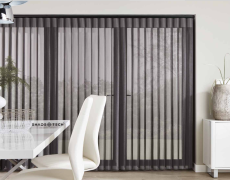
Color should support both the interior palette and solar performance. Soft neutrals integrate easily with painted trim and contemporary interiors. Darker fabrics can create a more defined visual line at the window, though they may not be the right choice for every hot, exposed elevation. Texture also matters. Fine woven sheers feel restrained and modern, while more visible textures can add warmth in transitional homes.
Do not overlook the headrail and mounting strategy. A slim cassette can give the installation a crisp finished edge. Inside mounting usually creates the most built-in appearance when the opening has sufficient depth. Outside mounting can be the better solution when the goal is to cover a wider area, reduce edge light, or work around shallow frames.
When Another Shade Style May Be Better
Tri shades are highly versatile, but they are not the automatic answer for every window. If the priority is a completely unobstructed view when shades are open, a traditional roller shade may have a simpler profile. If a bedroom requires the darkest possible environment, blackout roller shades with side channels may offer stronger performance. If insulation is the primary concern, cellular shades can provide a more insulating air-pocket design.
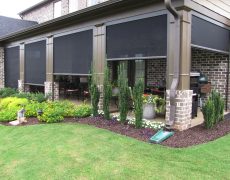
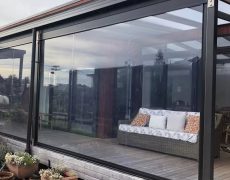
For patios, outdoor living areas, and openings exposed to wind and insects, exterior motorized screens solve a different problem. They can reduce solar load before it reaches the glass while improving the comfort of the space beyond it.
A well-planned home can use more than one shade type. Matching every room to the same product is convenient, but matching each window to its job usually produces the better result.
The smartest next step is to look at your home at the time of day when the sun creates the most frustration. That single observation often reveals whether tri shades need a sheer daytime setting, stronger privacy fabric, motorized scheduling, or a different solution entirely.
