

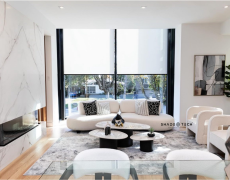
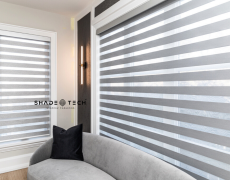
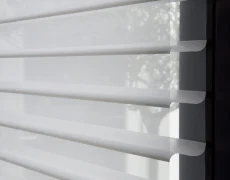
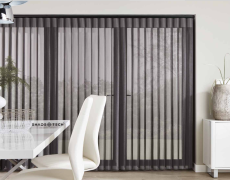

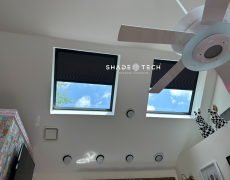


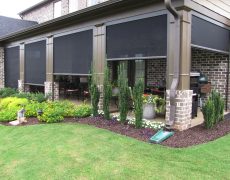

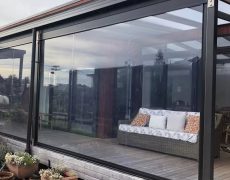



At 4 p.m. in a Dallas-Fort Worth living room with west-facing glass, window coverings stop being a finishing detail. They become part of how the home manages heat, glare, privacy, and daily comfort. The decision between smart shades versus traditional blinds is not simply about adding a motor. It is about choosing the level of control, design precision, and long-term performance your windows require.
Traditional blinds remain a practical option for many rooms. Smart shades add automation, cleaner sightlines, and scheduling that responds to the way a North Texas home actually operates. The better choice depends on the window, the room, the desired level of smart-home integration, and how much hands-on adjustment you are willing to do every day.
Smart shades versus traditional blinds: the core difference
Traditional blinds use manually operated cords, wands, or lift systems to raise, lower, and tilt slats. Their adjustable slats offer direct control over incoming light, which makes them useful where occupants want to fine-tune the view and brightness throughout the day. They are familiar, widely available, and generally have a lower initial cost.
Smart shades use a motorized drive system to raise, lower, or position the shade through a wall control, remote, mobile app, voice assistant, or automated schedule. Depending on the product and smart-home system, they can work with Alexa, Google Home, Apple HomeKit, and Matter-enabled platforms. Instead of walking to every window before leaving the house, a homeowner can set the shades to close during peak afternoon sun or open gradually in the morning.
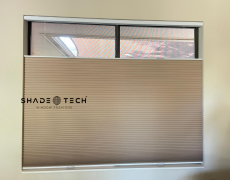
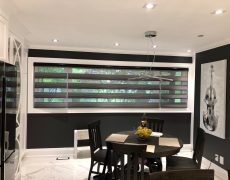
The distinction also affects the visual result. Blinds create a structured look with visible horizontal or vertical slats. Roller shades, Roman shades, cellular shades, and other motorized shade styles can present a quieter architectural surface, especially when installed inside a recessed window opening or paired with a concealed fascia. In modern homes with expansive glass, that restraint often matters as much as the technology.
Light control and privacy are not identical
Blinds are often chosen for their ability to tilt. Open the slats slightly and daylight enters while direct glare is reduced. Close them and privacy improves. That flexibility is valuable in street-facing bedrooms, offices, and spaces where people want to preserve a partial exterior view.
However, tilted slats do not always stop harsh Texas sunlight. Light can still reflect off floors, countertops, television screens, and work surfaces. In a room that receives intense afternoon exposure, a solar shade can provide more consistent glare management across the full window. The openness factor of the fabric determines how much view remains, while the material and color influence heat and light performance.
For total privacy or darkness, motorized blackout shades are usually a stronger fit than standard blinds. They are especially effective in primary bedrooms, nurseries, media rooms, and treatment areas within clinics. A blackout system must be measured and installed precisely to minimize light gaps around the edges. That is one reason custom fabrication and professional installation make a meaningful difference.
Privacy also changes by time of day. A solar shade may preserve a daytime view outward while limiting views inward, but that effect can reverse at night when interior lights are on. In rooms with nighttime privacy needs, pairing a solar shade with a blackout roller shade or a drapery layer can provide a more complete solution.
Heat gain makes the Dallas climate part of the decision
North Texas homeowners often notice the problem before they see it on an energy bill: a sun-facing room becomes uncomfortable, floors fade near the windows, and the HVAC system works harder late in the day. Both blinds and shades can help, but their performance depends on coverage, material, fit, and when they are used.
A manually operated blind only works when someone remembers to adjust it. That may be perfectly acceptable in a guest room or a low-use office. It is less effective for a two-story family room with hard-to-reach windows, a wall of glass facing west, or a home that sits empty during the hottest hours.
Smart shades make proactive control possible. A schedule can lower shades before direct sun reaches the room, rather than after furniture and surfaces have already absorbed heat. Scenes can also coordinate several windows at once, such as closing solar shades in the living area each afternoon while leaving kitchen windows open for natural light. The result is more consistent comfort without turning window covering management into another daily task.
Cellular shades can add insulating value because their honeycomb construction traps air. Solar roller shades are often selected for glare reduction and outward visibility. The best material is not universal. A shaded north-facing bedroom may prioritize privacy and softness, while a west-facing great room may need solar performance, large-scale motorization, and fabric selected specifically for UV exposure.
Convenience is where automation earns its place
The most obvious advantage of motorized shades is convenience, but convenience is more than pressing a button. It is the ability to make the window coverings work at the right time without interrupting a meeting, carrying groceries across the room, or finding a long wand for a high window.
In a smart home, shades can become part of a useful routine. A “Goodnight” command can lower bedroom shades and turn off lights. A “Movie” scene can reduce glare in the media room. Morning schedules can allow daylight in gradually without exposing a bedroom all at once. For homeowners with mobility concerns, automation can make hard-to-reach or heavy window treatments far easier to use.
Traditional blinds have an advantage when simplicity is the priority. There is no battery to recharge, no motor to configure, and no app to learn. Quality manual blinds can serve a straightforward window well for years. Smart shades introduce additional components, so product selection, power planning, programming, and installation quality matter more.
Battery-powered motors are often a practical choice for existing homes where running low-voltage wiring would be disruptive. Hardwired power can be preferable for frequently used shades, large or heavy treatments, and new construction projects where wiring can be planned before drywall. Solar charging options may help in suitable locations, though they are not the answer for every exposure or fabric type.
Design and construction should guide the choice
Large windows, tall ceilings, and open-concept layouts expose every detail. A generic off-the-shelf blind may fit the width of the opening, but it can still leave uneven gaps, interfere with trim, or look undersized against a substantial window wall. Custom window treatments are built around the actual opening, mounting conditions, fabric selection, and control requirements.
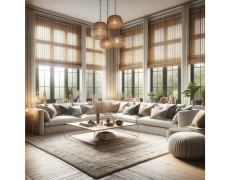
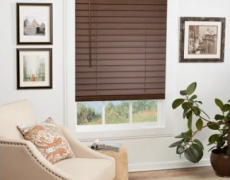
For contemporary Dallas homes, smart roller shades are often chosen because they maintain clean lines and scale well across wide expanses of glass. Woven shades can bring warmth and texture to interiors that feel overly hard or minimal. Motorized Roman shades offer a more tailored, decorative appearance. Blinds may be the right aesthetic when the room benefits from the crisp rhythm of wood, faux wood, aluminum, or vertical slats.
Material selection deserves practical attention. Natural wood has visual warmth but may not be ideal for humid areas or locations with extreme heat exposure. Faux wood can be durable and moisture-resistant. Shade fabrics should be selected for how they filter light, handle UV exposure, and coordinate with the room after sunlight changes throughout the day.
Cost is more than the purchase price
Traditional blinds generally cost less upfront, particularly for standard-size windows and basic manual controls. For a homeowner furnishing several secondary rooms on a defined budget, that lower entry cost can be sensible.
Smart shades cost more because the investment includes custom fabrication, motors, power options, controls, automation setup, and installation. For many clients, the return is not measured only in utility savings. It is measured in reduced glare, protected finishes, improved privacy, accessible operation, and a home that feels more responsive to everyday routines.
The comparison becomes more favorable for motorization when windows are difficult to reach or grouped together. One automated control can operate multiple shades in a great room, restaurant dining area, medical clinic, or conference space. In commercial settings, that consistency can improve appearance and reduce the time staff spend adjusting coverings throughout the day.
Avoid comparing only the advertised starting price. A system that is correctly measured, manufactured for the opening, installed securely, and programmed to work with the rest of the home is a different purchase from a retail blind that must be selected, transported, installed, and troubleshot separately.
When traditional blinds are the better answer
Smart shades are not automatically the right choice for every opening. Traditional blinds can be the better answer in low-use rooms, rental properties, budget-focused updates, or spaces where occupants want frequent slat-angle adjustment. They can also complement smart shades elsewhere in the home rather than competing with them.
The strongest projects often use both. A home may have automated solar shades in the great room, blackout motorized shades in bedrooms, durable faux-wood blinds in utility areas, and shutters where architectural presence is the priority. Each treatment should solve the specific light, privacy, heat, and style demands of its room.
For Dallas-Fort Worth homeowners, the practical question is not whether automation is impressive. It is whether the windows are working as hard as the rest of the home. ShadeoTech can help evaluate exposure, window dimensions, power options, and smart-home compatibility before the first treatment is manufactured.
A thoughtful window treatment plan starts at the glass: notice when the sun enters, where glare lands, which rooms feel too warm, and which windows are rarely adjusted because they are inconvenient to reach. Those observations point to the solution that will feel right long after installation day.
