










For years, faux wood blinds were the default choice for Texas homes. Today, homeowners across Dallas–Fort Worth are replacing them, and new cord safety rules are speeding that change up. Here is why faux wood blinds are on their way out, and why shades solve the problems they leave behind.
Cord safety rules changed the game
Loose blind cords are a strangulation risk for young children, and the rules have caught up:
- Off-the-shelf blinds: Under federal rules, stock blinds sold in the U.S. must be cordless, have short cords, or have cords that cannot be reached.
- Custom blinds: The updated industry safety standard, ANSI/WCMA A100.1-2022, took effect June 1, 2024. It eliminates free-hanging operating cords on custom products and bans continuous cord loops and bead chains on horizontal slatted products, like faux wood blinds.
- What it means for you: New blinds now come cordless or with restricted cords. Older corded blinds are not illegal to keep, but they are the kind of product the rules were written to phase out.
The problems with faux wood blinds
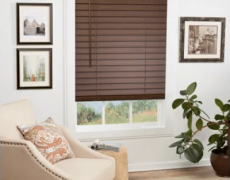
- Heavy. Faux wood slats are heavier than most shade fabrics. On wide windows, cordless faux wood blinds can be hard to lift by hand and can sag in the middle.
- Dust collectors. Every slat is a flat shelf for dust. Cleaning means wiping dozens of slats, one at a time.
- Dated look. Even fully open, slats break your view into lines, and the raised stack blocks the top of the window.
- Light gaps. Light leaks around the slats and the route holes, so bedrooms never get truly dark.
- Hard to automate. Heavy slats with tilt and lift functions are harder to motorize well than a simple shade.
How shades solve every one of these
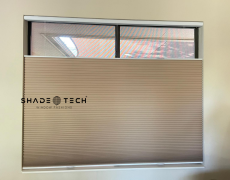
- Cordless by design. Shades can be made cordless or motorized, with no loose cords for children or pets.
- Light and easy. Fabric shades weigh far less than slats and roll up smoothly, even on wide windows.
- Little to dust. A smooth fabric surface instead of dozens of slats. A quick pass with a soft brush or vacuum keeps them clean.
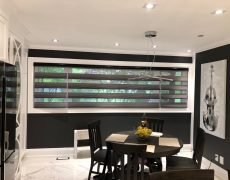
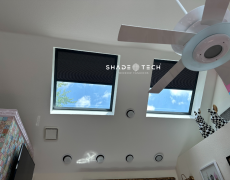
- A clean, modern look. Roller shades disappear into a slim headrail when raised, so you get the full window back.
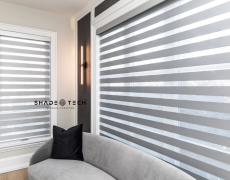
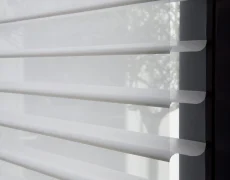
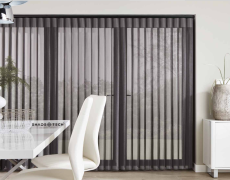
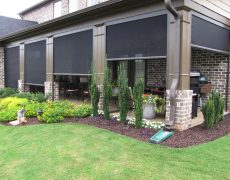
- Light control your way. Choose solar screen for glare, light filtering for a soft glow, or blackout for bedrooms. Duo and tri sheer shades even let you tilt light, like a blind, without the slats.
- Smart-home ready. Motorized shades work with Alexa, Google Home and Apple HomeKit, and can open and close on a schedule.
Faux wood blinds vs. shades at a glance
| Faux wood blinds | Custom shades | |
|---|---|---|
| Weight | Heavy, can sag on wide windows | Light fabric |
| Dust | Collects on every slat | Smooth surface, easy to clean |
| View when open | Slat lines and a tall stack | Rolls up out of sight |
| Bedroom darkness | Light leaks between slats | Blackout fabrics available |
| Cords | Restricted by new safety rules | Cordless or motorized |
Common questions
Are corded blinds illegal now?
Keeping the blinds you already have is not illegal. The rules apply to new blinds being made and sold, which now have to be cordless or meet strict cord limits.
What is the best replacement for faux wood blinds?
Roller shades are the most popular switch for a clean, modern look. If you like tilting light like a blind, duo or tri sheer shades give you that control without slats to dust.
How quickly can you replace my blinds?
We make interior shades in our Carrollton factory in 3–4 working days for in-stock fabrics, and our own team installs them across Dallas–Fort Worth.
Ready to retire your blinds?
Book a free consultation and we will bring roller, duo and tri sheer samples to your home, or call 469-499-3322.
