

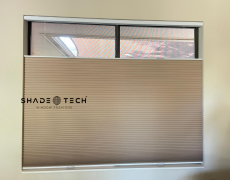

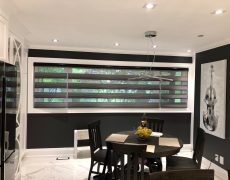
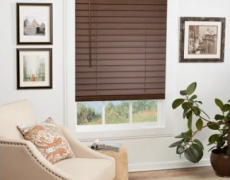






A patio can look exceptional and still be difficult to use from late spring through early fall. Direct western sun, reflected heat, mosquitoes, and sudden privacy concerns can turn an outdoor living area into a space everyone avoids. A drop shades screen addresses those conditions at the perimeter of the patio, creating a more controlled outdoor environment without closing off the view or changing the architecture of the home.
For Dallas-Fort Worth homeowners, restaurants, medical clinics, and builders, the right exterior screen is less about adding another patio accessory and more about making a high-value space perform when the weather is at its most demanding.
What Is a Drop Shades Screen?
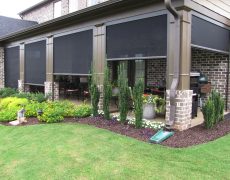
A drop shades screen is a vertically operated exterior shading system that lowers from a housing mounted above an opening. When raised, the screen is stored neatly inside its cassette or roller assembly. When lowered, it creates a tailored barrier against sun, glare, insects, wind-blown debris, and unwanted visibility.
These systems are commonly installed on covered patios, pergolas, balconies, outdoor kitchens, pool houses, restaurant patios, and large commercial openings. Unlike fixed walls or traditional curtains, exterior drop screens preserve flexibility. Lower them when the afternoon sun reaches the patio, then raise them when you want an open-air view.
The term can describe both manual and motorized systems, but motorization is often the practical choice for large openings or multiple screens. A properly specified motorized screen can be operated by wall control, remote, app, scheduled automation, or compatible smart-home voice control.
Why Exterior Screens Matter in North Texas
Dallas sun is not just bright. It creates meaningful radiant heat on concrete, stone, furniture, and glass. Once those surfaces heat up, a ceiling fan alone will not restore comfort. An exterior screen intercepts a portion of solar energy before it reaches the occupied patio area, which is generally more effective than trying to manage heat after it has entered the space.
The result depends on fabric openness, color, opening direction, and exposure. A darker mesh may offer a clearer outward view during daylight, while a lighter fabric can visually soften an exterior elevation. Tighter weaves provide more shade and privacy, but they reduce airflow and view clarity. There is no single “best” fabric because a west-facing patio with no tree cover needs a different solution than a shaded north-facing outdoor kitchen.
Insect control is another major advantage. A zip-guided screen system, in particular, holds the fabric securely within side tracks to limit gaps where insects can enter. It is not a substitute for a fully sealed indoor room, but it can make a significant difference during mosquito season while still allowing airflow through the mesh.
Choosing the Right Screen Fabric
Screen fabric drives much of the system’s performance. The housing, motor, and guides matter, but the fabric determines how much sun, visibility, privacy, and airflow the screen delivers every day.
Openness Factor and Solar Control
Openness factor refers to the percentage of open space in a woven solar fabric. A 1% or 3% openness fabric has a tighter weave and blocks more direct sun and glare. A 5% or 10% fabric permits more visibility and airflow but allows more light through.
For a patio facing west or southwest, tighter solar mesh often makes sense because late-day glare and heat are the main concerns. For a covered area where the goal is simply to reduce bugs and soften daylight, a more open fabric may provide the more comfortable result. The best choice should account for the orientation of the opening, the roof depth, nearby reflective surfaces, and whether the screen will be used primarily during the day or at night.
Privacy After Dark
Daytime privacy and nighttime privacy work differently. During the day, occupants can generally see outward through a solar screen while outside viewers have less ability to see in, especially when the exterior is brighter. At night, interior or patio lighting reverses that advantage. If privacy after dark is essential, consider a more opaque fabric, layered lighting, or a design that combines screens with other architectural privacy elements.
That trade-off is worth discussing before installation. A screen that delivers the best daytime view may not provide the level of nighttime privacy expected for a spa area, outdoor dining space, or clinic waiting area.
Color and Appearance
Fabric color should support both performance and the property’s design. Darker screen materials often reduce glare and retain a more natural view outward. Lighter colors can reflect more visible light and may better complement light stone, stucco, or painted trim. Frame and cassette colors can also be coordinated with patio beams, window frames, or exterior cladding for a finished appearance.
Motorized Drop Shades Screen Systems Make Large Openings Usable
Manual screens can work well for smaller, occasional-use openings. For wide patios, tall openings, or multiple bays, motorized operation is usually the better long-term decision. It avoids the uneven handling that can occur with large manual shades and makes the screens much more likely to be used consistently.
A motorized drop shades screen can be scheduled to lower during the strongest afternoon exposure and raise after sunset. It can also be grouped with interior motorized shades, allowing homeowners to manage solar comfort across the home from one control system. For a restaurant or clinic, grouped controls simplify opening and closing procedures for staff while maintaining a polished exterior experience.
Smart-home integration should be selected carefully. Compatibility with Alexa, Google Home, Apple HomeKit, and Matter-enabled systems can be valuable, but reliable performance begins with proper motor selection, power planning, and professional programming. A screen system should work just as well from a dedicated wall control as it does through voice commands. Smart features are most useful when they reduce friction rather than add another app to manage.
Installation Details That Determine Performance
Exterior drop screens are custom products, not off-the-shelf patio shades. Precision measurement matters because the system must fit the actual structure, including posts, beams, masonry, rooflines, and drainage details. Even a high-quality screen will perform poorly if the guides are not aligned or if mounting surfaces are not structurally appropriate.
A professional site evaluation should identify where the cassette will mount, how the side guides will terminate, whether there is adequate clearance for full screen travel, and where power will be supplied for motorized units. It should also address wind exposure. Screens are designed to manage sun and insects, but they are not intended to be left deployed in every severe storm condition. Wind ratings vary by product, size, guide system, fabric, and installation method.
For new construction, early planning is especially valuable. Builders can coordinate blocking, electrical provisions, recessed pockets, and finish details before exterior materials are completed. This produces a cleaner installation and avoids visible conduit or last-minute compromises later.
Where Drop Screens Deliver the Most Value
The strongest applications are spaces where comfort directly affects how often the area is used. A west-facing covered patio may become a comfortable dinner space instead of an overheated late-afternoon zone. An outdoor kitchen can gain relief from glare on stainless surfaces and countertop heat. A pool cabana can add privacy without building permanent walls.
Commercial settings benefit for similar reasons. Restaurant patios can remain more usable through bright, hot service hours. Medical clinics can reduce glare and improve discretion around covered entries or outdoor waiting areas. For hospitality projects, custom screens help create flexible outdoor rooms that can adapt to the time of day, event setup, and weather conditions.
The return is not limited to energy considerations. It is also about protecting furnishings from UV exposure, reducing glare, improving visual comfort, and making a well-designed outdoor area feel intentional rather than exposed.
A Better Way to Plan Your Exterior Screen Project
Start with how the space fails today. Is the issue afternoon heat, low-angle glare, mosquitoes, neighbors’ sightlines, or all of the above? Then evaluate the opening dimensions, structural mounting options, sun direction, preferred view, and desired level of automation.
Avoid selecting fabric from a small swatch alone. A material that looks attractive indoors may react very differently when it is installed across a large, sun-exposed patio opening. Seeing the fabric’s transparency, color, and openness in real outdoor light leads to better decisions.
ShadeoTech manufactures and installs custom screen solutions locally in Texas, allowing measurements, fabrication, installation, and smart-home setup to be coordinated as one process. That level of control is particularly useful for large contemporary openings and North Texas exposures where tolerances and material performance matter.
A well-planned screen should disappear when you do not need it and make the patio noticeably more comfortable when you do. That is the practical standard: not just a better-looking opening, but an outdoor space people choose to use more often.
