

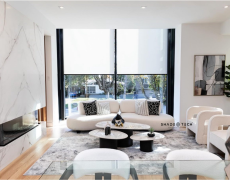








A wall of glass can make a Dallas home feel exceptional until the afternoon sun turns the room into a bright, hot, glare-filled space. Transitional shades offer a refined answer: precise daylight control without the visual weight of traditional blinds or the all-or-nothing effect of many roller shades.
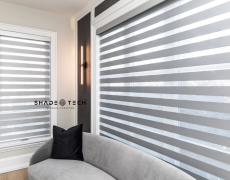
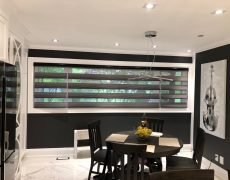
Also called zebra shades or dual-layer shades, transitional shades use alternating sheer and opaque fabric bands. As the fabric layers move past each other, the bands align to admit filtered daylight or overlap to create more privacy and shade. The result is a sleek window treatment that can shift with the conditions in the room, from soft morning light to full late-day solar exposure.
What Are Transitional Shades?
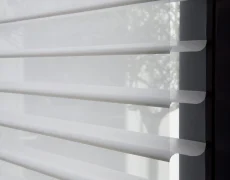
Transitional shades are engineered with a continuous loop of fabric that passes from the front of the shade to the back. The material contains horizontal opaque bands separated by translucent sheer bands. When the sheer sections align, natural light enters while the view remains partially visible. When the opaque bands overlap, the shade creates a more private, dimmed setting.
This design gives homeowners more adjustment than a standard roller shade, while maintaining a tailored, contemporary appearance. There are no tilted slats to dust, no cords hanging at the window, and no bulky stack of material when the shade is raised.
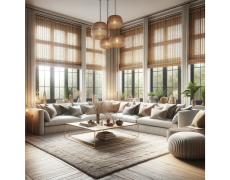
For modern Dallas-Fort Worth homes with expansive windows, transitional shades can bring scale and control to spaces that are often difficult to furnish and protect. They are especially effective in living rooms, kitchens, home offices, bedrooms, and open-concept spaces where light conditions change throughout the day.
Why Transitional Shades Work Well in North Texas
North Texas sunlight is not a minor design consideration. It affects indoor comfort, furniture longevity, screen visibility, and cooling demand for much of the year. A shade that looks good but cannot manage strong western exposure will quickly become an inconvenience.
Transitional shades help diffuse direct sunlight before it dominates the room. In their open alignment, the sheer fabric softens harsh light and reduces glare on televisions, monitors, and polished surfaces. In their closed alignment, the opaque bands provide a stronger level of privacy and light control.
They are not a substitute for a dedicated blackout system in every situation. A bedroom facing the sunrise, a media room, or a nursery may benefit more from blackout roller shades, room-darkening drapery, or a layered treatment. But for the majority of daytime living areas, transitional shades create a useful middle ground between bright openness and practical protection.
Their low-profile design also suits the architectural character of many newer DFW homes. Clean-lined windows, tall ceilings, and wide openings often call for a window treatment that feels intentional without competing with the room’s finishes.
Light Control Without Closing Off the Room
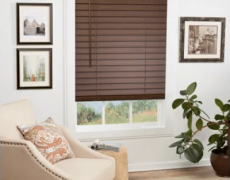
The defining advantage of transitional shades is flexibility. Traditional blinds can direct light, but their slats introduce visible lines and mechanical components. Solar roller shades preserve outward views, but they generally move between raised and lowered positions with fewer in-between options. Transitional shades offer a more nuanced adjustment within one compact treatment.
When sheer bands are aligned, the room receives softened daylight rather than direct, sharp sun. This can be ideal for a kitchen where natural light is welcome but glare on countertops is not. When privacy is needed, the opaque bands can overlap without requiring the shade to be fully raised or lowered.
That said, the view through a transitional shade is softer than the view through an open window or a highly transparent solar screen. If preserving a crisp, unobstructed view is the primary goal, a solar shade may be a better fit. The right choice depends on whether a room needs more view preservation, privacy, insulation, glare control, or complete darkness.
Fabric and Color Make a Performance Difference
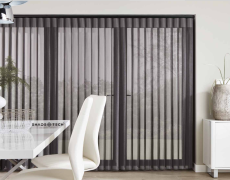
Transitional shades are available in a range of neutral fabrics, from bright whites and warm linens to charcoal and deeper contemporary tones. The right color should support both the interior palette and the room’s solar conditions.
Lighter fabrics typically create an airy, architectural look and can help a room feel open. Darker fabrics often provide stronger visual contrast and can be effective in contemporary interiors with black window frames, darker cabinetry, or dramatic accent walls. Yet color is not purely decorative. Fabric opacity, weave, and the relationship between sheer and solid bands all influence the amount of light that reaches the room.
A west-facing family room may call for a more substantial opaque band than a north-facing dining room. Likewise, a street-level office or clinic may prioritize privacy, while a second-floor living space may prioritize daylight. Custom consultation and sampling at the actual window matter because showroom lighting rarely reflects real-world sun exposure.
Motorized Transitional Shades Add Everyday Convenience
Motorization is particularly valuable for transitional shades because their benefit comes from frequent adjustment. Instead of leaving a treatment in one position all day, homeowners can set shades to respond to how the space is actually used.
A typical schedule might open the sheer bands in the morning, shift to a more protective alignment during peak afternoon sun, and move to privacy mode after dark. With motorized operation, these changes happen at the touch of a button, through a wall control, or on an automated schedule.
For smart-home households, custom motorized shades can integrate with Alexa, Google Home, Apple HomeKit, and Matter-enabled systems, depending on the selected control platform. This allows shades to become part of a larger routine: lower shades when the home enters away mode, close them during a movie scene, or adjust them according to the time of day.
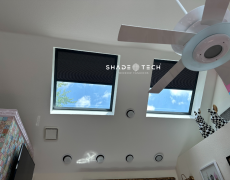
Motorization is also a practical upgrade for tall windows, hard-to-reach clerestory openings, and large banks of shades. Manual operation can work well for a small room with accessible windows. In a two-story living room or commercial reception area, automation delivers a more consistent and usable result.
Where Transitional Shades Fit Best
Transitional shades are versatile, but they perform best when selected for the room rather than simply repeated throughout a property. In open living areas, they offer adjustable glare control while preserving a bright, polished feel. In home offices, they help make screen work more comfortable without turning the space into a cave.
Bedrooms can benefit from transitional shades when the priority is privacy and soft daylight. For occupants who need near-total darkness, however, consider a layered solution. A room-darkening roller shade, side channels where appropriate, or decorative drapery can address the light gaps that are common around any inside-mounted shade.
Restaurants, medical clinics, and professional offices also benefit from the clean operation and finished appearance of transitional shades. The ability to adapt daylight across a reception area, dining space, or conference room makes the environment more comfortable for guests and staff. Commercial applications require careful attention to window dimensions, fabric durability, safety requirements, and control zoning.
Why Precision Measurement and Installation Matter
A transitional shade looks simple after installation, but its appearance depends on exact fabrication and alignment. Small measurement errors can create uneven gaps, interfere with handles or trim, or make a multi-window wall look inconsistent. On wide openings, alignment between shades is especially visible.
Professional measurement accounts for frame depth, sill conditions, obstructions, mounting surface, window squareness, and the desired location of the headrail. Installation also determines whether the fabric tracks smoothly and whether motorized units are properly paired, programmed, and grouped.
ShadeoTech manufactures custom window treatments locally in Texas and manages measurement, fabrication, installation, and smart-home setup as one coordinated process. That approach is valuable when a project includes large contemporary windows, multiple rooms, or automated shading scenes that need to work reliably from day one.
The best transitional shade is not simply the one that matches a paint color. It is the one that fits the window precisely, handles the room’s sun exposure, and is easy enough to adjust that it improves how the space feels every day.
