








A patio can be one of a restaurant’s most profitable spaces, until direct afternoon sun sends guests indoors, wind scatters napkins, or a light rain closes half the floor plan. The right restaurant outdoor shades turn that exposed square footage into a more dependable part of daily service. They improve guest comfort, preserve sightlines, support a polished exterior, and give operators more control over seating in North Texas weather.
For Dallas-Fort Worth restaurants, the decision is not simply about adding shade. It is about selecting a custom system that performs through intense UV exposure, high heat, sudden storms, and the daily wear of a busy hospitality environment.
Why outdoor shading affects restaurant revenue
Outdoor dining only works when guests can stay comfortable long enough to order, relax, and return. A patio facing west may be appealing at lunch, then become difficult to use from late afternoon through sunset. Without effective solar control, tables closest to the perimeter often become the last to fill and the first to clear.
Exterior shades reduce direct solar exposure before it reaches the patio. That difference matters. Lower glare makes menus and mobile payment screens easier to read, while cooler conditions make the space more inviting without relying entirely on fans or portable heaters. They also help protect upholstery, table finishes, flooring, and décor from fading under persistent Texas sun.
For full-service dining, better shade can increase the number of usable tables during peak periods. For quick-service concepts, it can make outdoor waiting areas and pickup zones more pleasant. The return depends on the patio’s layout and operating model, but a well-designed system is often a practical capacity investment rather than a cosmetic add-on.
Choose restaurant outdoor shades for the exposure, not the catalog
A restaurant patio has different demands than a residential porch. The system needs to look refined, operate reliably, handle repeated use, and fit the building without interfering with circulation, signage, service paths, or emergency access. The best option depends on the source of the problem.
Solar screens for heat and glare control
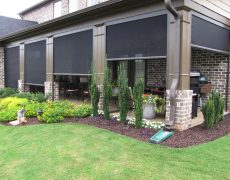
Motorized exterior solar screens are often the strongest fit for patios, covered dining areas, and openings along a building façade. They lower glare and filter solar heat while preserving a degree of outward visibility. Depending on the fabric openness selected, guests can still see the streetscape, landscaping, or skyline without sitting in direct sun.
Fabric selection is a performance decision. A more open weave preserves views and daylight but offers less privacy and solar filtering. A tighter weave creates stronger shade and privacy, though it can make the enclosure feel more visually solid. For restaurants, the right balance usually comes from evaluating the sun angle, surrounding views, neighboring properties, and the atmosphere the operator wants to maintain.
Retractable awnings for targeted overhead shade
When the primary issue is overhead sun on an open patio, a retractable awning can extend shade where fixed construction is impractical. It can be retracted when the weather is pleasant or when a venue wants an open-sky feel for evening service.
Awnings are not the ideal answer for every location. They provide strong top-down coverage, but lower-angle sun can still reach tables from the side. They also need appropriate mounting conditions and careful engineering for wind exposure. In some patio designs, pairing overhead coverage with vertical exterior screens provides a more complete solution.
Fixed shade structures for large, consistent coverage
Larger patios may benefit from a permanent pergola, canopy, or structural shade system with integrated screens. This approach can create a more defined outdoor room and offer a substantial architectural upgrade. It is especially useful where operators need predictable coverage over a broad dining area.
The trade-off is permanence. Structural systems require more planning, may involve permitting, and need to complement the building rather than appear added on as an afterthought. For a high-traffic patio expected to serve guests year-round, however, a permanent structure can create a clear operational advantage.
Motorization makes comfort easier to manage
Manual shades can work in small, lightly used areas. In a restaurant, they often create an operational problem: someone has to remember to raise and lower them, do it at the right time, and do it consistently during a busy shift. Motorization gives managers and staff a more reliable way to respond to conditions without disrupting service.
With motorized restaurant outdoor shades, a team can adjust several screens at once as the sun moves across the property. Scheduled scenes can lower screens before the afternoon rush, raise them after sunset, or align settings with opening and closing procedures. Weather-aware controls can also help protect certain systems when conditions change, depending on the equipment and sensors specified.
Smart controls should simplify operations, not add another complicated app for staff to manage. A professionally planned system can use wall controls, remotes, automation schedules, and selected smart-building integrations. For multi-zone patios, clear labeling and intentional programming matter as much as the motors themselves.
Design details guests notice without naming
Guests may not ask what fabric openness or side-channel system a restaurant chose. They will notice whether the patio feels comfortable, orderly, and connected to the restaurant’s interior. That perception comes from details.
Custom-sized shades prevent the awkward gaps and uneven coverage common with off-the-shelf products. Guided tracks or cable systems can keep screens stable and aligned, while enclosed housings protect components and maintain a cleaner appearance when shades are raised. Frame color, fabric tone, and mounting placement should work with the exterior finishes, brand colors, and lighting plan.
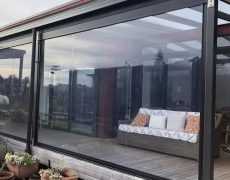
The goal is not to make a patio feel closed off. It is to give the restaurant control. On a bright day, screens can reduce glare while maintaining an open feel. During a cooler evening, they can help define the space and reduce wind. When the weather is ideal, they can disappear into the architecture.
Plan for the North Texas climate and daily use
Dallas-area restaurants need materials that can tolerate heat, UV exposure, dust, wind, and repeated operation. Premium exterior fabrics are engineered to resist fading and maintain their structure, but performance still depends on proper specification and installation. Hardware must be matched to opening size, mounting surface, and exposure conditions.
A site assessment should account for more than measurements. It should identify the direction each opening faces, where sun enters at different times of day, how wind moves through the patio, and whether nearby buildings create heat reflection or unexpected glare. It should also consider drainage, electrical access for motorization, clearance for doors and furniture, and local code requirements.
Restaurants should avoid treating exterior shading as a last-minute finishing item. Bringing a shading specialist into the design or renovation process early can prevent conflicts with lighting, signage, HVAC, sprinklers, and structural elements. It also creates a more intentional result than trying to fit standard products into a completed patio.
Installation quality protects the investment
An exterior shade system is only as dependable as its installation. Improper mounting can affect screen alignment, motor operation, water management, and long-term durability. For commercial properties, installation timing also matters. Work should be planned around service hours, guest traffic, and the needs of the general contractor or property manager.
ShadeoTech provides a factory-direct approach that combines consultation, precision measurement, local Texas manufacturing, and professional installation. That level of control is particularly valuable for restaurant projects with nonstandard openings, large spans, or multiple patio zones that need consistent fit and finish.
Before approving a system, restaurant owners and operators should ask how it will be serviced, who handles programming, what controls are included, and how the product is expected to perform in wind and rain. A clear answer is more valuable than a low initial price on a system that will see daily use.
A well-designed patio does more than add tables outside. It gives guests a reason to choose those tables, even when the Texas sun is at its strongest. With custom exterior shading planned around the building, the brand, and the service flow, outdoor dining can become a reliable extension of the restaurant instead of a space controlled by the forecast.
