

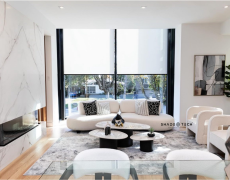
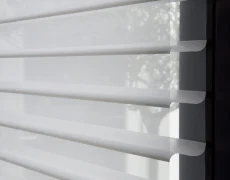

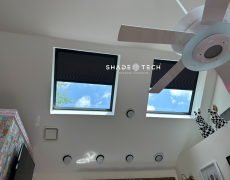






A wall of glass can make a Dallas home feel spectacular at noon and unexpectedly exposed after sunset. So, can shades improve privacy? Absolutely, but the right answer depends on where the window faces, how close the neighbors are, whether the room is used at night, and how much daylight you want to keep.
Privacy is not simply a matter of covering a window. A well-designed shade system manages sightlines, preserves the architectural feel of the room, and operates easily enough that it gets used every day. For homes with large contemporary windows, street-facing rooms, patios, or a pool behind the house, custom shades offer far more control than one-size-fits-all coverings.
How shades improve privacy without closing off a room
Shades create privacy by interrupting a direct line of sight into a room. The material, weave, color, opacity, mounting position, and fit around the window all affect how well they do that job. A properly measured system leaves fewer side gaps, aligns cleanly with the glass, and looks intentional rather than temporary.
The most effective solution usually combines privacy with another need: glare reduction in a home office, UV protection for furnishings, heat control on a west-facing wall, or room-darkening for a bedroom. In North Texas, that combination matters. Windows that admit intense afternoon sun can also put a living area on display once interior lights come on.
The key distinction is between daytime and nighttime privacy. During the day, a solar shade can reduce visibility from outside while still allowing outward views. At night, that relationship can reverse. When the interior is brightly lit and it is dark outside, people outside may see silhouettes or more detail through an open-weave fabric. Bedrooms, bathrooms, and street-facing rooms generally need a more opaque option for reliable after-dark privacy.
Choose the privacy level for the room
There is no single “best” shade for every window. The appropriate fabric and system should match the room’s use and exposure.
Solar shades for daytime privacy and views
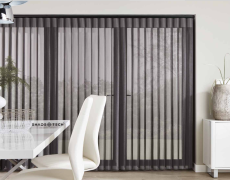
Solar roller shades use performance fabrics with varying openness factors. The openness percentage describes how tightly the fabric is woven. A lower openness factor has a tighter weave, offering more glare control and more daytime privacy. A higher openness factor admits more light and maintains a clearer view out, but offers less screening.
For a bright living room facing a side yard or a nearby property, a low-openness solar shade can be an excellent choice. It softens the view into the room, protects finishes from UV exposure, and keeps the connection to the outdoors. It is not, however, a complete nighttime privacy solution. If that room is used after dark, pairing solar shades with drapery or selecting a dual-shade system is often the more practical design.
Color matters as well. Darker solar fabrics typically provide a sharper view outward during the day, while lighter fabrics create a softer visual effect and can help reduce glare. Fabric selection should be evaluated in the actual room, with its orientation and surrounding light, rather than from a small sample alone.
Room-darkening and blackout shades for dependable privacy
Room-darkening shades use denser fabrics that block most incoming light and limit visibility in both directions. Blackout shades go further, using opaque material designed for the highest level of light control and privacy.
These options work especially well in bedrooms, nurseries, media rooms, bathrooms, and windows that face a neighbor’s second-story view. They also help shift workers, families with young children, and anyone who prefers a darker sleep environment. For the strongest results, the shade needs a precise fit. Light gaps at the sides, top, and bottom can affect both privacy and room darkening.
A cassette, fascia, side channels, or carefully planned inside mount can improve coverage depending on the window construction. This is one reason professional measurement matters: a shade that is technically blackout fabric is not automatically a blackout installation.
Dual shades for changing conditions
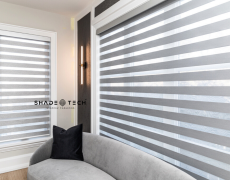
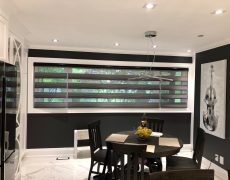
Dual shades place two fabrics within one coordinated system, often a solar screen and a room-darkening or blackout shade. During the day, the solar shade manages heat, glare, and visibility while preserving the view. At night, the opaque shade provides the privacy that a screen fabric cannot.
For many DFW homes, this is the most flexible answer for large living-room windows, primary suites, and open-plan spaces. It avoids the choice between enjoying daylight and feeling visible from the street. The trade-off is a more involved system and a higher initial investment, but the daily usability is difficult to match.
Cellular shades, Roman shades, and shutters
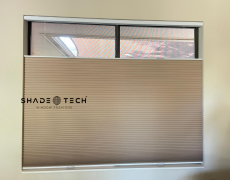
Cellular shades offer strong privacy, insulation, and a softer architectural appearance. Top-down/bottom-up operation is particularly useful for front-facing rooms because it can cover the lower portion of the window while allowing daylight through the upper glass. This protects privacy at eye level without making the room feel closed in.
Roman shades provide a tailored fabric look and can be lined for greater opacity. They are a natural fit where softness and design detail are priorities, though they do not offer the same view-through capability as solar shades.
Plantation shutters provide excellent privacy through adjustable louvers. Tilting the louvers upward can admit daylight while limiting direct views into the room. They are durable and substantial, but their fixed frame changes the appearance of the window more than a recessed roller shade does. For homeowners who prefer clean, minimal window lines, roller or dual shades may be the better visual fit.
Can shades improve privacy on patios and outdoor spaces?
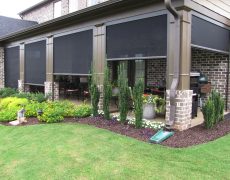
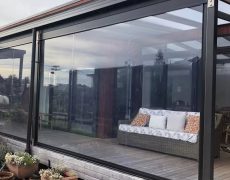
Yes. Exterior solar screens and motorized outdoor shades can make a patio, pergola, or covered outdoor kitchen feel more protected without building a permanent wall. They reduce low-angle sun, glare, wind-driven debris, and visibility from adjacent properties while preserving airflow.
Outdoor privacy is especially useful when homes sit close together or when a patio faces an active street, alley, or neighboring deck. Screen fabric openness should be selected carefully. A tighter fabric provides more visual screening and shade, while a more open fabric feels less enclosed and keeps more of the view.
Outdoor systems must also be designed for the conditions. Wind ratings, anchoring, track systems, motor selection, and fabric durability are not cosmetic details. A professionally installed exterior shade needs to operate smoothly and hold up to Texas heat, sun exposure, and changing weather.
Smart controls make privacy more consistent
The best privacy shade is not helpful if it remains open because someone forgot to lower it. Motorization turns privacy into a routine rather than a manual task.
A smart shade can close automatically at sunset, lower when a room reaches a selected brightness level, or follow a schedule that matches the household’s habits. In a front room, shades can lower before evening lights make the interior visible. In a primary suite, blackout shades can close at bedtime and rise gradually in the morning. For a commercial space, scheduled shades can protect conference rooms and waiting areas without relying on staff to adjust every window.
Integration with Alexa, Google Home, Apple HomeKit, and Matter-enabled smart-home systems adds another layer of convenience. Voice commands are useful when hands are full, but automation is where the system becomes truly practical. The goal is not more technology for its own sake. It is a home that responds predictably to sun, time of day, and occupancy.
Battery-powered motors can be a good option for some existing homes, while hardwired power is often worth considering during construction or a major remodel. Hardwired systems reduce the need for battery maintenance and are particularly well suited to tall, hard-to-reach, or frequently operated shades.
Details that determine whether privacy actually works
Fabric choice is only one part of the result. Outside mounts can extend beyond the window opening and reduce light leaks, while inside mounts create a clean, built-in appearance but may leave small edge gaps. The right approach depends on trim depth, window shape, handles, and the level of privacy required.
Consider the sightline from outside, not just the view from inside. A high transom window may not need the same treatment as a ground-floor picture window. A bathroom near a side gate needs more coverage than a living room facing a private backyard. For tall stairwell windows, motorization may be essential simply because manual operation is unrealistic.
For clinics, restaurants, offices, and hospitality spaces, privacy also affects customer comfort and operations. Solar shades can reduce visibility and glare in reception areas without making the space feel dark. Room-darkening systems support presentations, private consultations, and audiovisual control. Durable commercial-grade components matter when shades are used repeatedly throughout the day.
A custom plan is better than a blanket solution
The most successful projects rarely use one shade type across every room. A home may need solar shades in the family room, blackout roller shades in bedrooms, top-down/bottom-up cellular shades at the front windows, and motorized exterior screens on the patio. The finishes can still coordinate while each area performs according to its real needs.
ShadeoTech designs and manufactures custom systems locally in Carrollton, then handles precision measurement, installation, and smart-home setup as one process. That level of coordination is valuable when privacy depends on exact fit, consistent fabric selection, and automation that works reliably from day one.
Privacy should not require living in the dark or giving up the windows that made you love the space. With the right fabric, fit, and control strategy, your shades can let Dallas daylight in on your terms and close the view when home should feel private.
