

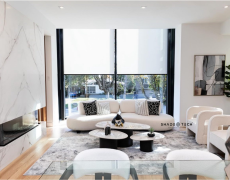
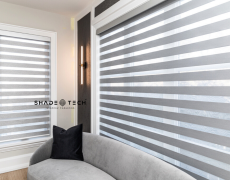
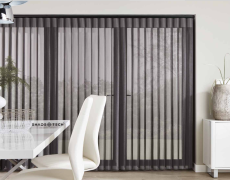

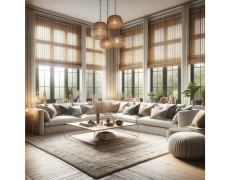
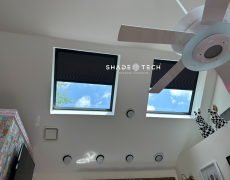


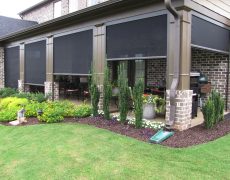

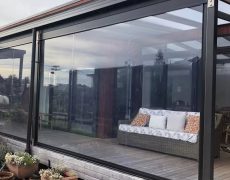



A wall of glass can make a Dallas home feel expansive until the afternoon sun turns the room bright, hot, and difficult to use. Designer roman shades solve that tension with a tailored silhouette that softens a space while giving homeowners meaningful control over glare, UV exposure, and privacy. When specified correctly, they are not simply decorative fabric panels. They are a custom window treatment engineered around the room, the window dimensions, and the way the home is lived in.
For homeowners who want more warmth than a roller shade and a cleaner profile than drapery, Roman shades occupy a useful middle ground. Their appeal comes from proportion, fabric selection, and precise fabrication. In a North Texas home with large contemporary windows, those details determine whether the finished treatment looks intentional or undersized.
What Makes Designer Roman Shades Different
A designer Roman shade is built to fit the actual window, not a generic size on a retail shelf. The fabric is selected for its color, texture, opacity, and performance. The fold style is chosen to complement the architecture. The lift system is sized for the shade’s width and weight, then installed so the treatment raises evenly and rests at the right height.
That level of customization changes the result. A crisp flat Roman shade can suit a clean-lined kitchen or a modern living room. A relaxed fold can bring softness to a bedroom or formal sitting area. A tailored hobbled style introduces more dimension, although its fuller folds are usually better for traditional interiors than minimal contemporary spaces.
The fabric matters as much as the style. Linen blends, woven textures, performance fabrics, and room-darkening options all behave differently in changing light. A pale fabric may make a room feel open while still diffusing harsh sun, but it will not deliver the same privacy or heat reduction as a lined, denser material. For west-facing rooms, fabric selection should begin with solar exposure rather than color alone.
Design That Also Works Hard in North Texas
Dallas-Fort Worth homes face unusually intense sunlight for much of the year. UV rays can fade hardwood floors, artwork, rugs, and upholstered furniture long before the damage is obvious. Large windows also create uncomfortable hot spots, particularly in rooms facing west or south.
Roman shades help moderate those conditions when they are specified with the right liner and installed close enough to the window to limit light gaps. A privacy liner is often appropriate for living areas that need filtered daylight and evening coverage. A blackout or room-darkening liner is more suitable for bedrooms, media rooms, nurseries, and spaces where sleep or screen visibility matters.
There is a trade-off. Heavier liners and dense fabrics improve privacy and light control, but they reduce the airy quality that draws many homeowners to Roman shades in the first place. The best choice depends on the room’s priorities. A breakfast nook may benefit from soft filtered light, while a primary bedroom often needs a more complete barrier to early morning sun.
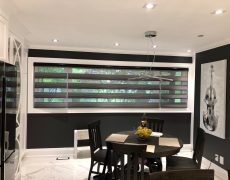
For very large openings, a single oversized Roman shade may not be the right answer. It can become heavy, visually dominant, and less practical to operate. Dividing the opening into coordinated shades often provides better scale, more precise light control, and a cleaner finished appearance. This is where professional measurement makes a visible difference, especially with high ceilings, deep trim, or windows that are not perfectly square.
Choosing the Right Fold, Fabric, and Lining
The visual language of a Roman shade is quiet, but it is not simple. Small choices affect how the treatment reads from across the room and how it performs every day.
Flat Roman Shades for Clean Architecture
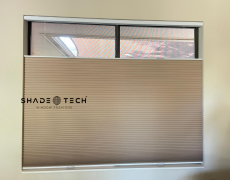
Flat Roman shades create a smooth face when lowered and stack neatly when raised. They are a strong fit for modern homes, offices, restaurants, and medical clinics that need a refined appearance without adding visual clutter. A textured weave can add depth while preserving the crisp profile.
This style works especially well when the shade is mounted outside the window opening, covering the trim and creating a more intentional frame. Inside mounts can be elegant too, but they require enough depth and leave more potential for light at the sides.
Soft Folds for Layered Interiors
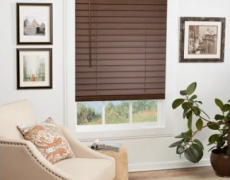
Relaxed and hobbled Roman shades bring more softness and dimension. They can complement natural materials, traditional millwork, transitional furnishings, and rooms where drapery would feel too formal or too heavy. Their folds remain part of the design even when the shade is lowered, which means fabric pattern placement and fabrication quality are particularly noticeable.
These styles are less ideal where maximum light blocking is the primary goal. Their character comes from their shape, and that shape can allow more light variation than a flat style. They are best chosen for visual warmth and controlled daylight rather than blackout performance.
Liners That Match the Room’s Needs
A lining gives the shade body, protects the decorative fabric, and helps control light. The right liner should be discussed early because it influences the shade’s weight, stack height, and appearance. In a sunny family room, a light-filtering liner may preserve the brightness of the space. In a street-facing bedroom, a privacy or blackout liner may be worth the added structure.
Smart Motorization Changes the Daily Experience
Motorized Roman shades are particularly valuable on tall windows, hard-to-reach areas, and rooms with multiple shades that need to move together. Instead of adjusting each treatment manually, homeowners can use a wall control, remote, mobile app, voice command, or scheduled automation.
The practical benefit is consistency. Shades can lower during the hottest part of the afternoon, rise in the morning, or close at sunset for privacy. In homes with children or pets, cordless motorization also removes exposed lift cords. For commercial settings, scheduled operation can help staff maintain a polished guest or patient experience without daily manual adjustments.
Smart-home compatibility should be considered before fabrication, not after installation. A well-planned system can work with Alexa, Google Home, Apple HomeKit, and Matter-enabled platforms, depending on the motor and control configuration. The best option depends on the home’s existing ecosystem, Wi-Fi conditions, power access, and whether the owner wants individual room control or whole-home scenes.
Battery-powered motors are often a practical choice when running power would disrupt finished walls. Hardwired motors can be preferable for extensive projects, new construction, and large groups of shades where long-term power management is a priority. Neither approach is automatically better. The right recommendation comes from evaluating the window layout and the project’s level of automation.
Why Measurement and Installation Matter
Roman shades are unforgiving of casual measurement. A fraction of an inch can affect side gaps, mounting clearance, alignment with adjacent windows, and the way a shade stacks at the top. This is especially true in homes with large windows, custom trim, tile backsplashes, or uneven surfaces.
Professional installation also protects the operation of the lift system. Mounting hardware must be anchored correctly, brackets must be level, and motorized shades need programming that matches how the client will use the room. A treatment can have premium fabric and excellent components yet still look or perform poorly if it is mounted without precision.
For Dallas-area projects, local manufacturing adds another advantage. Fabric selections, dimensions, liner choices, and control requirements can be reviewed as one connected system rather than passed among a retailer, an outside fabricator, and a separate installer. ShadeoTech manufactures locally in Carrollton and coordinates measurement, fabrication, installation, and smart-home setup for a more accountable custom process.
Where Roman Shades Fit Best
Designer Roman shades are a strong choice for bedrooms, kitchens, breakfast rooms, offices, sitting areas, boutique retail spaces, clinics, and hospitality settings. They offer a polished solution where a room needs fabric warmth but cannot accommodate the fullness of drapery.
They may not be the ideal standalone choice for every window. Rooms that require the highest possible solar reduction may benefit from pairing Roman shades with another shading strategy. Extremely wide glass walls may call for coordinated multiple shades, roller shades, or drapery panels depending on the desired coverage and architecture. In bathrooms or high-humidity spaces, the fabric and hardware must be selected carefully, and alternative materials may perform better.
The most successful window treatments start with a clear decision about what the room needs at 3 p.m., not only how it should look in a photograph. When fabric, fold style, liner, and automation are designed around that real-world use, Roman shades become one of the most versatile ways to make a Dallas home feel calmer, cooler, and more considered.
