

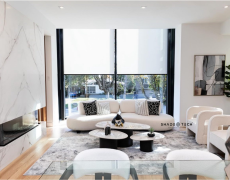

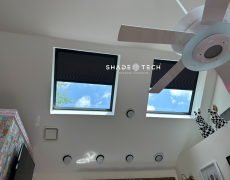


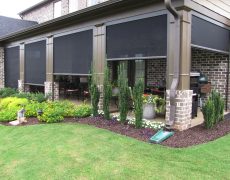

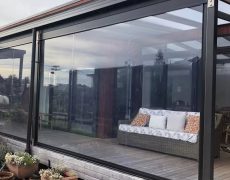



A two-story wall of glass can be the architectural highlight of a Dallas home until late-afternoon sun turns the room into a glare-filled heat zone. The best shades for tall windows need to do more than look proportional. They must control solar heat, protect interiors from UV exposure, preserve the view when desired, and operate reliably at heights no one wants to reach with a pole.
For most large contemporary windows, custom motorized roller shades are the strongest starting point. But the right system depends on window orientation, ceiling height, privacy needs, fabric openness, and whether the room needs full darkness or filtered daylight. A properly designed solution considers all of those details before the shades are manufactured.
How to Choose the Best Shades for Tall Windows
Tall windows create a different set of performance requirements than standard bedroom or living room windows. A shade that looks excellent on a five-foot opening may sag, telescope, show light gaps, or become difficult to operate when scaled for a twelve-foot-tall glass wall. Precision measuring, fabric selection, roller sizing, and professional mounting all matter more at this scale.
Start with the room’s primary challenge. West-facing windows in North Texas typically need aggressive glare and heat control. A double-height living room may need daylight filtering without sacrificing an expansive view. A street-facing entry or commercial lobby may require daytime visibility with stronger privacy after dark. Once the function is clear, the shade style becomes easier to specify.
Solar roller shades for view and heat control
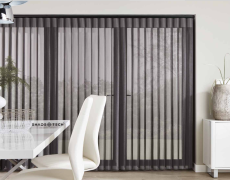
Solar roller shades are often the best fit for tall windows in living rooms, offices, restaurants, medical clinics, and other spaces where daylight and exterior visibility remain valuable. Their technical screen fabrics filter sunlight while reducing glare and UV exposure. They also maintain a clean, architectural profile that suits large glass expanses.
The key decision is openness factor. A lower openness fabric provides more privacy and solar control but limits visibility to the outdoors. A higher openness factor preserves more of the view but allows more light through. For a bright Dallas-Fort Worth room with strong afternoon exposure, a tighter fabric is often the better performance choice. For shaded windows or a view-forward space, a more open weave may be appropriate.
Color affects performance as well. Darker fabrics generally offer clearer outward views during the day, while lighter fabrics can create a softer, more reflective appearance from inside. The best choice depends on the interior palette, the direction of the windows, and how much heat reduction the room requires.
Blackout roller shades for bedrooms and media spaces
For tall bedroom windows, media rooms, conference rooms, and hospitality spaces, blackout roller shades provide the strongest light control. They are particularly effective when early morning light, exterior lighting, or reflected glare disrupts sleep or screen visibility.
Blackout fabric alone does not guarantee a dark room. Light can still enter around the sides of the shade, above the roller, or below the hem bar. On very tall windows, those gaps can become more noticeable. A custom system can address this with carefully planned mounting, fascia options, side channels where appropriate, and fabric dimensions tailored to the opening.
Blackout shades are highly functional, but they do block the view when lowered. In rooms that need both daytime visibility and nighttime darkness, dual shades are usually a more flexible answer.
Dual shades for rooms that do everything
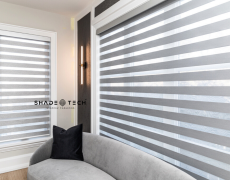
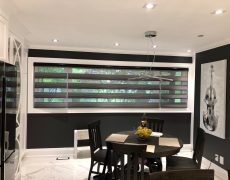
Dual roller shade systems pair two fabrics on one window: typically a solar shade for daytime filtering and a blackout shade for privacy and darkness. This approach works exceptionally well in primary bedrooms, large family rooms, multipurpose spaces, and commercial interiors with changing needs throughout the day.
During the afternoon, the solar layer can reduce glare and solar gain while keeping the room connected to the outdoors. At night, the blackout layer can lower for privacy. The trade-off is a larger overall system and a higher investment than a single shade, but the versatility is hard to match for tall windows that are central to daily living.
Cellular shades for insulation-focused applications
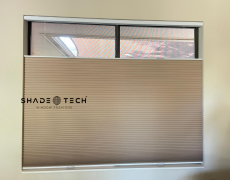
Cellular shades can be a strong choice when insulation is the main priority. Their honeycomb structure traps air, helping reduce heat transfer at the glass. This can be useful for tall windows in bedrooms, north-facing rooms, or spaces where comfort near the window is a persistent issue.
That said, cellular shades are not the ideal answer for every tall opening. Very large dimensions may require multiple shades, and their horizontal pleated appearance creates a different design effect than the minimal, continuous surface of a roller shade. For contemporary homes with broad floor-to-ceiling glazing, roller systems often offer a cleaner visual result. For targeted insulation and softer texture, cellular shades deserve consideration.
Woven shades when texture matters most
Woven shades bring natural texture and a more decorative presence to tall windows. They can work beautifully in a refined dining room, boutique hospitality setting, or home that leans warm and organic rather than strictly modern. Optional liners improve privacy and light control.
Their limitation is scale and operation. On oversized openings, woven materials can be heavier, and the stacking height may be more visible than a roller shade. Motorization is especially valuable here, both for convenience and to protect the material from uneven manual handling over time.
Why Motorization Matters at Height
A tall window treatment should not depend on a step stool, extension pole, or manual cord that is difficult to access. Motorized shades turn a hard-to-reach feature into a practical part of the home’s comfort strategy.
With scheduled automation, shades can lower during the hottest part of the afternoon and rise in the morning to bring in natural light. A scene can close every shade in a double-height great room before a movie, or open them together at sunrise. Integration with Alexa, Google Home, Apple HomeKit, and Matter-compatible systems makes the experience more convenient, but the real value is consistency. Shades are more likely to manage heat and glare effectively when they operate on schedule rather than only when someone remembers to adjust them.
For commercial spaces, motorization also supports a more polished daily operation. Restaurants can manage changing sunlight across a dining room, medical clinics can reduce glare in waiting areas, and offices can improve screen visibility without asking staff to adjust multiple tall shades manually.
Battery-powered motors can work well where wiring is impractical, while hardwired systems are often preferred for larger projects, new construction, and heavily used commercial installations. The right choice depends on access, construction conditions, and the number of shades in the system.
Details That Make Tall Shades Perform Better
Tall windows magnify installation errors. Even a slight measurement issue can make a shade appear out of level or leave uneven side gaps. Large openings also place more demand on brackets, rollers, and mounting surfaces. This is why custom fabrication and professional installation are not cosmetic upgrades. They are central to long-term performance.
A well-designed installation considers where the shade should sit in relation to the glass, trim, mullions, ceiling, and adjacent windows. An inside mount can look tailored when the opening is square and deep enough. An outside mount can cover more glass, reduce light gaps, and create a more unified appearance across irregular or oversized windows.
Fascias and cassette systems are also worth considering. They conceal the roller hardware and provide a finished architectural edge, especially when shades are mounted high near a ceiling. For modern homes, this small detail often separates a basic window covering from a designed shading system.
A Better Fit for North Texas Glass Walls
In Dallas-Fort Worth, the best shades for tall windows are usually the ones designed around sun exposure, glass size, and how the room is actually used. A west-facing great room may call for motorized solar rollers with a tighter openness factor. A primary suite may benefit from dual solar and blackout shades. A commercial lobby may need durable screen fabrics that control glare without closing off the space.
ShadeoTech manufactures and installs custom shade systems locally in Texas, allowing the fabric, hardware, controls, and mounting approach to be specified for the window rather than pulled from a standard retail shelf. That level of coordination matters when the windows are tall, prominent, and exposed to North Texas sun.
The best result is not simply a shade that covers a large opening. It is a system that makes the room more comfortable, protects the finishes you invested in, and gives you control over daylight at the touch of a button or on a schedule that fits your life.
