


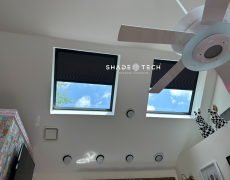


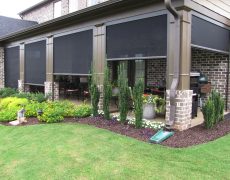

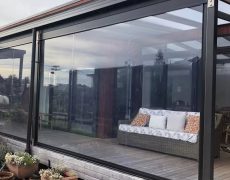



A covered patio can look finished and still feel unusable by midafternoon. North Texas sun reflects off stone, concrete, and pool decking, while mosquitoes arrive just as dinner moves outside. A patio zip track screen addresses both problems with a clean, guided exterior shade system that lowers into place when conditions demand it and retracts when you want an open view.
For Dallas-Fort Worth homes, restaurants, clinics, and hospitality spaces, the difference is not merely cosmetic. A properly specified screen can make an exposed outdoor area more comfortable through a longer portion of the year, protect furnishings from UV exposure, and give the architecture a more intentional appearance than loose curtains or temporary mesh panels.
What Is a Patio Zip Track Screen?
A zip track screen is a motorized or manually operated exterior screen with fabric edges captured inside vertical side channels. Rather than relying on cables, snaps, or a free-hanging weighted bar alone, the screen stays guided from top to bottom as it travels. The result is a taut, tailored panel designed for wide openings such as patios, pergolas, balconies, cabanas, and outdoor dining areas.
The “zip” refers to the reinforced edge retention system that holds the screen within the track. This design reduces side gaps, limits fabric movement, and gives the installation a more architectural finish. When retracted, the screen rolls into a protective housing above the opening. When lowered, it creates a controlled boundary without turning the patio into a permanent enclosed room.
That distinction matters. Homeowners often want relief from glare, insects, and low-angle sun without blocking daylight or losing the connection to the backyard. A zip track system preserves that flexibility.
Why Dallas Patios Need More Than a Standard Shade
A conventional awning or covered roof solves only part of the heat problem. Afternoon sunlight can enter from the west at a low angle, and open sides allow glare and radiant heat to reach seating areas. Outdoor curtains may soften the look, but they can blow around, fade quickly, collect debris, and leave openings for insects.
A custom patio zip track screen is designed to cover the vertical plane where much of that discomfort enters. Depending on the fabric selected, it can filter harsh sunlight while maintaining an outward view, increase privacy from nearby properties, and create a more pleasant setting for entertaining. For a restaurant patio, it can also help protect guests from direct sun during peak service hours without making the dining area feel closed off.
Wind performance deserves a realistic conversation. The guided track design is substantially more stable than a loose exterior shade, but no retractable screen should be treated as a storm shutter or left deployed in every severe weather event. Proper use, quality hardware, secure mounting, and professional installation all affect long-term performance.
Fabric Choice Determines the Experience
The screen fabric is not a minor finishing detail. It determines how much heat, glare, privacy, airflow, and visibility the system provides. The best choice depends on the direction the patio faces, the size of the opening, the surrounding landscape, and how the space is used.
Solar screen fabrics
Solar mesh is often the right starting point for open patios. It filters sunlight and UV while allowing air to circulate, making it well suited to Texas heat. Openness factor matters here. A more open weave offers a clearer view and more airflow, while a tighter weave provides greater sun control and daytime privacy.
For a west-facing patio, a tighter solar fabric may be worth the trade-off in visibility. For a covered outdoor kitchen that already receives substantial roof shade, a more open fabric can preserve the view while cutting the remaining glare.
Insect screen fabrics
If mosquitoes and other pests are the primary concern, insect mesh may be the better choice. It allows strong airflow and provides a clearer visual connection to the outdoors, although it does less to reduce solar heat gain than a dedicated solar fabric. Some homeowners choose insect protection on one side of a patio and solar mesh on the side that receives the most punishing afternoon sun.
Privacy and blackout options
Privacy-focused fabrics are useful for patios near neighboring homes, multifamily properties, medical offices, and commercial waiting areas. They can reduce sightlines and visual distractions, but they also limit outward visibility and natural light. Blackout materials offer the strongest light control, yet they are typically better suited to projection areas, specialty commercial applications, or spaces where the screen will not remain down for extended periods.
Color also affects performance and appearance. Darker solar fabrics often preserve outward visibility better during daylight hours, while lighter colors may reflect more light and coordinate with pale stone or stucco. The right answer is usually a balance between façade design, view preservation, and heat control.
Custom Measurement Is Where Performance Begins
A screen system can only perform as well as its measurements and mounting conditions allow. Patio openings are rarely perfectly square, especially in retrofit projects. Columns may vary slightly in width, ceiling surfaces can be uneven, and existing trim may not provide a suitable fastening surface.
Professional measurement identifies the true opening dimensions, available recess depth, mounting substrate, drainage considerations, and clearance for the housing and guide tracks. It also confirms whether multiple smaller screens will function better than one oversized unit. Larger openings can be impressive, but dividing a broad patio into zones may improve daily usability and allow one section to remain open while another blocks direct sun.
For builders and contractors, planning for screens before exterior finishes are finalized often creates the cleanest result. Recessed pockets, adequate structural backing, and intentional power placement can make the finished system look integrated rather than added after the fact.
Motorization Makes the Screen More Useful
A screen that requires frequent manual handling is less likely to be used at the right time. Motorization changes that habit. With a wall control, remote, app, or smart-home command, the patio can shift from open to protected in seconds.
This is especially useful when the sun moves across the patio during the day. A homeowner may lower one west-facing screen in late afternoon, then raise it after sunset to restore a fully open entertaining space. Restaurants can standardize staff operation before lunch, dinner, or private events. Clinics and commercial properties can manage glare and privacy without asking employees to adjust multiple shades by hand.
Smart controls can also support schedules and scenes. A “patio ready” scene might lower exterior screens, adjust indoor shades facing the same exposure, and activate outdoor lighting as evening approaches. Compatibility should be confirmed during system design, particularly for homes using Alexa, Google Home, Apple HomeKit, or Matter-based controls. The objective is reliable operation, not a collection of disconnected apps.
Installation Details That Protect the Investment
Exterior systems live with heat, rain, dust, insects, and seasonal weather changes. Premium fabric and motors matter, but so do the details that are not obvious after installation: properly anchored tracks, aligned housings, protected wiring, secure fasteners, and tension settings appropriate for the opening.
Local manufacturing and installation can be an advantage when the project requires a precise fit, a nonstandard color, coordinated multiple openings, or service support after completion. ShadeoTech designs and installs custom outdoor screen solutions in the Dallas area with those site-specific conditions in mind, from modern patio structures to demanding commercial openings.
Homeowners should also ask how the system will be serviced. Motors, controls, fabrics, and guide components should be accessible without dismantling surrounding construction. A professional team should explain normal operation, cleaning recommendations, and when to retract screens for high-wind conditions.
Is a Zip Track System Right for Your Patio?
Zip track screens are a strong fit when a patio has a defined opening and a stable mounting surface, such as a covered porch, pergola with suitable framing, outdoor room, or commercial canopy. They are less effective as a solution for an entirely open yard or a structure with insufficient support for side tracks and a housing.
They also will not replace air conditioning. Solar fabric can reduce direct heat and glare considerably, but outdoor comfort still depends on roof coverage, ventilation, ceiling fans, paving materials, landscaping, and the patio’s orientation. The most effective projects treat the screen as part of a complete comfort strategy rather than a single cure for Texas summer.
A well-designed exterior screen should disappear when you want the patio open and perform decisively when the weather changes. That is the practical value: more usable dinners, more comfortable afternoons, and an outdoor space that works as deliberately as the rest of the home.
