

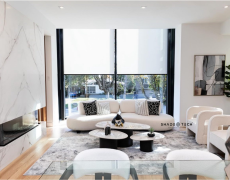







The right commercial window treatment ideas solve problems your team and customers feel every day: afternoon glare on monitors, heat pouring through west-facing glass, exposed treatment rooms, fading finishes, and spaces that look unfinished after dark. For Dallas-Fort Worth businesses, window coverings are not simply a decorative final step. They are part of the building’s comfort, privacy, energy, and operational strategy.
A professionally specified system should fit the room’s use, the direction of the windows, the brand environment, and the people who operate it. That may mean clean roller shades for a medical clinic, layered solar shades and drapery for a restaurant, or motorized blackout shades in a conference center. The best choice is rarely one product applied everywhere.
Start With How Each Space Needs to Work
Commercial projects often go wrong when every window receives the same treatment. A lobby, private office, patient room, dining area, and training room have very different privacy and light-control requirements, even when they sit within the same building.
In an office, employees need daylight without the screen glare that causes people to close every shade by midafternoon. In a clinic, privacy and easy-to-clean materials may carry more weight than a dramatic visual statement. Restaurants need to protect guests from direct sun while preserving the atmosphere created by their windows. A hotel or event venue may need room-darkening capability on demand, along with a polished appearance that holds up to daily use.
Before selecting fabric or hardware, identify what the space must accomplish at different times of day. Consider direct sun angles, peak occupancy, visibility from neighboring properties, audiovisual use, and whether staff can realistically adjust individual shades throughout the day. This functional review creates a better result than choosing a style first and trying to make it work later.
Commercial Window Treatment Ideas for Light and Heat
Solar Roller Shades for Offices and Open Workspaces
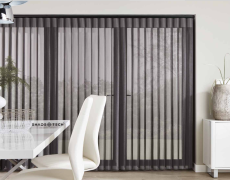
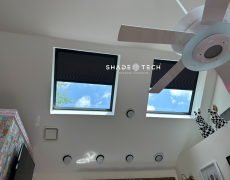
Solar roller shades are a strong choice for offices with wide expanses of glass. Their performance comes from an openness factor that filters sunlight while retaining a degree of outward visibility. Lower openness fabrics provide more glare and heat control; higher openness options preserve a clearer view but allow more light through.
For many Dallas offices, a medium-to-low openness fabric offers the best balance. It reduces harsh afternoon sun, helps protect flooring and furnishings from UV exposure, and maintains a clean, architectural look. Neutral colors typically integrate well with corporate interiors, while darker fabrics can improve view-through during daylight hours.
The trade-off is privacy. Solar fabrics are excellent for daytime glare management, but they may reveal interior silhouettes at night when lights are on. Areas facing public walkways or neighboring buildings often need a second layer, a more opaque fabric, or a different treatment altogether.
Dual Shades for Spaces That Need Flexibility
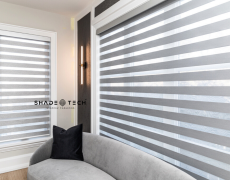
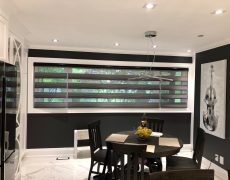
Dual shades combine a solar shade with a blackout or room-darkening shade on the same window. This is particularly effective in conference rooms, executive offices, training rooms, presentation areas, and hospitality spaces where daylight is welcome at some times and a distraction at others.
During normal business hours, the solar layer manages glare and heat without making the room feel closed off. When a presentation begins, the blackout layer can lower for projector visibility and privacy. Motorization makes this transition practical. One scene can lower shades before a meeting, then return the room to a daylight setting afterward.
Exterior Screens for Sun-Exposed Glass and Patios
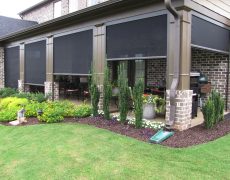
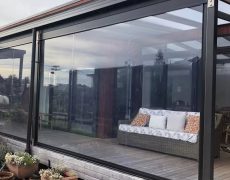
When heat reaches the inside of the glass, interior shades can still help, but exterior screens stop a significant portion of solar energy before it enters the building. For restaurants with patios, clubhouses, fitness facilities, and commercial properties with large west-facing openings, motorized exterior screens can improve usable comfort while adding shade, wind reduction, and insect protection.
Exterior systems need materials and hardware built for North Texas conditions. Sun, wind, dust, and repeated operation place real demands on screen fabric, guides, motors, and mounting surfaces. Proper measurement and professional installation matter as much as the screen itself.
Privacy Solutions for Clinics, Restaurants, and Street-Facing Spaces
Privacy requirements can change by room and by hour. Medical and dental clinics may need full visual privacy in treatment areas while still wanting filtered daylight in reception. Restaurants may prefer open views during lunch but need stronger privacy after sunset. Ground-floor offices often need protection from sidewalk visibility without turning the interior into a closed box.
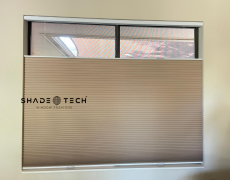
Opaque roller shades offer a streamlined solution where privacy is the priority. They can be specified in commercial-grade fabrics with a broad range of colors and textures, giving a space a refined finish without adding visual clutter. For clinics and high-touch environments, select materials that are durable and easy to maintain.
For a more elevated hospitality or executive setting, drapery panels can soften acoustics and add depth around large windows. They are not the first choice for every commercial environment because they require more fabric, more maintenance, and adequate wall space. Yet in restaurants, boutique hotels, event venues, and upscale lounges, they can add warmth that roller shades alone may not provide.
Motorized Shades Reduce Daily Friction
Manual shades work in smaller, simple spaces. They become less practical when a property has tall windows, a large number of openings, or changing daylight conditions across the day. If employees have to adjust twenty shades individually, the system usually goes underused.
Motorized commercial shades create consistent operation. A receptionist can control a lobby from a wall keypad. A facilities manager can schedule south- and west-facing shades to lower during the hottest hours. A conference room can activate a presentation scene with shades, lighting, and audiovisual equipment working together.
For businesses with smart-building goals, compatibility matters. Systems can be designed to work with Alexa, Google Home, Apple HomeKit, and Matter-enabled platforms where appropriate. The right level of control depends on the project. A small clinic may benefit from simple scheduled automation, while a large office or hospitality project may need grouped zones, centralized controls, and integration planning with electricians or AV teams.
Automation is also useful for consistency after hours. Shades can close at sunset to improve privacy and create a more finished exterior appearance, then raise on schedule the next morning. This protects interiors without relying on the last employee leaving the building to remember every window.
Specify for Durability, Not Just First Impressions
Commercial window treatments face more use than residential products. They may be adjusted daily by staff, exposed to cleaning protocols, or installed on unusually large windows. The lowest initial price can become expensive when hardware fails, fabrics fade prematurely, or replacement parts are difficult to source.
Look for commercial-grade components sized for the shade width and weight, particularly on broad windows and motorized systems. Fabric selection should account for UV exposure, flame-retardant requirements where applicable, moisture, cleaning needs, and the desired level of opacity. Fascias and cassette systems can conceal rollers and provide a more finished appearance, especially in reception areas and customer-facing spaces.
Professional field measurement is essential. Commercial glazing is not always uniform, walls may be out of square, and mullions, door swings, sprinkler heads, soffits, and HVAC elements can affect installation. A precise site review prevents clearance issues and helps ensure shades align across a wall of windows.
Coordinate Window Treatments Early in New Construction
For contractors, builders, and architects, window treatments are easiest to execute when they are considered before the final stages of construction. Early coordination can identify where power should be placed for hardwired motors, whether recessed pockets are desired, and how shade brackets will interact with trim, ceiling details, and storefront systems.
Battery-powered motorization can be an excellent option for retrofit projects or locations where wiring is impractical. Hardwired systems are often preferable for large commercial installations, frequent operation, or projects where a clean long-term power strategy is a priority. Neither option is universally better. The building plan, access, shade count, and control requirements should determine the decision.
ShadeoTech brings local manufacturing, precision measurement, professional installation, and smart-control setup into one coordinated process. That matters when a project needs custom dimensions, dependable lead times, and a finished result that supports both design intent and daily operations.
Choose a System That Supports the Business After Installation
The best commercial window treatment does more than look right on opening day. It helps employees work comfortably, gives customers a better experience, protects interior investments, and reduces the constant small disruptions caused by unmanaged sun and privacy issues.
Start with the rooms that create the most friction, whether that is a glaring conference room, an overheated dining area, or a clinic space that needs better visual privacy. A custom solution built around those real conditions will continue delivering value long after the furniture is in place and the doors are open.
