

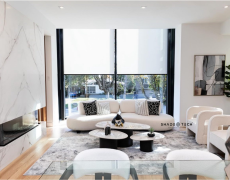







A two-story living room can look spectacular at noon and feel unbearable by 4 p.m. when Texas sun hits a wall of glass. Homeowners asking which shades suit high ceilings are usually balancing more than appearance: they need dependable glare control, meaningful heat reduction, privacy after dark, and a system they can actually operate without reaching for a ladder.
The best answer is rarely a standard off-the-shelf blind. High windows amplify every design and performance decision. The shade must be proportioned to the glass, engineered for the weight of the fabric, mounted precisely, and matched to how the room is used. In Dallas-Fort Worth homes, automation is often the feature that turns a beautiful window treatment into a practical daily solution.
Which Shades Suit High Ceilings Best?
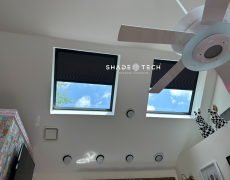
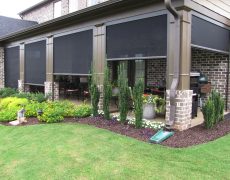
For most tall and hard-to-reach windows, custom motorized roller shades are the strongest all-around choice. They have a clean architectural profile, cover large expanses of glass with minimal visual clutter, and can be made in solar-screen, light-filtering, or blackout fabrics. One touch on a wall control, remote, phone, or voice assistant can raise or lower a shade that would otherwise be inaccessible.
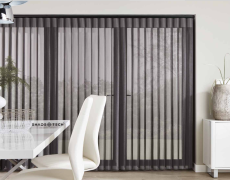
Solar roller shades are especially effective in rooms with expansive west- or south-facing glass. Their woven fabrics reduce glare and UV exposure while preserving an outward view during the day. Openness matters: a lower openness percentage provides more solar control and privacy, while a higher percentage retains a clearer view. There is a trade-off. A more open weave does not provide much nighttime privacy, so it may need to be paired with drapery or a second shade layer in bedrooms and living spaces.
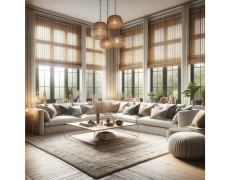
For homeowners who want a softer look, motorized Roman shades can work beautifully on high ceilings, particularly in formal sitting rooms, dining rooms, and hospitality settings. They add texture and dimension that roller shades intentionally avoid. However, their stacked fabric takes up more visual space when raised, and very large spans may require multiple shades. Proper fabric selection and motor sizing are essential to avoid uneven lifting or a bulky appearance at the top of the window.
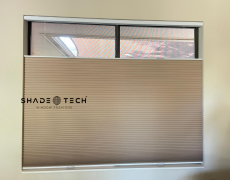
Cellular shades are another smart option when insulation is the priority. Their honeycomb construction creates air pockets that help moderate heat transfer at the glass. They are useful in upstairs bedrooms, media rooms, and sun-exposed spaces where comfort matters as much as daylight. On very wide or exceptionally tall windows, though, the pleated look can be more noticeable than a smooth roller fabric, and the available size range should be confirmed during the design phase.
Match the Shade to the Window, Not Just the Ceiling
A high ceiling does not automatically mean every window needs a floor-to-ceiling treatment. The right coverage depends on where the glass starts, how much direct sun it receives, and whether the windows are grouped with doors or transoms. A row of clerestory windows may need solar shades for glare control, while a dramatic two-story window wall may call for separate shade zones so the room remains flexible.
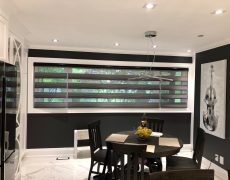
Scale is the first design rule. Narrow blinds on a large glass wall can look undersized and create too many visible gaps. Wider custom shade panels, aligned to mullions or window divisions, usually create a more intentional result. In contemporary Dallas homes, roller shades installed close to the ceiling line can visually simplify tall windows and make the architecture feel even more refined.
Mounting also changes the finished look. An inside mount fits within the window opening and keeps trim visible, but it can allow small light gaps at the sides. An outside mount can cover more of the window perimeter and improve light control, especially for blackout applications. On high windows, the mounting surface must be evaluated carefully. Drywall alone may not provide sufficient long-term support for a large motorized treatment, so installers may need to locate framing or add proper backing.
Motorization Is More Than a Convenience Feature
Manual shades become impractical once windows move above normal reach. Motorization removes that friction, but its bigger value is consistency. Shades only reduce heat gain and UV exposure when they are lowered at the right time. A scheduled system can close solar shades before afternoon sun warms the room, then raise them later to bring back natural light.
For a smart home, the motor platform should match the rest of the system. Many homeowners want shades that work with Alexa, Google Home, Apple HomeKit, or Matter-enabled controls. A professional setup can create scenes rather than forcing each shade to operate individually. A “Good Morning” scene might raise east-facing shades gradually, while an “Away” scene lowers selected treatments to help protect floors, furnishings, and artwork from direct UV exposure.
Battery-powered motors can be a good fit for many retrofit projects, particularly where wiring is difficult. Rechargeable options reduce maintenance, but tall windows still require a plan for access when charging is needed. Hardwired motors are often the preferred long-term choice for new construction, major remodels, and commercial spaces because they eliminate battery service and support frequent daily operation. The right choice depends on window access, construction conditions, usage patterns, and budget.
Fabric Choice Determines Comfort and Privacy
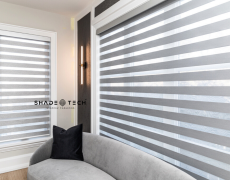
Fabric is where performance becomes visible. A solar fabric can reduce harsh glare while keeping the room bright and connected to the view. Light-filtering fabrics provide a softer, more private effect, but silhouettes may remain visible at night when interior lights are on. Blackout fabrics provide the strongest privacy and light blocking, though complete darkness also depends on mounting style and side gaps.
Color deserves the same attention. Lighter fabrics often reflect more solar energy and keep an airy appearance against a high ceiling. Darker solar fabrics can sharpen the outward view by reducing reflected light, but they may make a large shade read more prominently in the room. Neutral tones are usually the safest choice for tall contemporary spaces because they complement the architecture instead of competing with it.
Do not choose fabric only from a small swatch. Hold larger samples against the actual glass at different times of day. North Texas sun can make an understated fabric look much warmer, more reflective, or more transparent than it appeared in a showroom. This is one reason an in-home consultation is so valuable for high-window projects.
When Layered Treatments Make More Sense
Some rooms need both solar performance and nighttime privacy. A dual-shade system solves that issue by combining a solar roller shade with a blackout or privacy shade in one coordinated installation. During the day, the solar layer manages glare and heat while preserving the view. At night, the privacy layer closes for coverage.
Layering can also be aesthetic. Motorized roller shades handle daily light management, while stationary drapery panels soften a large window wall and add visual scale. This approach works well when a room has hard surfaces, tall ceilings, and a slight echo. The shade delivers the technical performance; the drapery contributes warmth without becoming the main operating treatment.
For commercial interiors, such as medical clinics, restaurants, and hospitality spaces, roller shades are often the more durable and maintainable option. They can be specified in commercial-grade fabrics, divided into logical control zones, and programmed to support staff comfort, guest experience, and glare reduction on screens or work surfaces.
Why Custom Measurement Matters at Height
Tall-window shading is not forgiving of rough measurements. A small width error can create obvious light gaps; an incorrect drop can leave fabric short of the sill or interfere with window hardware. Large shades also place more demand on brackets, tubes, motors, and mounting surfaces. The components must be selected as a system, not assembled from generic parts.
ShadeoTech approaches these projects with local measurement, Texas-made custom fabrication, professional installation, and smart-home programming. That process matters because the finished result depends on details that are hard to judge from a product photo: fabric roll direction, bracket clearance, wiring paths, shade alignment, and how the controls behave after installation.
The most effective shade for a high ceiling is the one that lets you enjoy the architecture without living with its glare, heat, or hard-to-reach glass. Start with how the room faces the sun and how you want it to function at different hours, then let the treatment be designed around that reality.
