

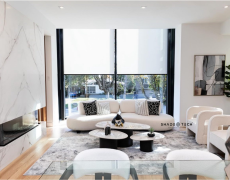
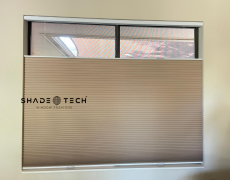

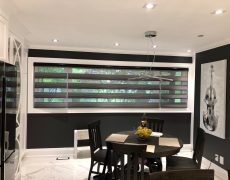
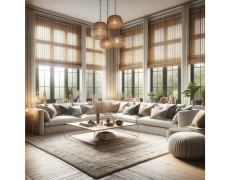
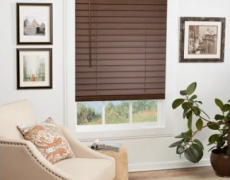
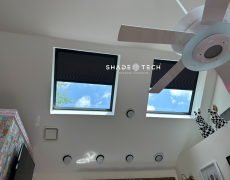


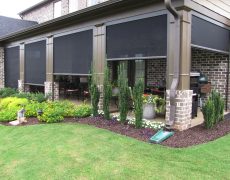

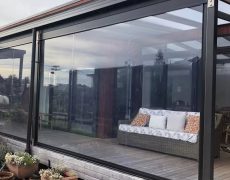



A wall of glass can make a Dallas home feel open and architectural until the afternoon sun turns the room into a glare-filled hot spot. Day and night shades solve that problem with two useful modes in one clean window treatment: softly filtered daylight when you want the view, and a more private, shaded setting when you do not.
Often called zebra shades, these systems are especially well suited to North Texas homes with large contemporary windows, sun-facing living areas, media rooms, and tall openings that are difficult to cover with traditional blinds. Their appeal is not just visual. The right fabric, fit, and control system can help manage heat gain, protect interiors from UV exposure, and make everyday privacy far easier to control.
How Day and Night Shades Work
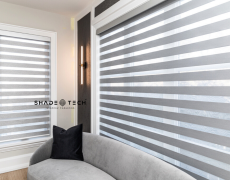
Day and night shades use a continuous loop of fabric with alternating sheer and opaque horizontal bands. As the shade moves, those bands align in different positions. When sheer bands line up, daylight enters through the translucent sections and the room keeps a sense of openness. When opaque bands overlap, they create a more private, light-reducing surface.
That adjustable alignment is what separates day and night shades from a single roller shade. You are not limited to fully open or fully closed. A small adjustment can soften sharp sunlight at breakfast, reduce screen glare during the workday, or add privacy after dark without making the room feel closed off.
The fabric rolls into a compact headrail, which gives the finished treatment a tailored, modern profile. It works particularly well in homes where clean lines matter and bulky slat blinds would interrupt the window architecture.
Why They Perform Well in Dallas-Fort Worth
The Dallas-Fort Worth climate asks a lot of window coverings. Long summer afternoons, intense UV exposure, and large expanses of south- and west-facing glass can put real pressure on indoor comfort. Day and night shades give homeowners more control over those conditions throughout the day.
In their sheer setting, they diffuse incoming light rather than simply leaving a bare window exposed. This can reduce harsh contrast on floors, countertops, televisions, and computer screens while retaining a brighter, more natural feel. Shift the bands toward the opaque position when the sun is strongest, and the shade adds another layer of visual and thermal control.
The result depends on fabric selection, window orientation, glass type, and how tightly the treatment is installed. A shade is not a replacement for high-performance windows or HVAC planning. Still, custom shading is one of the most practical ways to reduce direct solar exposure in the rooms where homeowners actually feel it.
For homes with hardwood floors, artwork, upholstery, and custom cabinetry, UV management is also a design-protection decision. Filtered light can help reduce the daily exposure that contributes to fading over time.
Privacy Without Losing the Room
Privacy is often the deciding factor for street-facing windows, neighboring homes, and first-floor bedrooms. Day and night shades offer a polished way to create privacy without defaulting to heavy drapery or closing off every bit of daylight.
There is an important distinction, though: the sheer setting provides daytime light filtering, not complete privacy. At night, when interior lights are on and it is darker outside, sheer bands may reveal silhouettes or activity indoors. For full evening privacy, the opaque bands need to be aligned in their closed position.
If a room requires complete darkness, day and night shades may need support from side channels, drapery panels, or a dedicated blackout shade. Their strength is versatile light control, not absolute blackout performance. That trade-off is worth discussing before fabric is selected, especially for nurseries, bedrooms, and media spaces.
Choosing the Right Day and Night Shade
A well-made system starts with more than a fabric swatch. The shade must be proportioned for the opening, coordinated with the room, and built around how the space is used. Large windows, for example, may require multiple shades on one wall rather than one oversized unit. This keeps operation reliable and makes it easier to create separate zones for changing sun exposure.
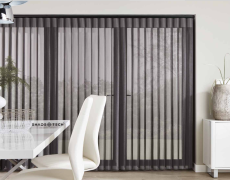
Fabric color affects both appearance and performance. Lighter fabrics tend to preserve a bright, airy look and can be a strong choice for open living spaces. Darker fabrics can provide stronger glare reduction and a more defined visual contrast, but they may also make the shade more noticeable when closed. The best choice depends on the room’s finishes, window direction, and the level of light control expected.
Opacity matters as well. Some collections are designed primarily for soft diffusion, while others use denser opaque bands for greater privacy and light reduction. A professional consultation helps prevent a common mistake: choosing a fabric based only on its appearance in a small sample, then finding it behaves differently across a large sunlit wall.
Custom Fit Is Part of the Performance
Off-the-shelf shades are rarely designed around the realities of large or nonstandard windows. Even a minor measurement error can create uneven gaps, inconsistent band alignment, or an installation that looks out of place against detailed trim.
Custom measurement accounts for window depth, trim, mounting surface, handle clearance, and the relationship between adjacent openings. It also determines whether an inside mount will deliver the clean recessed look you want or whether an outside mount will provide better coverage.
For high ceilings and wide glass walls, professionally installed day and night shades are often the better long-term choice. Proper mounting, balanced operation, and precisely aligned fabrics matter more as the shade size increases.
Motorized Day and Night Shades Make Control Easier
Manual shades work well for many windows, but motorization changes how consistently people use their window treatments. A shade that is difficult to reach or inconvenient to adjust tends to remain in one position. With motorized control, the setting can follow the room’s schedule instead.
A west-facing family room might lower to a glare-reducing position in late afternoon, then shift to privacy mode at sunset. In a primary suite, shades can open gradually in the morning and close at night without cords or repeated adjustments. For restaurants, medical clinics, and commercial spaces, scheduled shading can create a more comfortable guest or patient experience while simplifying daily operations.
Motorized systems can be controlled with a wall remote, handheld remote, app, or integrated smart-home platform. Depending on the selected system, that may include Alexa, Google Home, Apple HomeKit, or Matter-enabled controls. The best setup is the one that fits the home’s existing automation environment and remains simple for every member of the household to use.
Battery-powered motors are often a practical option for many retrofit projects. Hardwired power can be a strong choice during new construction or major renovation, particularly when there are many shades or very large openings. Solar charging can also be considered in the right window conditions. Each approach has installation and maintenance considerations, so power planning should happen before fabrication rather than after the room is finished.
Where Day and Night Shades Fit Best
These shades are a natural match for living rooms, kitchens, home offices, lofts, and primary bedrooms where the goal is flexible daylight rather than total darkness. Their horizontal bands add subtle texture without competing with architectural finishes, which makes them a strong fit for modern, transitional, and contemporary interiors.
They are also useful in commercial settings with customer-facing glass. A clinic can soften bright daylight in waiting areas. A restaurant can reduce late-day glare at perimeter tables. Builders and designers can use them to give newly completed spaces a finished, technology-ready look without adding visual weight to the windows.
For rooms that need a softer decorative layer, day and night shades can be paired with stationary drapery panels. The shade handles daily light and privacy control, while the drapery adds color, scale, or acoustic softness. This combination is especially effective on wide window walls where a single treatment would otherwise feel too minimal.
A Better Result Comes From Planning Early
Window treatments are often treated as a final decorative purchase, but they affect comfort, privacy, energy use, and smart-home design from the first day a space is occupied. Planning them early gives you more freedom to select power options, coordinate finishes, and choose fabrics based on actual sun exposure rather than guesswork.
ShadeoTech manufactures and installs custom solutions locally in Carrollton, pairing precise measurement with fabric and automation guidance for North Texas conditions. The goal is not simply to cover a window. It is to give each room the right response to daylight, heat, and privacy at the touch of a button.
The most useful shade is the one you will adjust without thinking about it. When daylight feels comfortable, screens stay visible, and evening privacy takes one command, the windows can remain the best part of the room.
