








A Dallas patio can be comfortable at breakfast and nearly unusable by mid-afternoon. Direct sun, heat reflecting off hardscape, windblown insects, and the occasional need for privacy can turn a well-designed outdoor room into space no one wants to use. An automated patio screen changes that equation with the touch of a button, creating protection when conditions demand it and disappearing when you want an open view.
For North Texas homes, restaurants, and hospitality spaces, motorized exterior screens are not simply an accessory. They are a practical extension of the building envelope, designed to manage solar exposure and make outdoor areas more functional across more of the year.
What an Automated Patio Screen Does
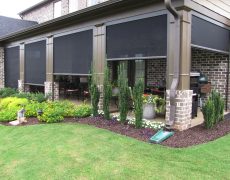
An automated patio screen is a motorized exterior shade that lowers vertically from a housing mounted above an opening. It can cover a patio, pergola, covered porch, outdoor kitchen, balcony, storefront, or large pass-through opening. When retracted, the screen rolls into its enclosure for a clean, architectural appearance.
The fabric, guide system, and motor work together to control light, heat, insects, and visibility without permanently closing off the space. Depending on the selected screen material, a system can preserve outward views while reducing glare, block insects during dinner, or provide a more private setting near neighboring homes.
That flexibility is the real advantage. Fixed screens solve one problem all the time. Motorized screens let the patio stay open when weather is pleasant, then become protected in seconds when the sun shifts or guests arrive.
Why Dallas-Fort Worth Patios Benefit From Motorized Screens
North Texas outdoor spaces face a demanding mix of conditions: intense western exposure, high summer temperatures, strong UV, pollen, mosquitoes, and sudden wind. A standard patio roof helps, but it does not stop low-angle sun from heating the space or blasting through the sides of an opening.
Exterior solar screens intercept sunlight before it reaches the patio and adjacent glass doors. This matters because stopping solar heat outside is generally more effective than trying to manage it after it has entered the space. The result can be a patio that feels less glaring and more usable, while nearby interior rooms may experience less heat gain through large openings.
UV management is equally valuable. Sunlight can fade outdoor upholstery, flooring finishes, rugs, and wood details over time. The right screen fabric reduces exposure while maintaining the level of visibility the homeowner wants. A more open weave keeps views clearer; a tighter weave provides greater shading and privacy. Neither is universally better. The best choice depends on the patio orientation, sightlines, and how the space is used.
For restaurants and clinics, the benefit is operational as well as visual. Screens can make outdoor waiting areas, patios, and covered entry zones more comfortable without giving the building a temporary or improvised appearance. They also allow staff to respond quickly to changing conditions rather than manually adjusting several separate shades.
The Details That Separate a Custom System From a Basic Screen
Motorization is only one part of a successful installation. A patio screen has to fit the opening precisely, operate reliably, and look intentional from every angle. That is why the measurement and mounting strategy deserve as much attention as the motor or fabric color.
Fabric Selection Should Follow the Sun, Not Just the Color Palette
Solar screen fabric is often chosen by openness factor, which describes how tightly the material is woven. A higher openness factor usually allows more view and daylight through, while a lower openness factor delivers stronger shade and more privacy. On a covered patio with a prized backyard view, a more open fabric may be appropriate. On a west-facing outdoor kitchen, stronger solar control may be worth the reduced visibility.
Insect screen fabrics address another need. They help keep mosquitoes and flying pests out while allowing ventilation. Privacy fabrics can be useful near pool areas, side yards, or homes with close neighboring windows. Some projects call for one fabric type across every opening; others benefit from different materials on different exposures.
A custom consultation should account for sun path, prevailing wind, opening dimensions, surrounding architecture, and whether the patio is primarily used for quiet evenings, family gatherings, or entertaining.
Side Guides Matter in North Texas Wind
The screen needs a stable path as it lowers and raises. Side channels or guided track systems keep the fabric aligned, reduce gaps at the edges, and help the screen resist movement in normal outdoor conditions. For patios exposed to wind, this design element is especially important.
No exterior screen should be treated as a storm shutter unless it has been specifically engineered and rated for that purpose. In severe weather, screens should be retracted according to the manufacturer’s guidance. A professionally designed system balances day-to-day stability with sensible operation during Texas storms.
The Housing and Finish Should Belong to the Architecture
A motorized screen housing is visible when the system is open, so its placement and finish affect the finished look. It may be mounted under a beam, within a soffit, or on the exterior face of a structure, depending on the opening and construction details.
Custom color coordination can help the housing, side tracks, and bottom bar complement the patio structure rather than interrupt it. On a modern home with broad glass openings, that clean integration is often the difference between a screen that feels built in and one that feels added later.
Smart Control Makes the Screen More Useful
A wall switch, remote, or app provides straightforward operation. Smart-home integration adds another level of convenience. An automated patio screen can be included in scenes and schedules, such as lowering west-facing screens in the late afternoon or raising all screens when the outdoor area is being opened for the day.
Voice control through Alexa, Google Home, or Apple Home can be particularly useful when hands are full with food, drinks, or children. Matter-compatible smart-home setups can also help bring controls into a broader connected-home plan. The goal is not technology for its own sake. It is making the screen easy enough to use every day.
Automation should still be planned thoughtfully. A fixed schedule may work well for a predictable west exposure, but it may be less useful on a patio shaded by trees or neighboring structures. Sun sensors and wind considerations can add value in certain applications, while a simple remote may be the right choice for others. Reliable controls begin with matching the system to the way the property actually operates.
Planning an Automated Patio Screen Installation
The strongest projects start before product selection. First, identify what is making the patio uncomfortable. If glare is the main problem, solar fabric and exposure analysis should lead the conversation. If mosquitoes are driving people indoors, insect protection and edge sealing become more important. If the goal is privacy, sightlines from neighboring lots should be evaluated from seated and standing positions.
Next, consider the structure. Screen systems need suitable mounting surfaces and enough clearance for the housing, guides, and bottom bar. Covered patios, pergolas, and outdoor living rooms can all be candidates, but the installation approach varies. Large or unusually shaped openings may require careful engineering, especially where columns, fireplaces, railings, or uneven surfaces are involved.
Power planning is another essential step. Hardwired motors offer a refined, dependable solution for many permanent installations, while battery-powered options can work where wiring is impractical. The best decision depends on access, usage frequency, number of screens, and the level of smart-home integration desired.
Working with one local team for measurement, manufacturing, installation, and programming avoids the common handoff problems that occur when exterior shades are sourced from one company and installed or automated by another. ShadeoTech manufactures and installs custom solutions locally in Texas, allowing the finished system to be tailored to the opening rather than adapted from a retail box size.
Is an Automated Patio Screen Worth It?
For a patio used only a few weekends each year, a manual shade or fixed screen may be enough. For homeowners who regularly entertain outdoors, have a sun-exposed patio, or want a more polished indoor-outdoor transition, automation often earns its place quickly. The convenience encourages consistent use, and consistent use is what turns a patio upgrade into a genuine lifestyle improvement.
The investment also depends on scale and specification. Screen width and height, fabric type, guide system, motor choice, electrical work, control integration, and architectural finish all influence the final cost. A custom system is not the lowest-cost way to cover an opening, but it is designed to deliver cleaner appearance, stronger performance, and long-term usability than a temporary solution.
A well-planned patio screen should feel almost invisible when you do not need it and indispensable when the Texas sun, insects, or lack of privacy would otherwise send everyone back inside. That is the standard worth designing for.
